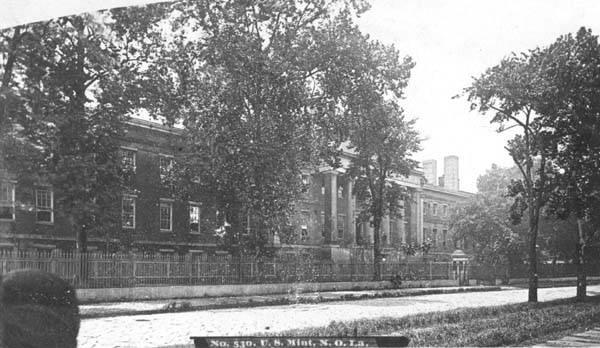
From Fort St. Charles to the U.S. Mint
Text
The United States Mint was once the site of Fort St. Charles, one of the defenses built in 1792 during the Spanish period. Fort St. Charles was the largest of five fortifications surrounding the city. Spanish Governor Baron Hector de Carondelet noted that Fort St. Charles, constructed in the form of a pentagon, was built larger than the other four to accommodate troops in the event of an insurrection.
Andrew Jackson is said to have reviewed his troops in front of Fort St. Charles’ gates, before leading them to face the British on December 23, 1814 in the “Night Battle.” In the early afternoon on December 23rd, a messenger had alerted Jackson that the British had landed on the Villere plantation, nine miles below the city. Hearing that the British had landed, Jackson allegedly exclaimed:
“By the Eternal, they shall not sleep on our soil!...Gentlemen, the British are below, we must fight them to-night.”
Jackson marched his forces from Fort St. Charles to attack the British that night, surprising the unsuspecting forces. Jackson concluded that the Americans would have won the night battle if a thick fog had not rolled in. Jackson and his forces ultimately went on to defeat the British on January 8, 1815, following the better known Battle of New Orleans.
According to Greg Lambousy, Director of Collections for the Louisiana State Museum:
"In 1821 the fort was demolished, and the land was given to the City of New Orleans the following year. The area was made into a park, aptly named Jackson Square. The park remained until 1835, when the city returned it to the federal government for construction of the New Orleans branch mint . . . Purportedly, the cornerstone of the mint building was laid on the foundation of Fort St. Charles."
The Mint produced both US and Confederate currency. After the federal government occupied New Orleans during the Civil War, the building saw other uses until 1879, when it resumed coining operations. Its service as a mint ended in the early 1910s, when it began to be used for a series of other purposes, including a federal prison from 1931 to 1943. It served as a Coast Guard receiving station until the mid-1960s, when the building was transferred to state control.
Part of the Louisiana State Museum complex since 1979, the Mint houses the Louisiana Historical Center, one of the oldest and most comprehensive archives in the state. It also houses one of the largest and most significant collections of Jazz related instruments, images, and recordings in the world.
Files
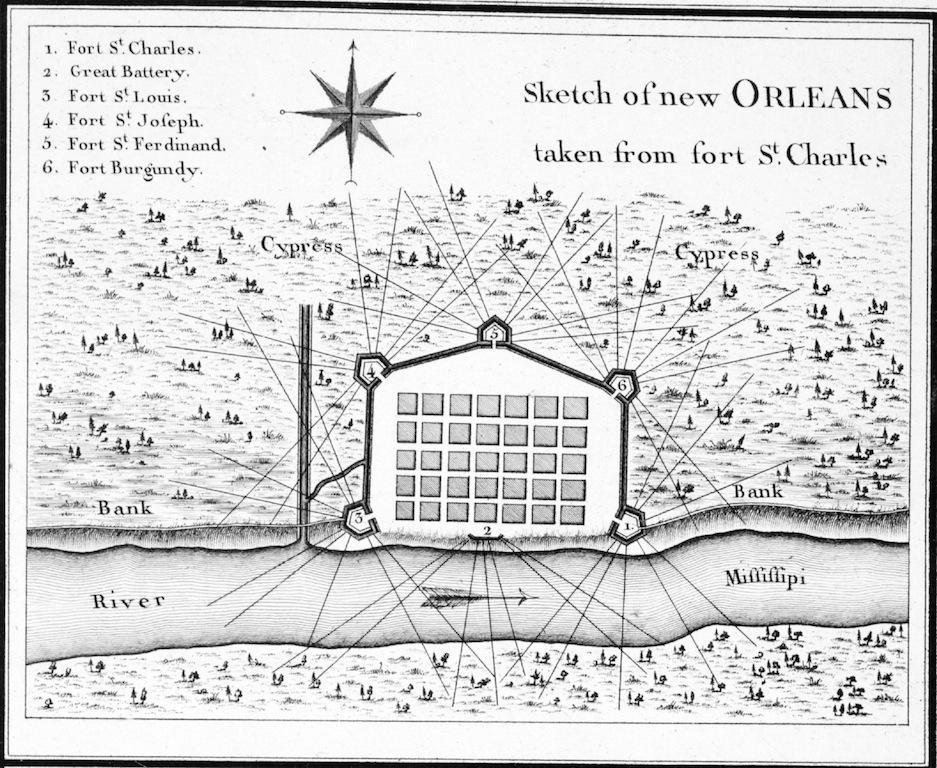
Sketch of New Orleans, taken from Fort St. Charles
Fort St. Charles appears as Numeral 1. Originally published as part of A Journey in North America, containing a Survey of the Countries watered by the Mississippi, Ohio, Missouri, and other Affluing Rivers; with Exact Observations on the Course and Soundings of these Rivers; and on the Towns, Villages, Hamlets, and Farms of that Part of the New World; followed by Philosophical, Political, Military and Commercial Remarks, and by a Projected Line of Frontiers and General Limits. Illustrated by an Atlas of 36 Maps, etc. By Gen. V. Callot, late in the French Service, and Governor of Guadeloupe. | Source: Courtesy of the Collections of the Louisiana State Museum | Date: 1796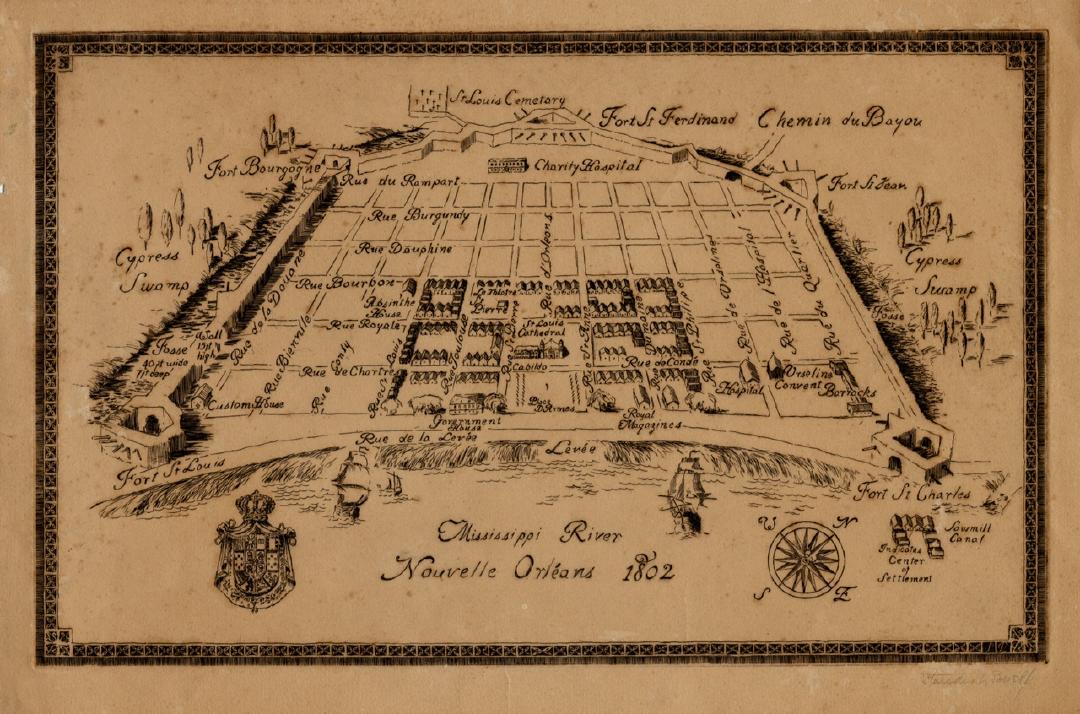
Nouvelle Orleans depicted as it may have appeared in 1802.
Fort St. Charles is visible in the lower right corner of the city. This etching was created by celebrated 20th century printmaker, Alice Standish Buell. Born in Illinois, she spent most of her working years splitting her time between studios in Vermont and Florida. This is one of many etchings of New Orleans subjects matter, indicating that she spent at least several years visiting the Crescent City as well. | Source: Courtesy of the Collections of the Louisiana State Museum | Date: 1920s-1950s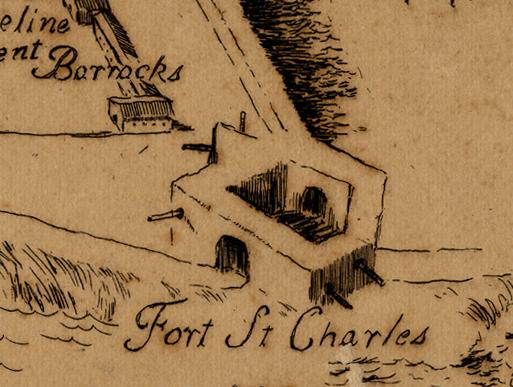
Detail, Nouvelle Orleans 1802
Detail of this map shows the pentagonal structure of Fort St. Charles, the largest fortification protecting New Orleans during the Battle of New Orleans. | Source: Courtesy of the Collections of the Louisiana State Museum | Date: 1920s-1950s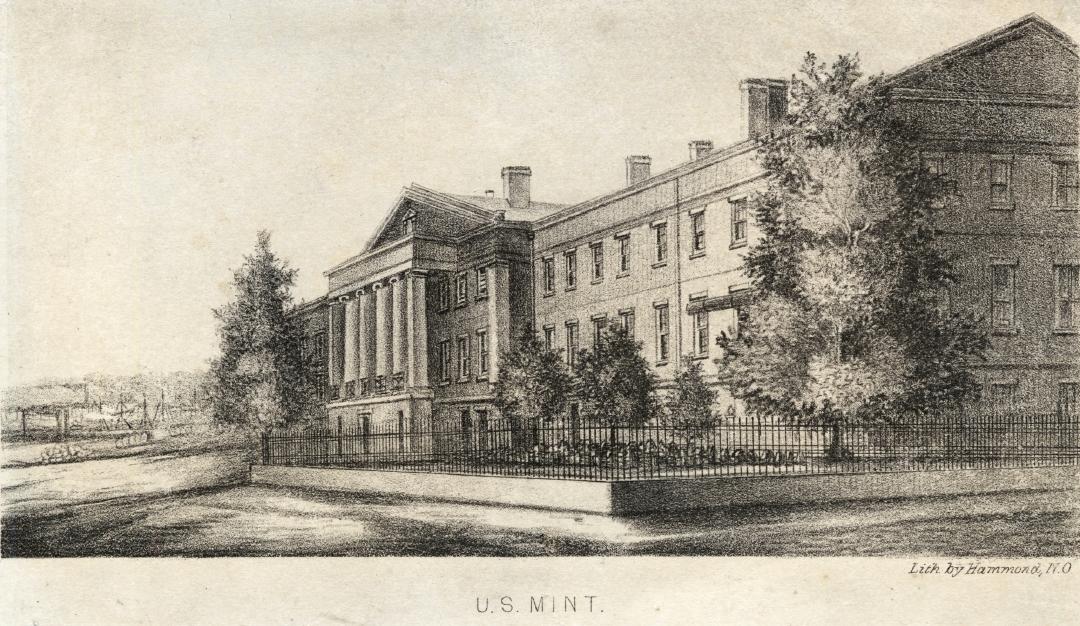
U.S. Mint
This lithograph depicts the front of the building, as seen from Esplanade Avenue. The Mississippi River is visible toward the left side. | Source: Courtesy of the Collections of the Louisiana State Museum | Date: 1838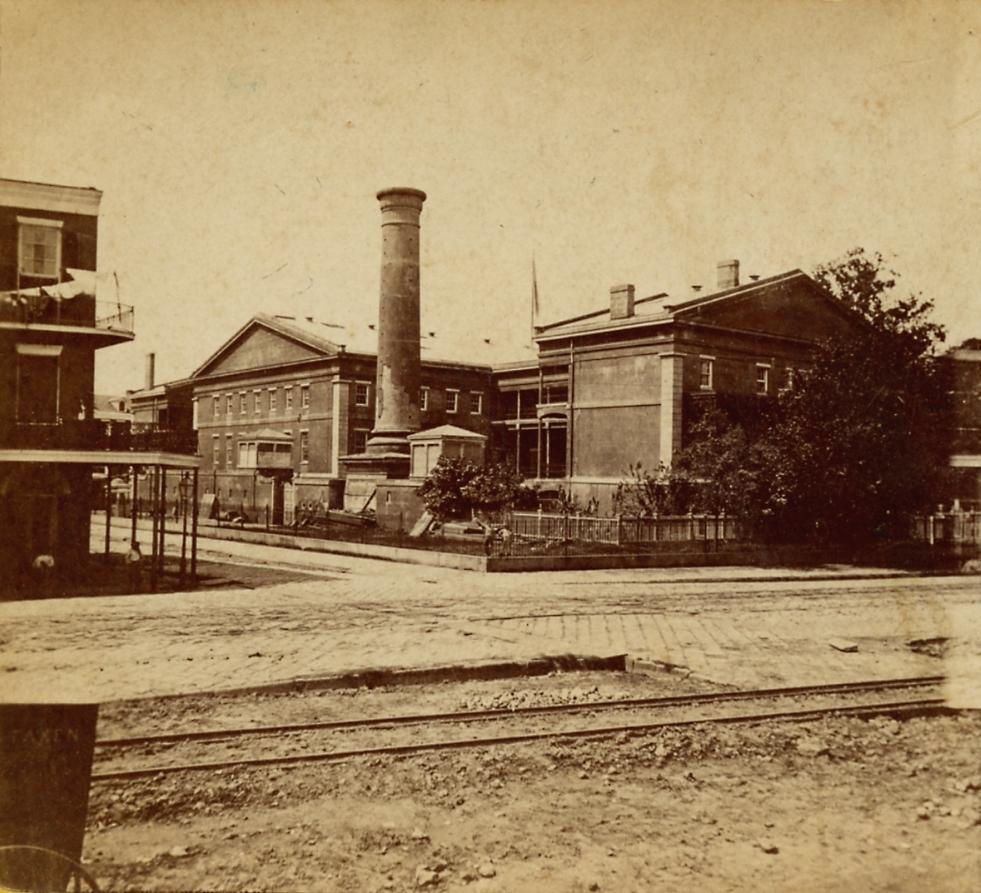
U.S. Mint
This albumen print photograph shows the rear view of the U.S. Mint, facing the French Market. | Source: Courtesy of the Collections of the Louisiana State Museum | Date: late 19th century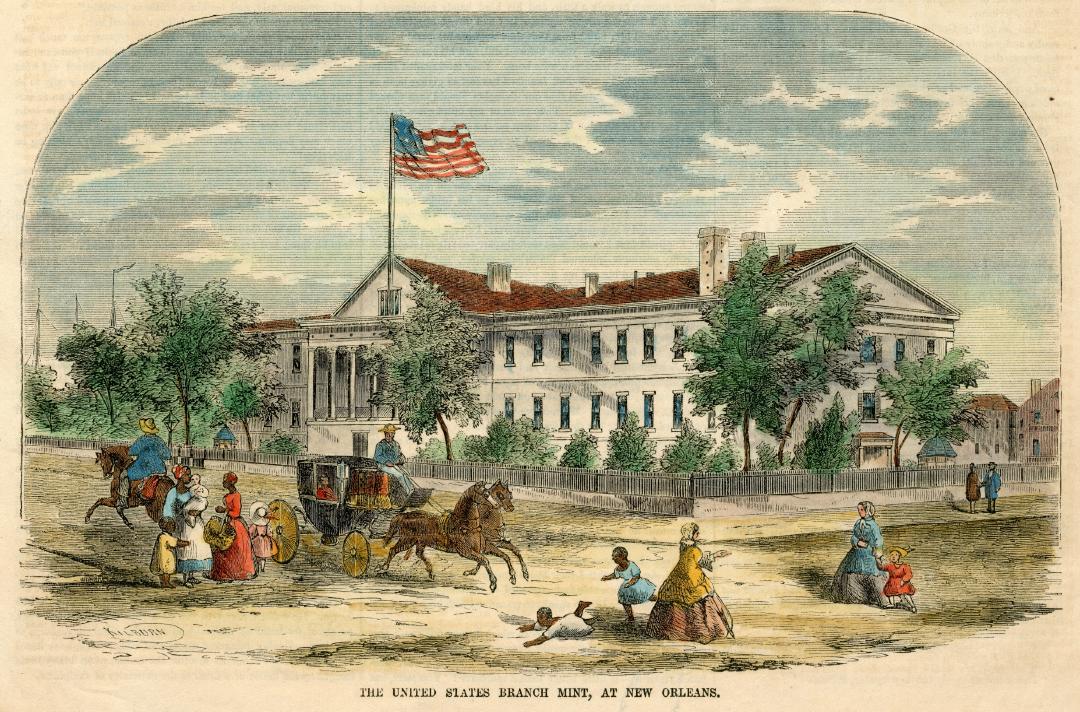
The United States Branch Mint, at New Orleans
This wood engraving is from Ballou's Pictorial Drawing-Room Companion, a popular periodical of the mid-19th century. | Source: Courtesy of the Collections of the Louisiana State Museum, gift of Miss Lynne Farwell | Date: 1858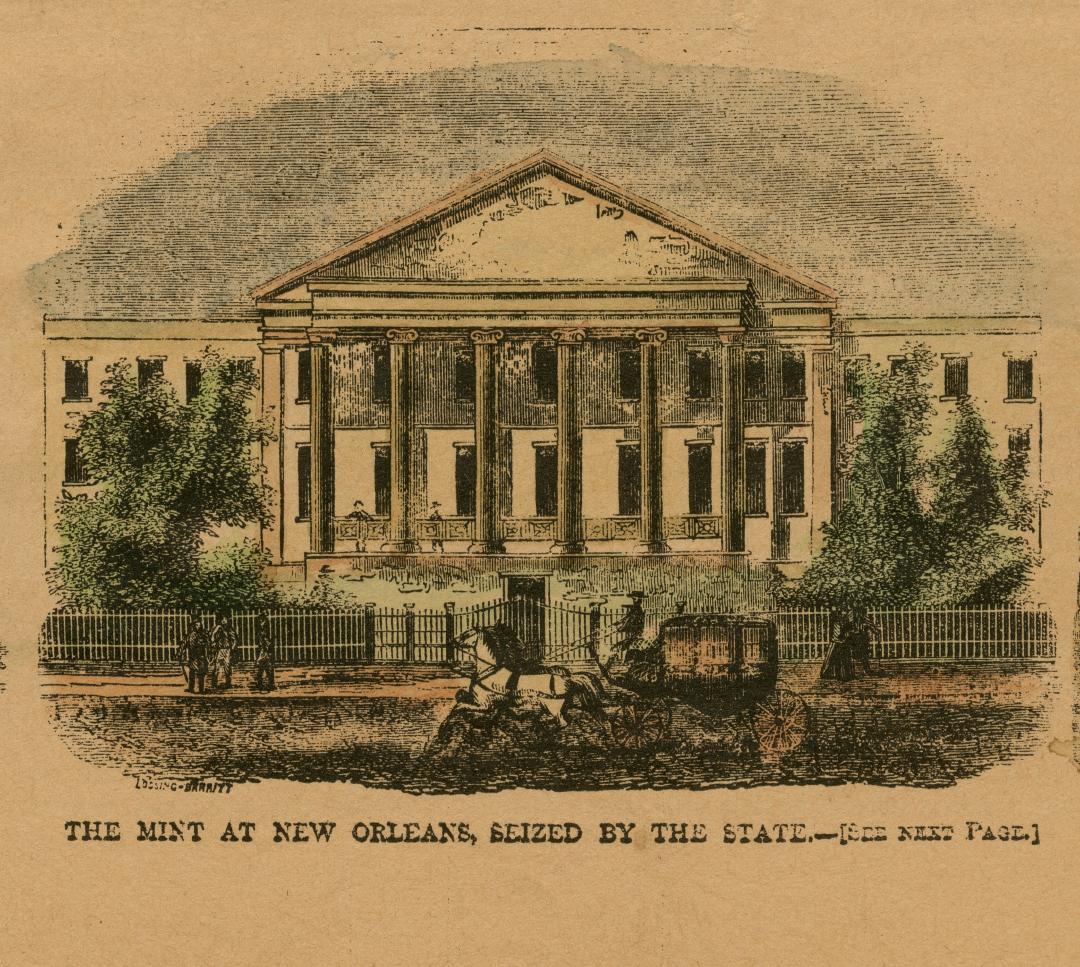
The Mint at New Orleans, seized by the State.
The Mint, newly under Confederate control. This wood engraving appeared in Harper's Weekly. | Source: Courtesy of the Collections of the Louisiana State Museum | Date: February 16, 1861