Battle of New Orleans: Pirate's Alley, The Arsenal, Creole House & Jackson House
Text
Walking out of Jackson Square toward St. Louis Cathedral, Pirate’s Alley appears on the left, between the Cathedral and the Cabildo. Formerly known as “Orleans Alley,” the passage is one block long, extending from Chartres Street at Jackson Square to Royal Street. Halfway down the alley, a lamppost marks its intersection with Cabildo Alley, which extends (the width of the Cabildo) to St. Peter Street.
Much legend swirls around Pirate’s Alley and its location between the original Spanish prison and the Cathedral. One legend maintains that pirates traveled this alley to enter the town from the Mississippi River. Another suggests that pirates and other criminals were often seen being escorted to the prison via this route.
The Arsenal at 600 St. Peter Street stands directly behind the Cabildo. From approximately 1728, the French Guard House and prison occupied the site until destroyed during the Good Friday Fire of March 21, 1788. The Spanish rebuilt the prison, which was destroyed once again by fire in 1793. Two years later, in 1795, Don Andres Almonester y Roxas, who financed and built St. Louis Cathedral and the Cabildo, rebuilt the “Calabozo,” or prison. (Some linguists suggest that the 19th-century American slang term for prison, "calaboose," derives from this Spanish term.)
In 1814, Pierre Lafitte, brother of Jean Lafitte, was imprisoned in chains in the Calabozo, until his escape on September 6, 1814. Even though a thousand dollar reward was offered for his capture, Pierre Lafitte was not apprehended and served honorably at the Battle of New Orleans. The prison was demolished in 1837 to allow for the construction of the Arsenal.
In 1836, the Louisiana legislature passed a bill to construct the “State Armory” or Arsenal on this property, fronting St. Peter and Orleans Streets between Royal and Chartres Streets. From 1846 until the Civil War, the Orleans Artillery occupied the building. After the Union forces captured New Orleans, the Arsenal served as a military prison and Federal headquarters. During the most violent period of Reconstruction, the Metropolitan Police controlled the arsenal until September 14, 1874, when the White League Democrats defeated the Metropolitan Police at the Battle of Liberty Place. The White League prevailed at first, occupying the Cabildo and Arsenal for three days until President Ulysses S. Grant sent in federal troops to restore order. After Reconstruction ended, the building again became the State Arsenal until it was transferred to the Louisiana State Museum on March 15, 1914. The Arsenal was dedicated as “Battle Abbey” for the centennial celebration of the Battle of New Orleans in 1915.
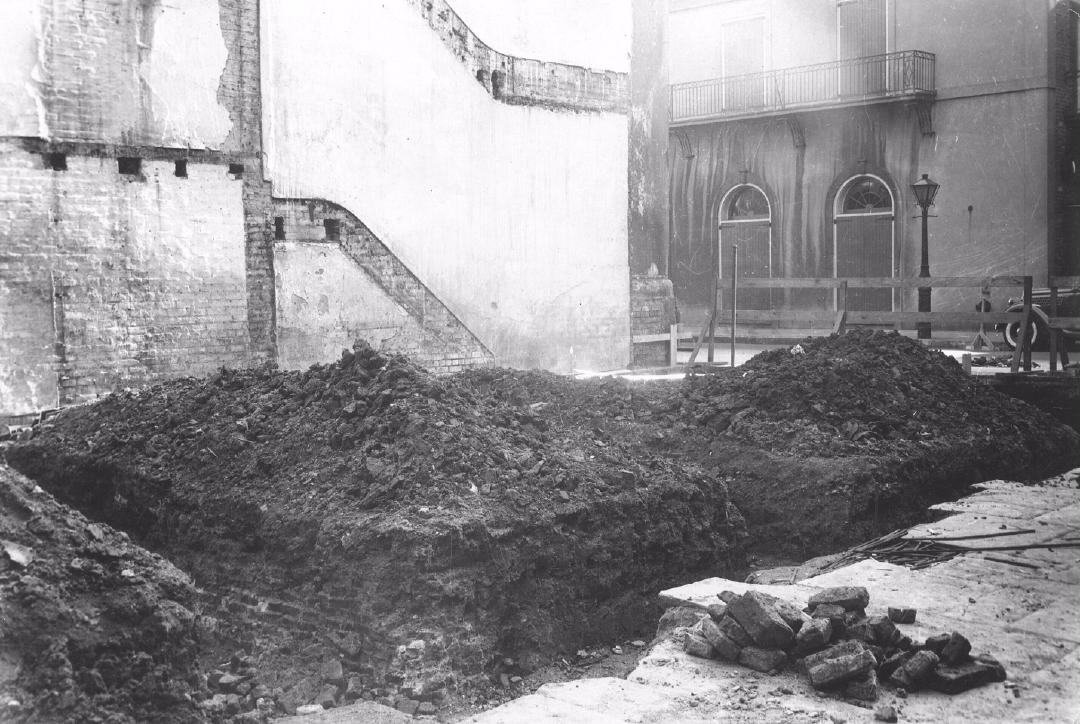
The Creole House, at 701 Chartres Street, and the Jackson House, at 616 Pirate’s Alley, are also both owned by the Louisiana State Museum, but closed to the public. The three-story antebellum houses share a courtyard with the Arsenal and occupy the site of the French Guard House and later the Spanish Calabozo, which was demolished in 1837. Both houses have two-story slave quarters at the rear of their properties.
In 1921, the Louisiana State Museum purchased the Creole House, which at that time was still known as the “Calabozo.” In 1937, the house was formally dedicated as the Creole House or “Maison Creole,” to commemorate a visit by French and Canadian dignitaries. (There is no known historical connection between Andrew Jackson and the Jackson House.)
On May 11, 1988, the Cabildo caught fire, resulting in the closure of the Creole House for repairs. Fortunately, the Creole House was not damaged but was included in the restoration of the Cabildo that followed.
Files
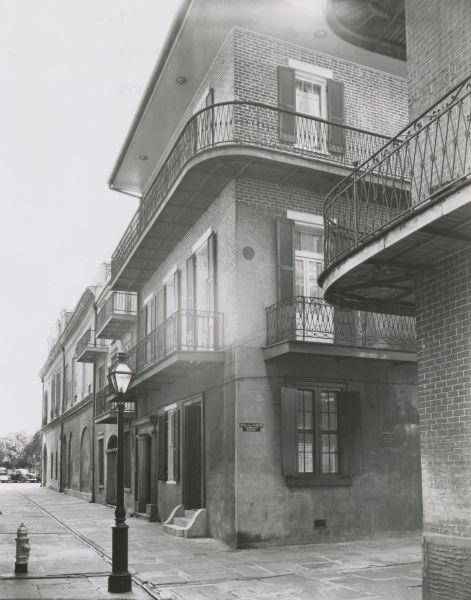
Orleans Alley or Pirate's Alley, 1939
Pirate's Alley is located between St. Louis Cathedral and the Cabildo. Courtesy of the Collections of the Louisiana State Museum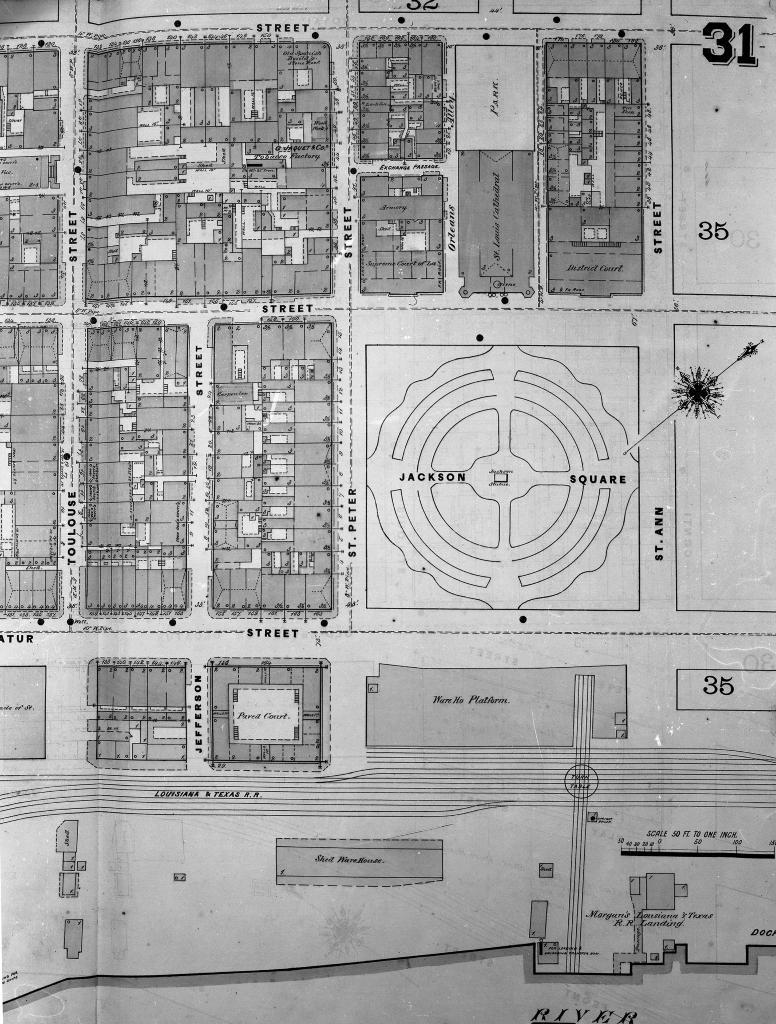
Sanborn Map 1876
Upper right-hand corner, above Jackson Square, one can see the original term "Orleans Alley" for Pirate's Alley.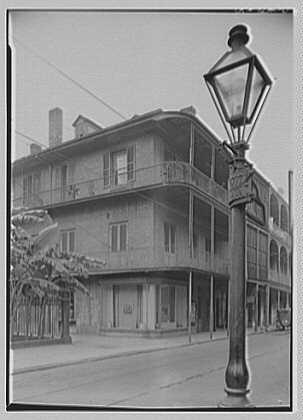
Gaslight, Corner of Pirate's Alley and Royal Street, circa 1920
Library of Congress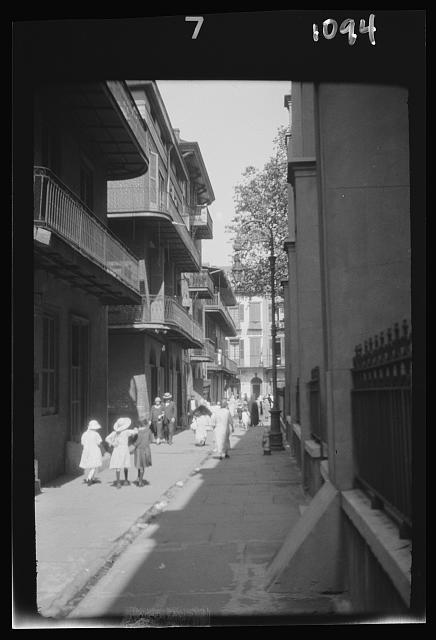
Pirate's Alley, circa 1920
St. Louis Cathedral, located on the right, casts a large shadow over the alley. The view is from Jackson Square towards Royal Street. Library of Congress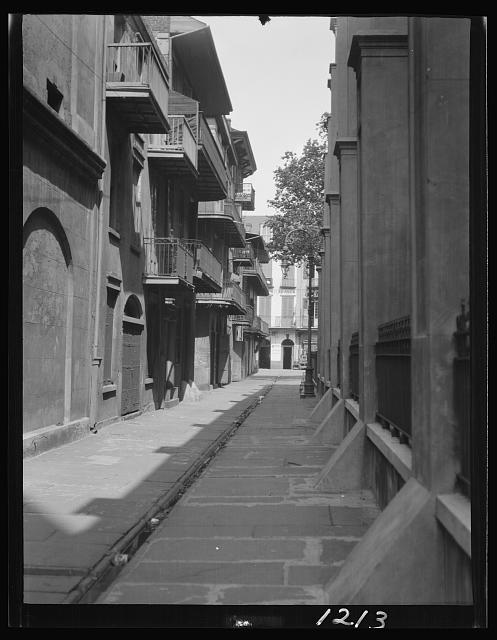
Pirate's Alley, same view, sans people, circa 1920
Library of Congress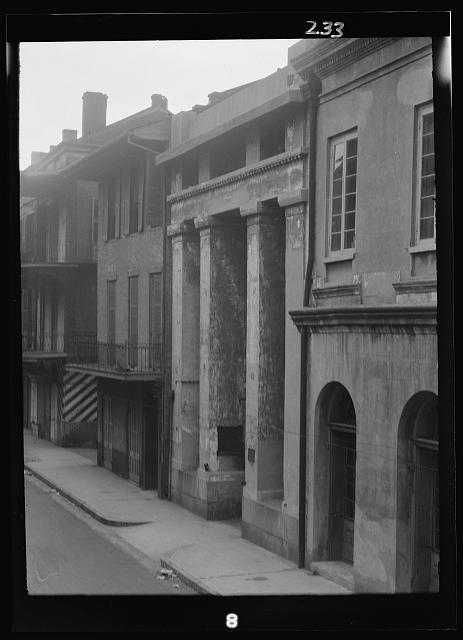
Arsenal Building, 1920
Viewed from St. Peters Street near Jackson Square, the Arsenal appears as the second building in the image. It's connected to the Cabildo, which is in the foreground. Library of Congress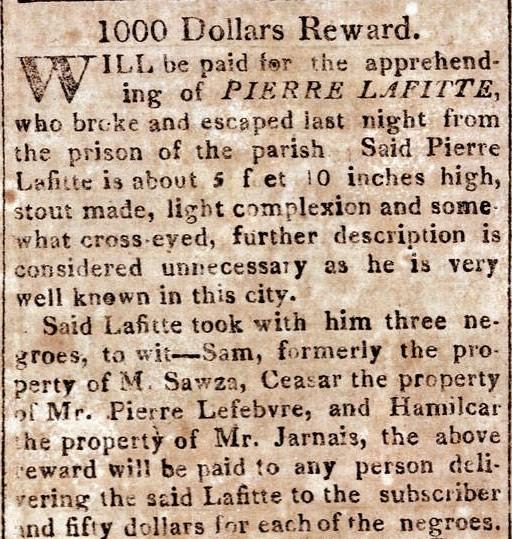
Le Courrier de la Louisiane, Sept. 7, 1814: $1000 reward for capture of Pirate Pierre Lafitte and three slaves
Courtesy of the Collections of the Louisiana State Museum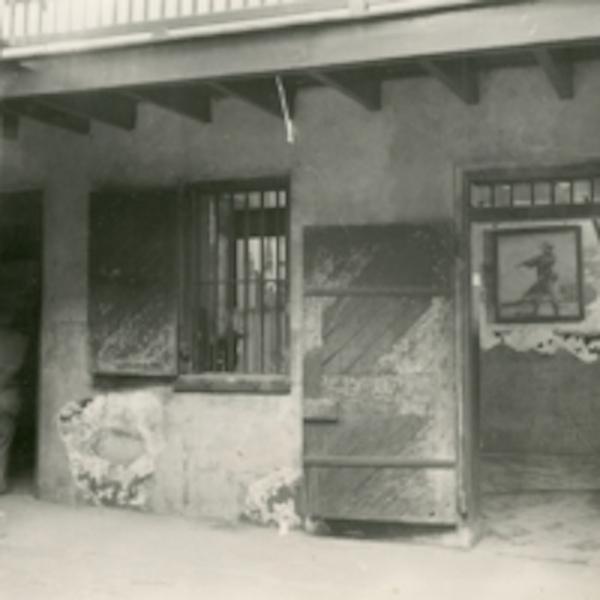
Lafitte Cell: in the Courtyard of the Cabildo, 1950
This prison cell is said to have held Jean Lafitte's brother Pierre after his arrest in the city in 1814. Courtesy of the Collections of the Louisiana State Museum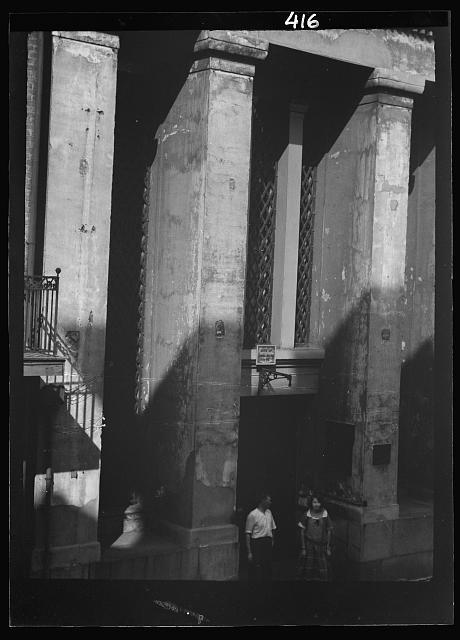
Arsenal Building, 1920
The Arsenal viewed from the front. Library of Congress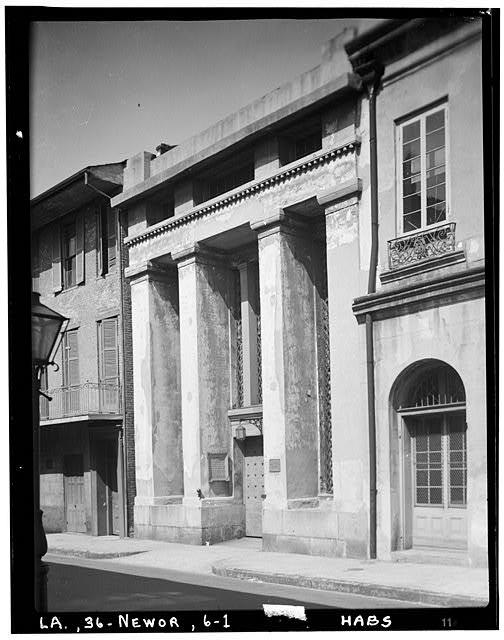
Arsenal, circa 1930s
The Historic American Buildings Survey image, taken in full sunlight, reveals more clearly the beautiful lines of the Arsenal Building. Library of Congress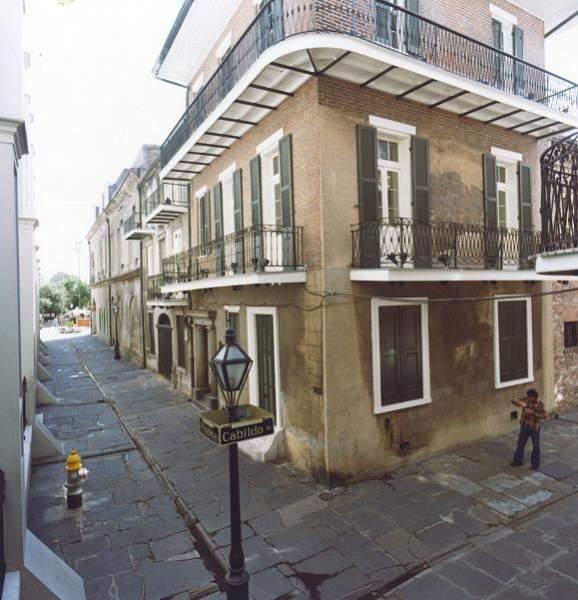
Creole House, 616 Pirate's Alley
Formerly the site of the guard house for the French and Spanish prison; building now owned by Louisiana State Museum. Courtesy of the Collections of the Louisiana State Museum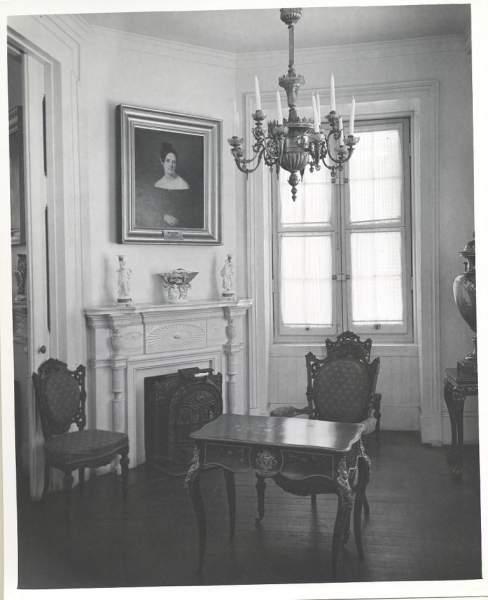
Creole House parlor
Courtesy of the Collections of the Louisiana State Museum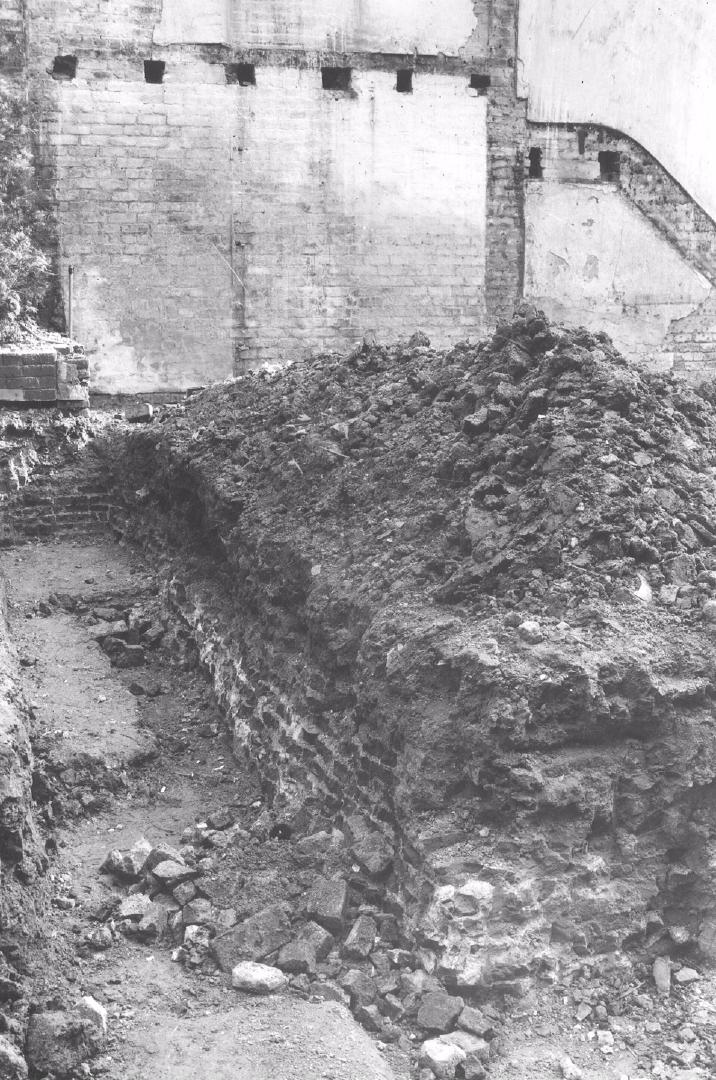
Restoration of Jackson House, 1939
Back of the image reads: "Brick foundation probably of old calabazo unearthed during the restoration of the so called Jackson House which when rebuilt will be used by the daughters of 1812 as their meeting place." Courtesy of the Collections of the Louisiana State Museum