“Confined in the Dungeons”: Orleans Parish Prison and Self-Emancipated People
Text
Located in Treme, the original Orleans Parish Prison stood where the Municipal Auditorium and Louis Armstrong Park stand today. From the 1830s to 1895, the prison housed individuals accused of crimes, including enslaved people who attempted to free themselves from bondage. [1]
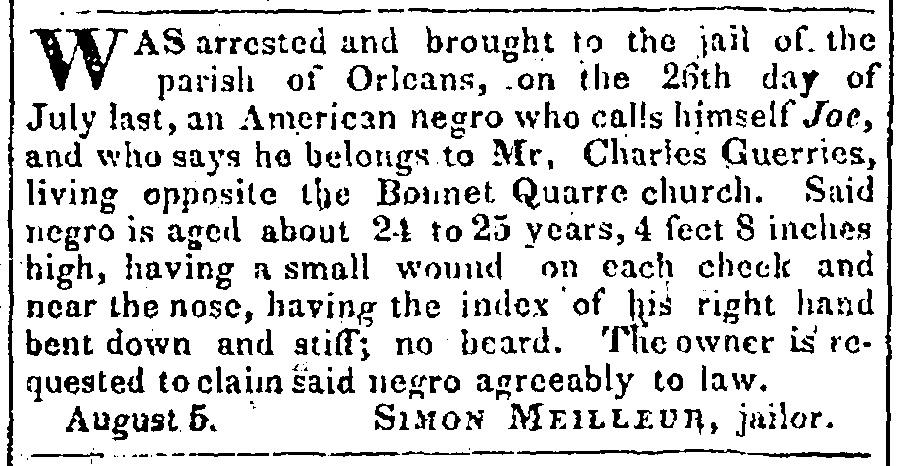
The nineteenth-century newspaper advertisements in the images below come from Freedom on the Move, a database of fugitive slave advertisements including those placed by jailors appealing to enslavers to claim ownership of runaways. If someone accused a Black person in New Orleans of running away from slavery, jailors imprisoned them until their enslaver paid the bond. Black people, enslaved or free, lived under the constant threat of incarceration. Laws required free people of color to carry court-issued documents proving free status, known as freedom papers. The failure to show freedom papers at the request of any white person could result in imprisonment or enslavement. [2]
In 1895, The Times-Picayune described Orleans Parish Prison as “the place where refractory slaves were sent to receive a dose of cat o’nine tails, or to be confined in the dungeons… in extreme cases the rebellious blacks were kept immured in the dark cells on a diet of bread and water until reduced to the proper degree of submission.” [3] Jailors subjected enslaved people to degrading and torturous prison conditions as a punishment for running away.
It is not known exactly how many enslaved people spent time locked away behind these now forsaken walls. Nonetheless, the Orleans Parish Prison jailors’ advertisements reveal a lot of information about self-emancipated people and their experiences of physical escape to resist punishment, violence, and the other brutal conditions of slavery. [4] Names, physical descriptions, skills, family connections, and many more personal and individual characteristics surface in the advertisements. We can also learn how long a self-emancipated person lived outside of the confinements of slavery. During this time, self-emancipated people fostered a greater sense of privacy, autonomy, and freedom.
Even though many self-emancipated people ended up in bondage once again in the Orleans Parish Prison, their efforts show how enslaved people resisted enslavement and created their own freedom.
Files
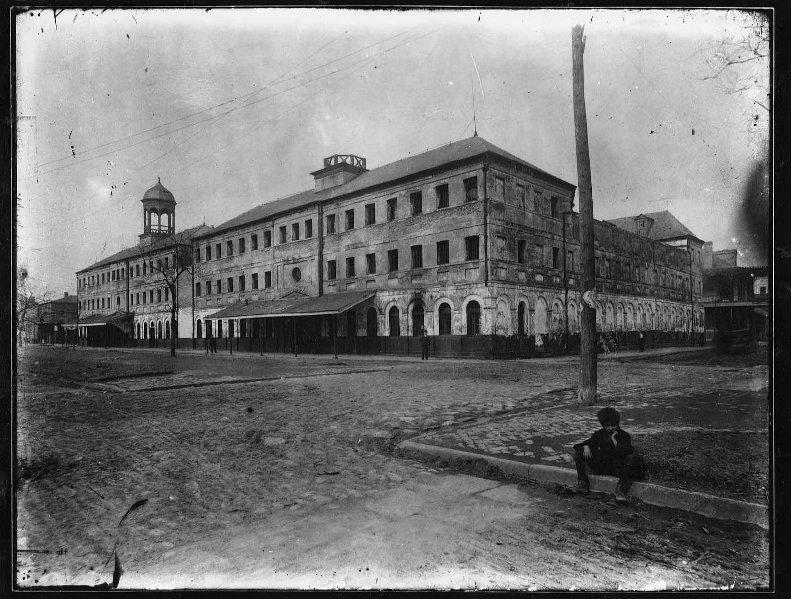
Old Parish Prison
This photograph (circa 1915-1920) shows a young boy sitting on a sidewalk overlooking the vacant remnants of the Orleans Parish Prison. | Source: Visual Materials Collection, Southeastern Architectural Archive, Special Collections Division, Tulane University Libraries | Date: between 1915 and 1920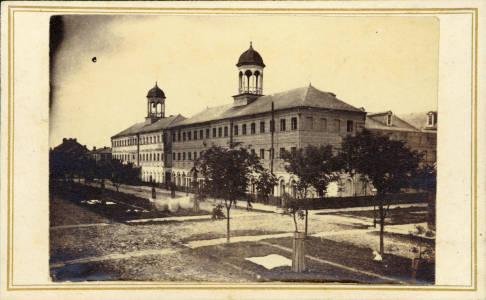
"Police Jail & Parish Prison"
This photograph, taken in 1864, shows the Orleans Parish Prison as it looked then. Notice that the lookout tower to the right is still intact unlike in the previous photograph. | Source: LOUISiana Digital Collection, Louisiana State Museum | Date: 1864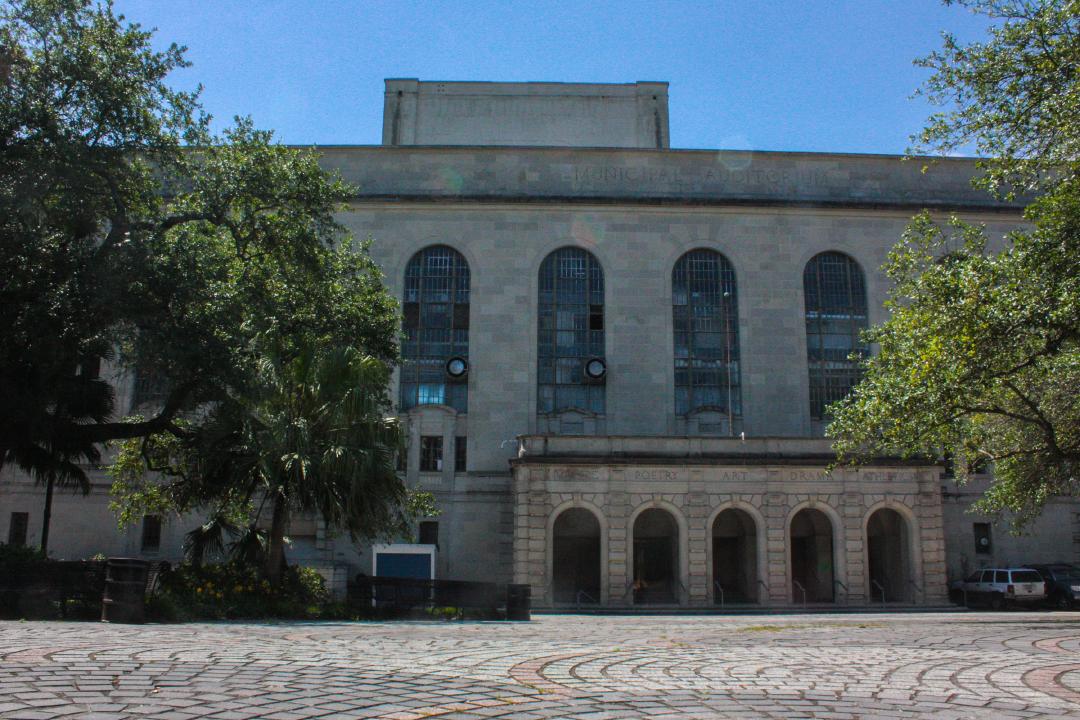
"Municipal Auditorium"
This photograph shows the Municipal Auditorium. This building rest on the site of where the old Orleans Parish Prison once stood. | Source: Rebecca Ann Photography | Date: 2015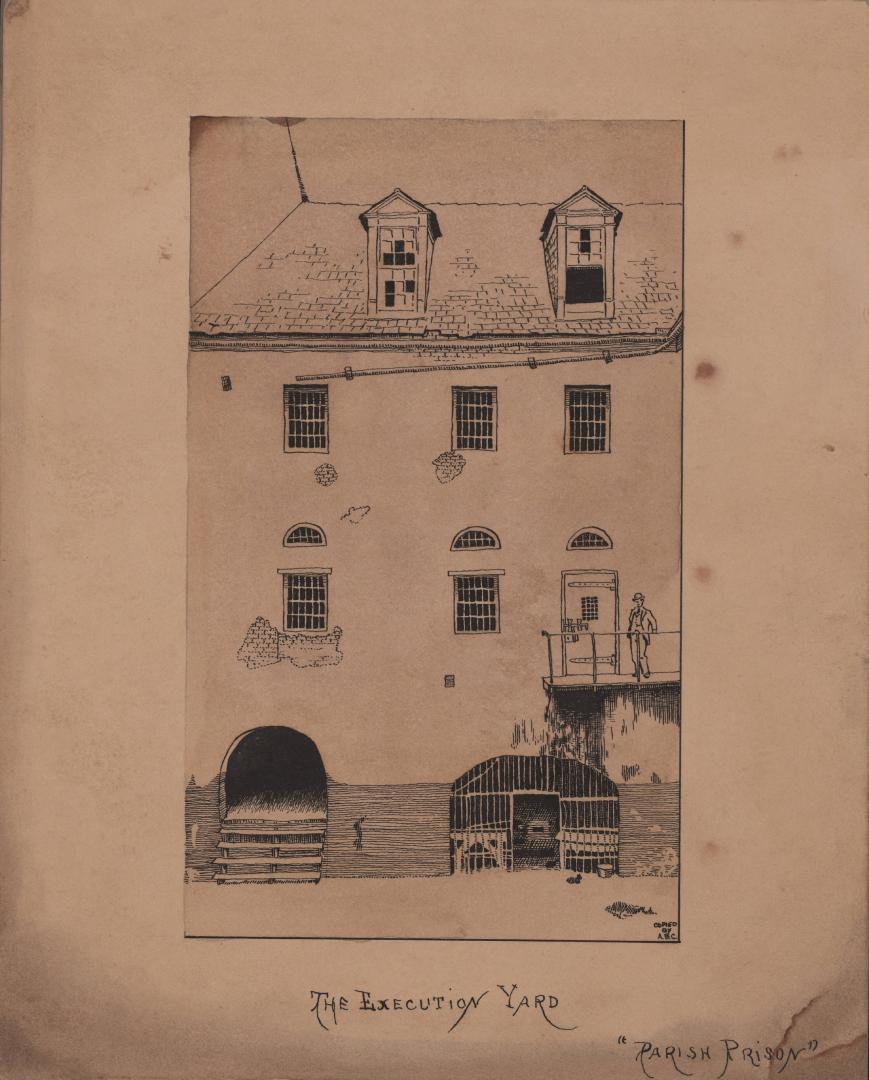
"The Execution Yard (Orleans Parish Prison)"
This illustration, from the Historic American Buildings Survey (between 1937 and 1940), shows the execution yard of the Orleans Parish Prison. | Source: LOUISiana Digital Collection, Louisiana State Museum | Date: Between 1937 and 1940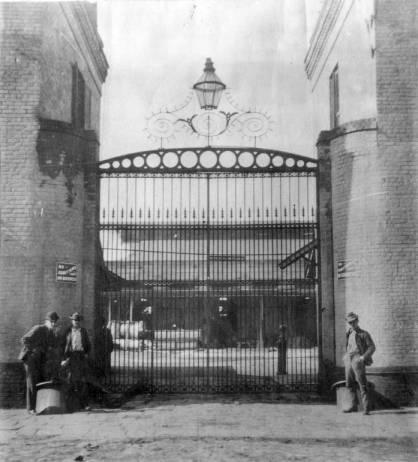
"Parish Prison"
This undated photograph shows three men standing in front of the large iron gates of a brick building tentatively identified as the Orleans Parish Prison. | Source: LOUISiana Digital Collection, Louisiana State Museum | Date: Unknown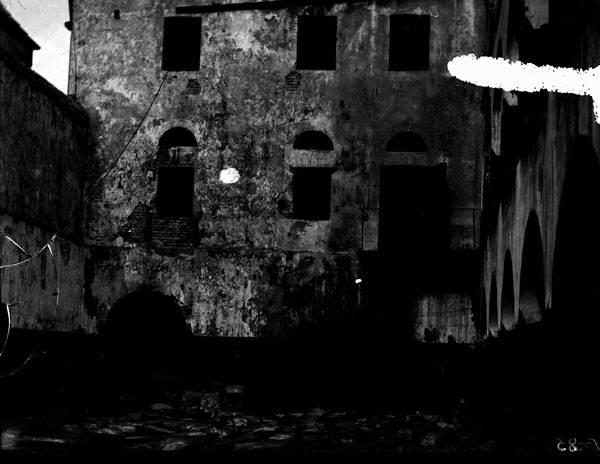
"Parish Prison"
This photograph, taken between 1894 and 1920, shows a view of the execution yard of the Orleans Parish Prison. | Source: LOUISiana Digital Collection, Louisiana State Museum | Date: between 1894 and 1920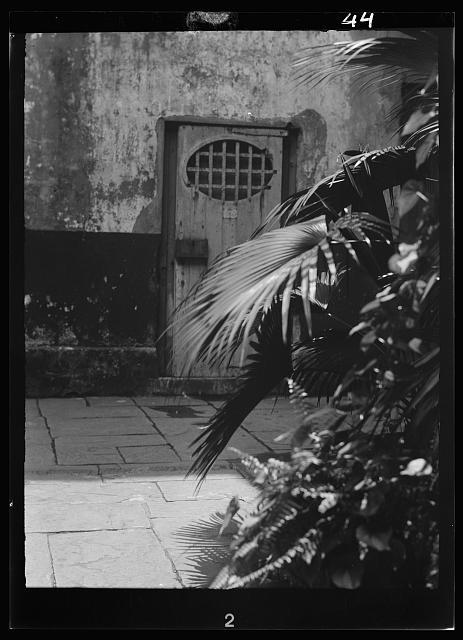
"Slave prison (Calabozo), New Orleans"
This photograph, taken between 1920 and 1924, shows a barred door outside in the courtyard of the Orleans Parish Prison. | Source: Library of Congress | Date: between 1920 and 1924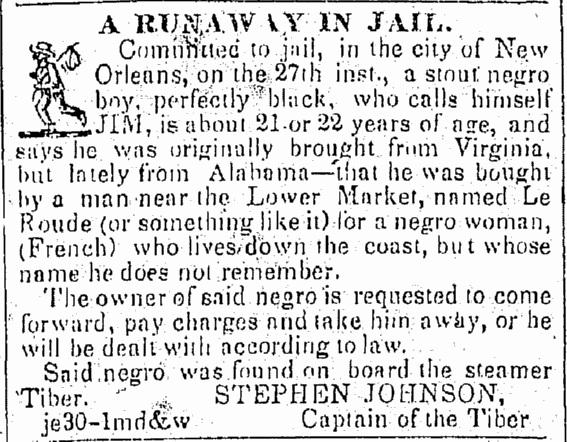
"Runaway Ad for Jim"
This runaway slave ad, posted in 1830's by a local jailor, states that the said slave was harbored in the Orleans Parish jail. Ads such as this one were common in New Orleans and would inform the slaves' owners to pick them up from the prison. | Source: Freedom on the Move Project, Midlo Center, University of New Orleans | Date: 1830's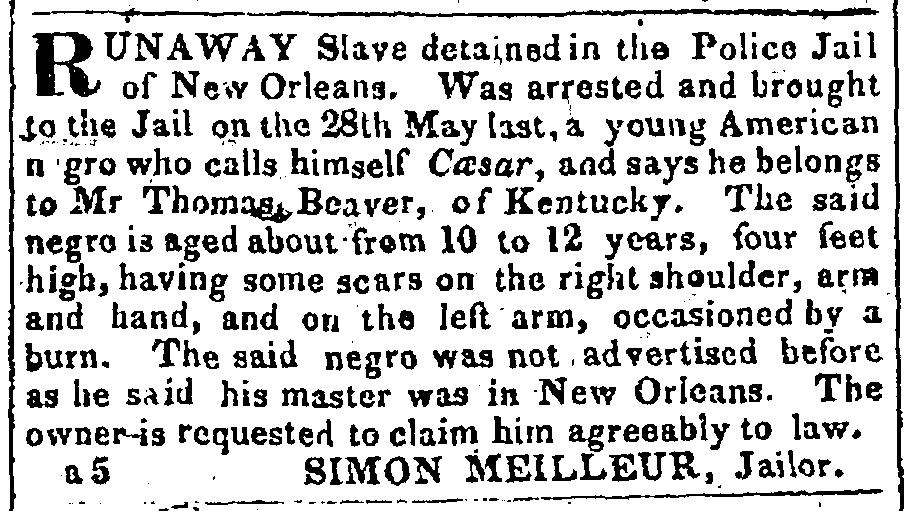
"Runaway Ad for Casar"
This runaway slave ad, posted in 1830's by a local jailor, states that the said slave was harbored in the Orleans Parish jail. Ads such as this one were common in New Orleans and would inform the slaves' owners to pick them up from the prison. | Source: Freedom on the Move Project, Midlo Center, University of New Orleans | Date: 1830's