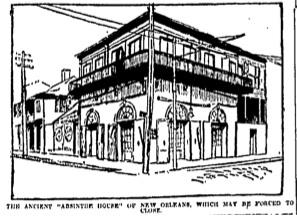
Old Absinthe House and the Battle of New Orleans
Text
The Old Absinthe House, a stucco building at the corner of Bourbon and Bienville Streets, is one of the oldest structures in New Orleans, dating to approximately 1806.
In the nineteenth century, the Old Absinthe House became famous for its cocktail, the absinthe frappe, also known as the “green monster,” a mixture of absinthe and sugar water. On October 1, 1912, the U.S. Government banned the importation and sale of absinthe, alleging it was “dangerous to health.” Interstate shipment of the beverage was prohibited since it contained “wormwood, or absinthe (artemisia absinthium), an added deleterious ingredient.” Prohibition of absinthe was predicted to be the Old Absinthe House’s “death knell.”
Legend suggests that Major General Andrew Jackson conferred with privateer Jean Lafitte in a secret chamber on the second floor of the Old Absinthe House prior to the Battle of New Orleans. In 1950, the Old Absinthe House installed a commemorative plaque, stating: “Old Absinthe House. Legend has it that Andrew Jackson and Gov. W.C.C. Claiborne met here with Jean Lafitte on the secret floor to plan for the defense of New Orleans. The Battle of New Orleans was fought Jan. 8, 1815.”
The owner of Maspero’s Exchange at 440 Chartres Street filed suit against the Old Absinthe House over the right to post the historical plaque on the building. Both establishments claimed to be the location where Andrew Jackson had met with Jean Lafitte. In February 1951, a Judge in Civil District Court, Parish of Orleans, State of Louisiana, dismissed Maspero’s lawsuit, ruling: “Legend means nothing more than hearsay or a story handed down from the past.” Both Maspero’s and Old Absinthe House still lay claim to the legend.
Files
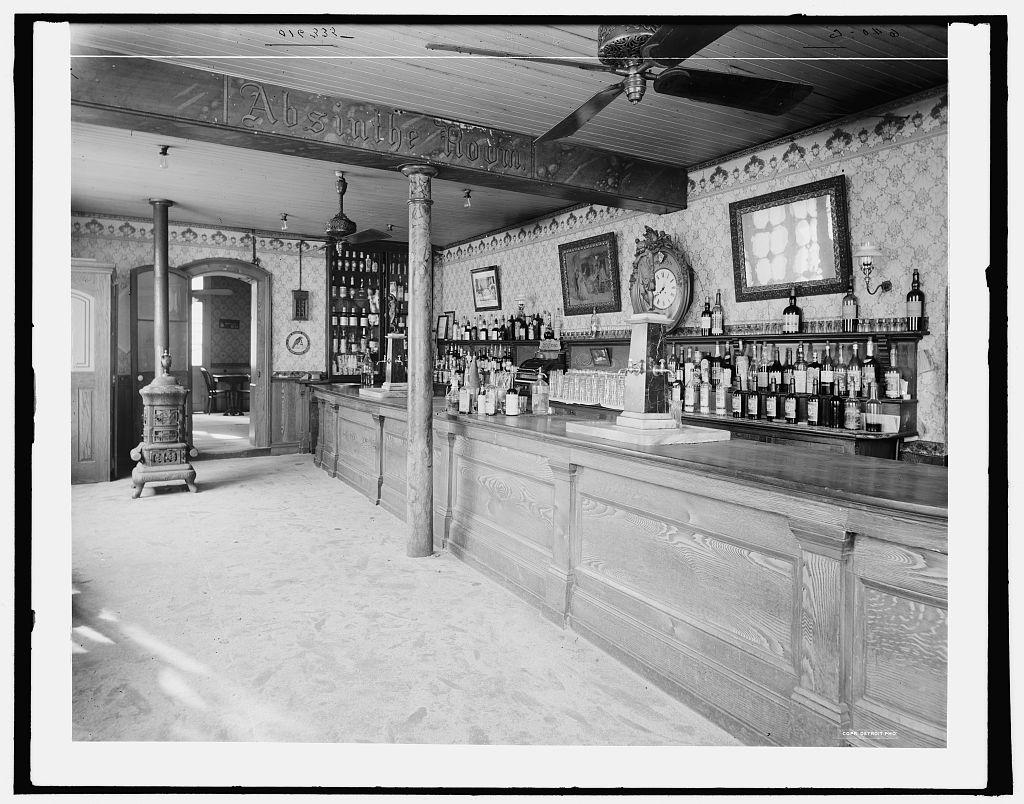
Absinthe House bar, 1900
Few images survive depicting the interior of the famous bar during this period. Library of Congress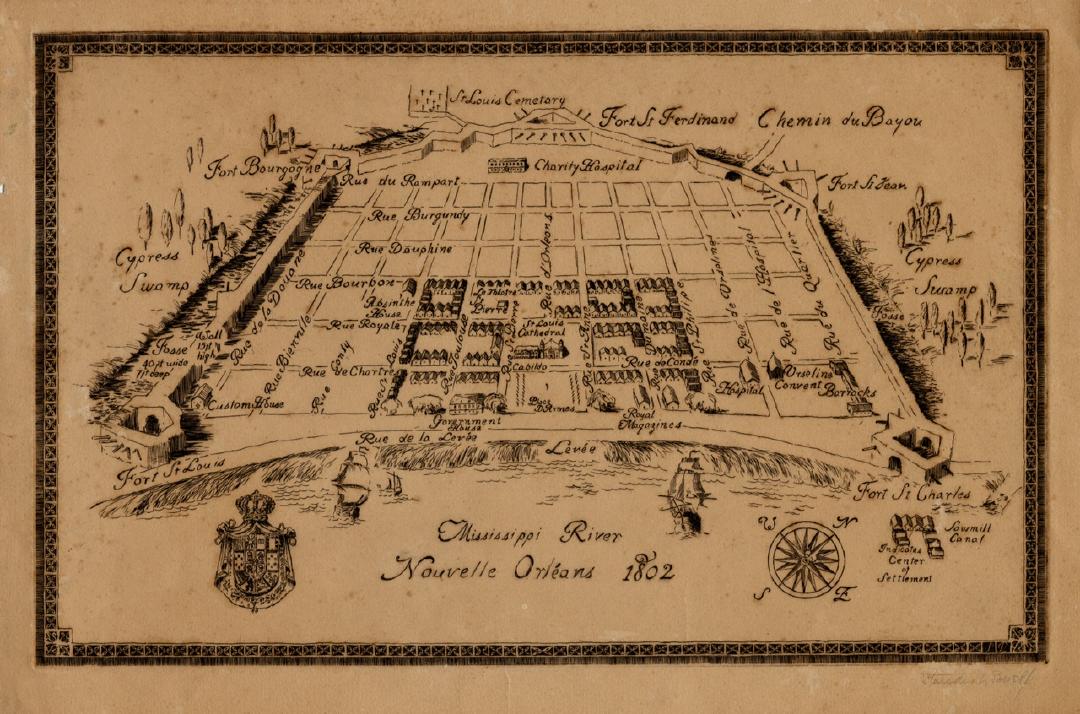
Nouvelle Orleans depicted as it may have appeared in 1802
Created by Mrs. Alice Standish Buell. The Absinthe House is visible between Bourbon and Royal Street, in the top left corner of the French Quarter. Courtesy of the Louisiana State Museum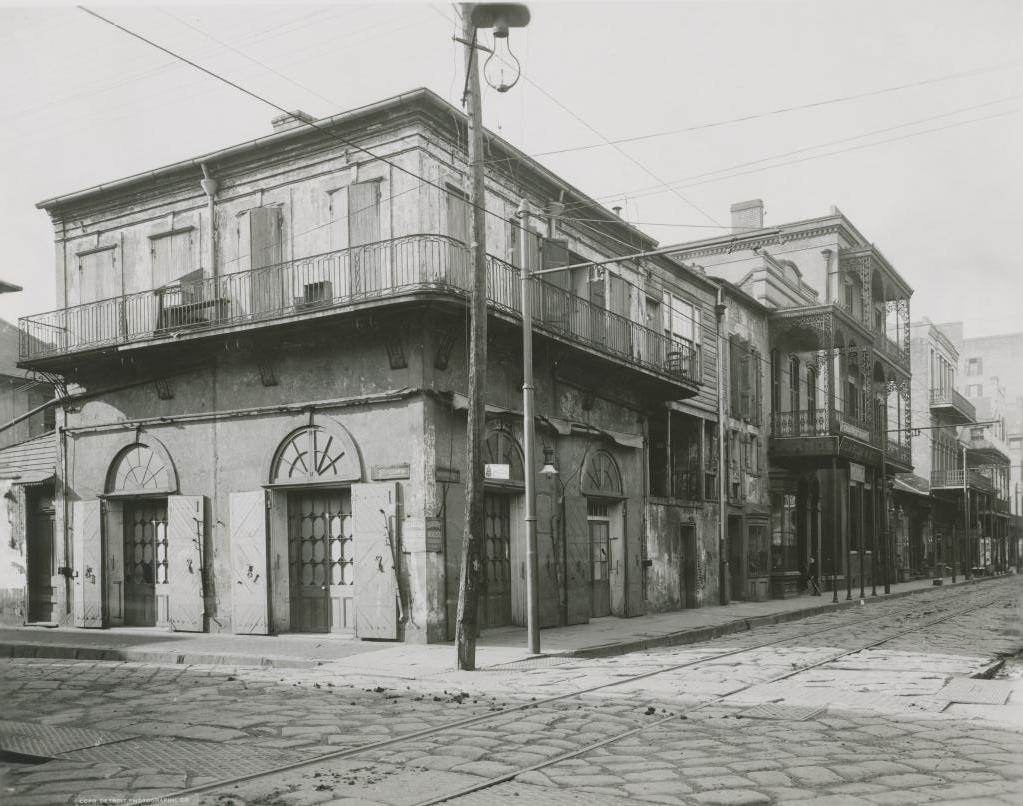
The Old Absinthe House, 1900
Absinthe drinks, including absinthe frappe, were served until the United States government banned absinthe on October 1, 1912. Detroit Publishing Company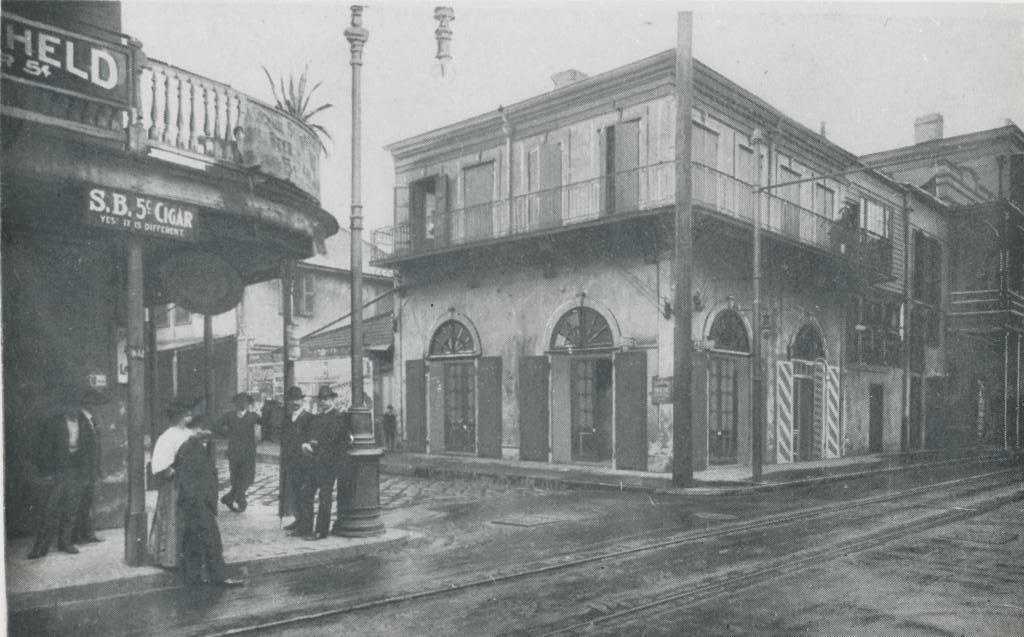
The Old Absinthe House, 1909
Electric streetcars passed in front of the Old Absinthe House in the early 1900s, as the tracks and electric overhead in the foreground indicate. General Andrew Jackson and Jean Lafitte allegedly met in a room on the second floor prior to the Battle of New Orleans. Illinois Central Railroad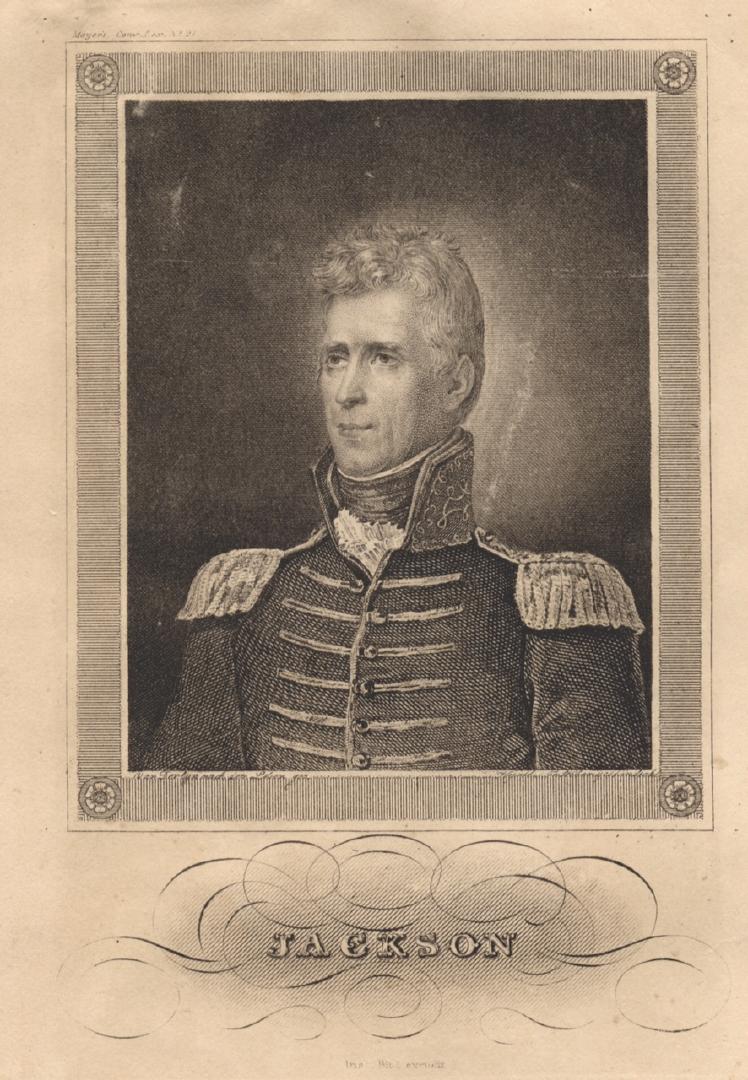
Andrew Jackson
by John Vanderlyn, engraving, c. 1820. General Jackson is said to have met with Jean Lafitte in secret at the Old Absinthe House. Courtesy of the Collections of the Louisiana State Museum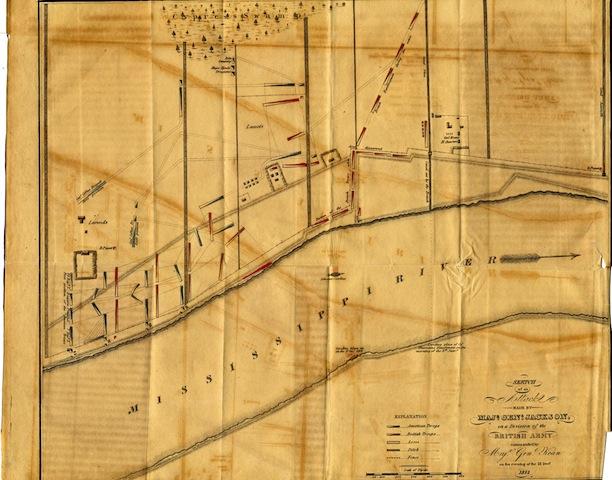
Battle Map, adaptation of A. Lacarrière Latour's original, 1814.
Sketch of an Attack made by Major Gen. Jackson, on a Division of the British Army commanded by Major General Kean on the evening of the 23 December 1814; unidentified maker. Courtesy of the Collections of the Louisiana State Museum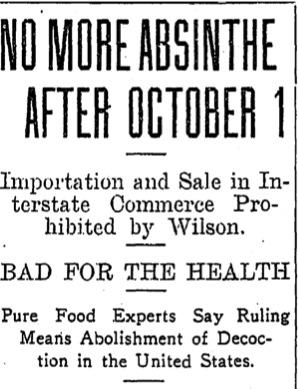
Newspaper Article:
Absinthe was declared to be “bad for health,” according to this 1912 newspaper article. Courtesy of the Times-Picayune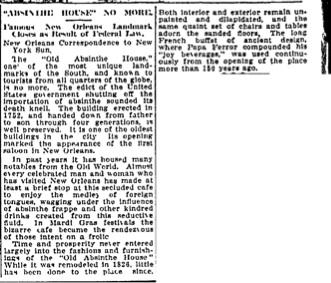
Old Absinthe House closes for a period
According to this 1913 newspaper article, the Old Absinthe House allegedly closed for a period after absinthe was banned in 1912. Courtesy of The Times-Picayune
Lawsuit between Maspero's and the Old Absinthe House
1951 newspaper article announces the dismissal of the lawsuit between Maspero's and the Old Absinthe House regarding the location of a meeting between General Andrew Jackson and Jean Lafitte. The Judge ruled, "Legend means nothing more than hearsay or a story handed down from the past." Courtesy of the Times-Picayune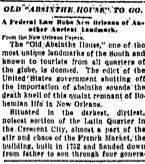
"Old 'Absinthe House' To Go" (1 of 3)
1912 passage of a federal law that prohibited the trade of absinthe is depicted as the "death knell" of the New Orleans institution.
"Old 'Absinthe House' To Go" (2 of 3)