Madame John's Legacy: 2013 Excavation by Ryan Gray and UNO
Text
During the Summer of 2013, a team from Tulane University and its Masters in Preservation Studies program undertook a long-term study of conservation issues at Madame John’s Legacy. This project was financed in part with federal funds from the National Park Service, Department of the Interior, through the Louisiana State Department of Culture, Recreation and Tourism, Office of Cultural Development, Division of Historic Preservation. Portions of the brick walls have undergone substantial deterioration, and the goal of the conservation effort was to determine the source of moisture and salts adversely affecting the brickwork on site. A number of techniques were utilized to this end, including infrared imagery, test coring of the walls, and the installation of sensors to monitor moisture at select locations in the walls. The results of the study can be found at madamejohnslegacy.wordpress.com.
The Tulane study integrated archaeological data as well. Ryan Gray of the UNO Department of Anthropology was engaged to assess the conditions of the foundations and to clear a location for installation of moisture monitors. A team of volunteers and students from UNO conducted excavations along three interior walls inside Madame John’s. Several features were documented, including remains of a French Colonial structure and a dense lens of debris from the 1788 fire, probably representing the ‘in situ’ collapse of the pre-1788 structure’s lower level.
Each of the projects added valuable context to the site’s history, and the level from the 1788 fire presents a vivid picture of the material culture of the DeLanzos household. Perhaps even more significantly, the spatial dimension of the data adds to the site’s story as well. DeLanzos and his wife were involved in numerous transactions involving the sale and purchase of enslaved individuals. By comparing the distribution of artifacts in the interior of the house at the time of the 1788 fire with those from the courtyard, more likely associated with the detached kitchen and presumed living area of those enslaved at Madame John’s (explored in Dawdy’s research), one may get a sense of the ways in which these social worlds were interlinked. The material remains and surviving documents serve as a reminder that slavery was not solely rural and plantation based; the labor and lives of the enslaved made the growth of the city possible.
Files
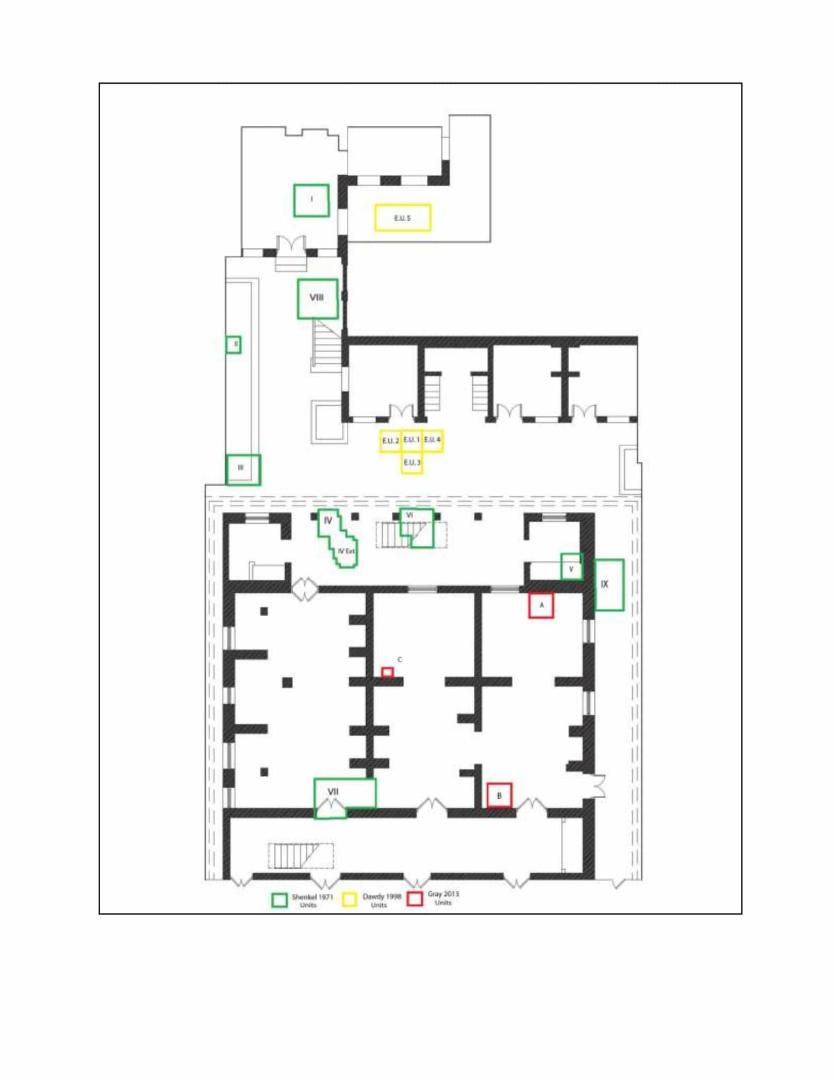
Plan showing locations of previous excavations at Madame John’s relative to floorplan, with Gray’s excavations in red.
Source: Reproduced from Gray 2015. Courtesy of UNO Department of Anthropology and Sociology.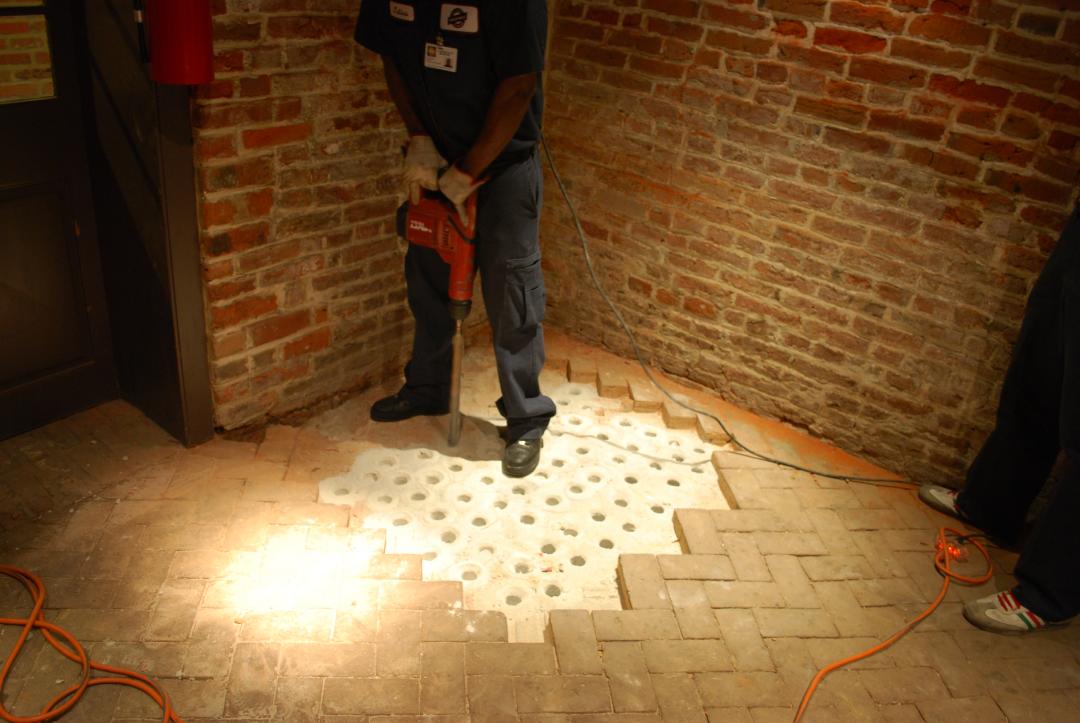
Preparing for excavations.
The brick floor in the interior of Madame John’s had to be removed in the excavation areas, but this proved to be a considerable challenge. A 1990s renovation in which the floor had been replaced had involved the installation of a plastic moisture barrier, sand layer, and reinforced concrete subfloor, abutting the interior walls and preventing natural dissipation of moisture in the interior. | Source: Image courtesy of UNO Department of Anthropology and Sociology.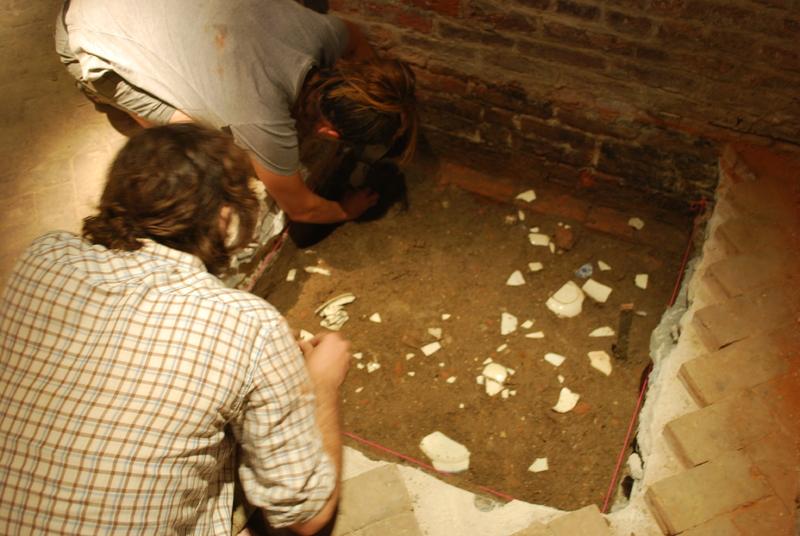
UNO volunteers excavating in interior of Madame John’s Legacy.
Source: Image courtesy of UNO Department of Anthropology and Sociology.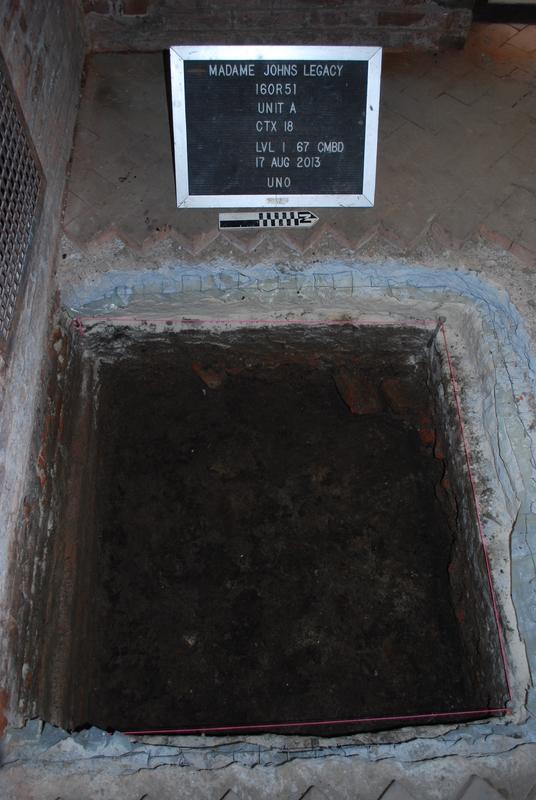
Ash deposit associated with 1788 fire, exposed during 2013 excavations.
Source: Image courtesy of UNO Department of Anthropology and Sociology.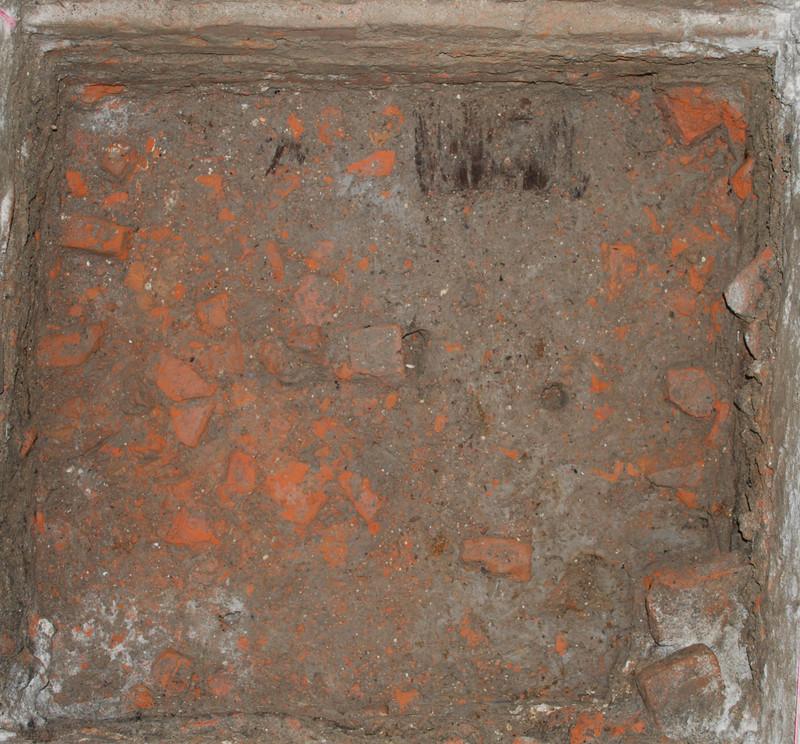
Remains of floor and wall trench associated with early French Colonial post on sill structure extending beneath interior wall of Madame John’s Legacy.
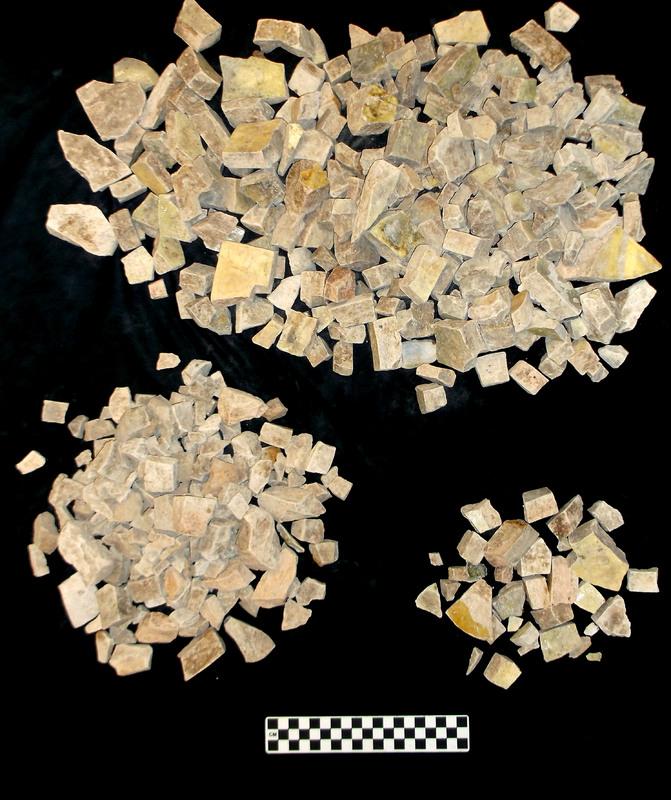
Fragments of burned and shattered storage jar from 1788 fire debris level, interior of Madame John’s.
The numerous fragments from French Provence/Biot-type storage jars and German Rhenish style stoneware bellarmine jugs in the 1788 fire level potentially represent vessels that were stored in the ground floor of the structure at the time of the fire, and it is likely that further excavations in the interior of this segment of the building could allow for a fine-grained reconstruction of how the rooms within the house were used at the time. | Source: Image courtesy of UNO Department of Anthropology and Sociology.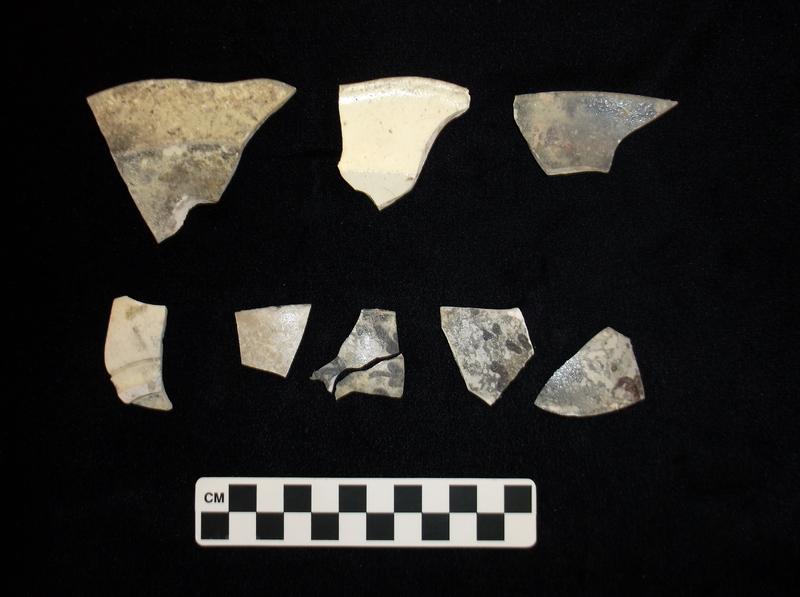
Fragments of burned creamware tablewares from 1788 fire debris level, interior of Madame John’s.
The majority of the tablewares used in the DeLanzos household were English wares, and the family apparently liked wares with overglaze red and green floral decorations, here mainly visible as ‘ghosts’ burned into the surface of the glaze by the heat of the fire. It is interesting to note that, even for a Spanish official of the period, such English table settings were apparently preferred to wares produced in Spain or its colonial era holdings. | Source: Image courtesy of UNO Department of Anthropology and Sociology.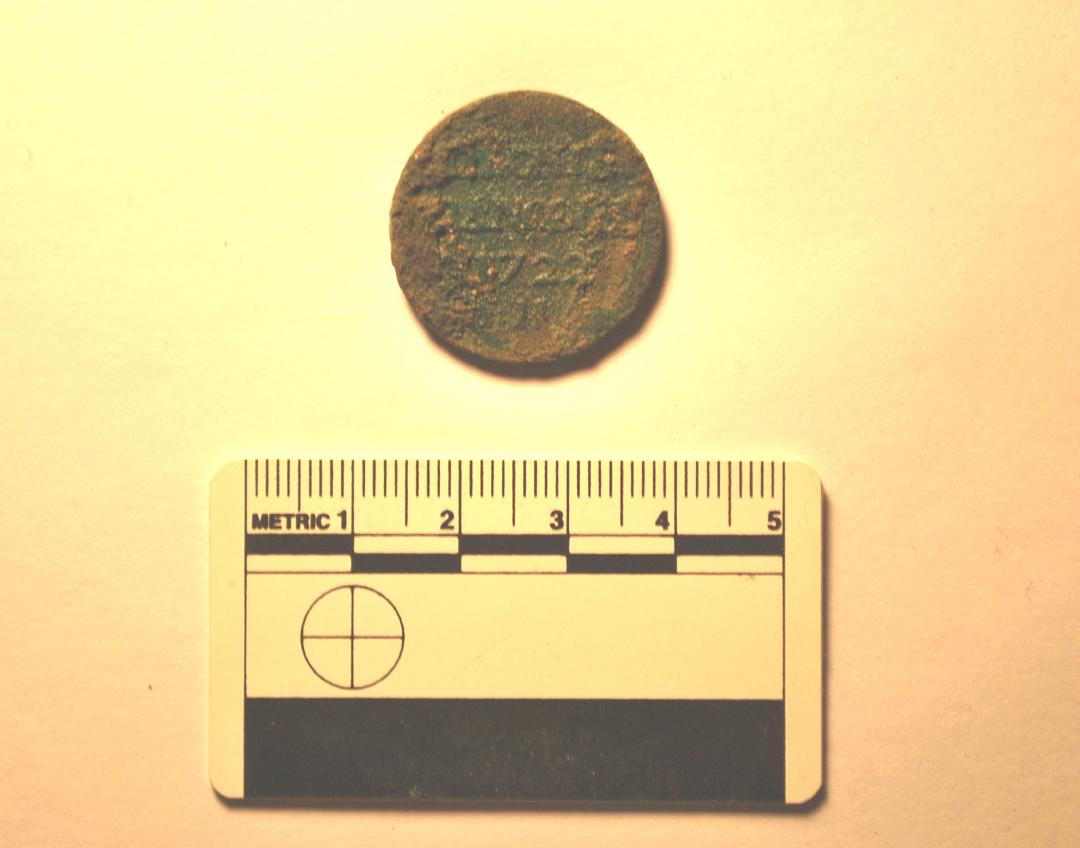
French copper coin recovered from Spanish Colonial levels at Madame John’s.
This coin recovered from a level dated to around 1800-1810 was actually minted in 1722, but it would have crossed the Atlantic at least three times before ending up buried in the ground at Madame John’s! Valued at 9 deniers when first minted, the French coin was intended to help remedy a shortage of hard currency in New France, but the coin was underweight, and, when some 534,000 of the coins were shipped to Canada in 1722, they languished in a warehouse. Canadian colonists, already mistrustful of the coins because they were refused at face value in the British colonies, saw their suspicions confirmed in 1724, when the crown devalued them to 6 deniers. Even though penalties were imposed to force acceptance of the coins, the Canadians shipped almost 526,000 of them back to France in 1726, so only 8,000 had entered circulation while in Canada. The saga of the 9 denier coin did not end with the shipment back to France. Louisiana had struggled with issues surrounding its unsupported paper currency from its inception. After the end of the so-called Mississippi bubble and the reversion of the Louisiana colony to the French crown in 1731, the remaining 9 denier coins were shipped to Louisiana, where they circulated at anywhere from 3 to 12 deniers in value, depending on the actual metal weight. Anecdotal evidence suggests that they gained new life in Louisiana, remaining in circulation for much longer than might be typical for a low denomination copper coinage. | Source: Image courtesy of UNO Department of Anthropology and Sociology.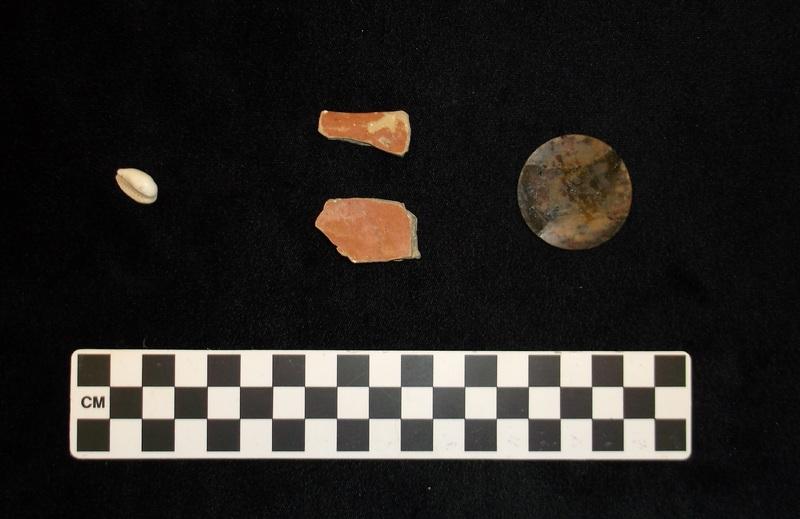
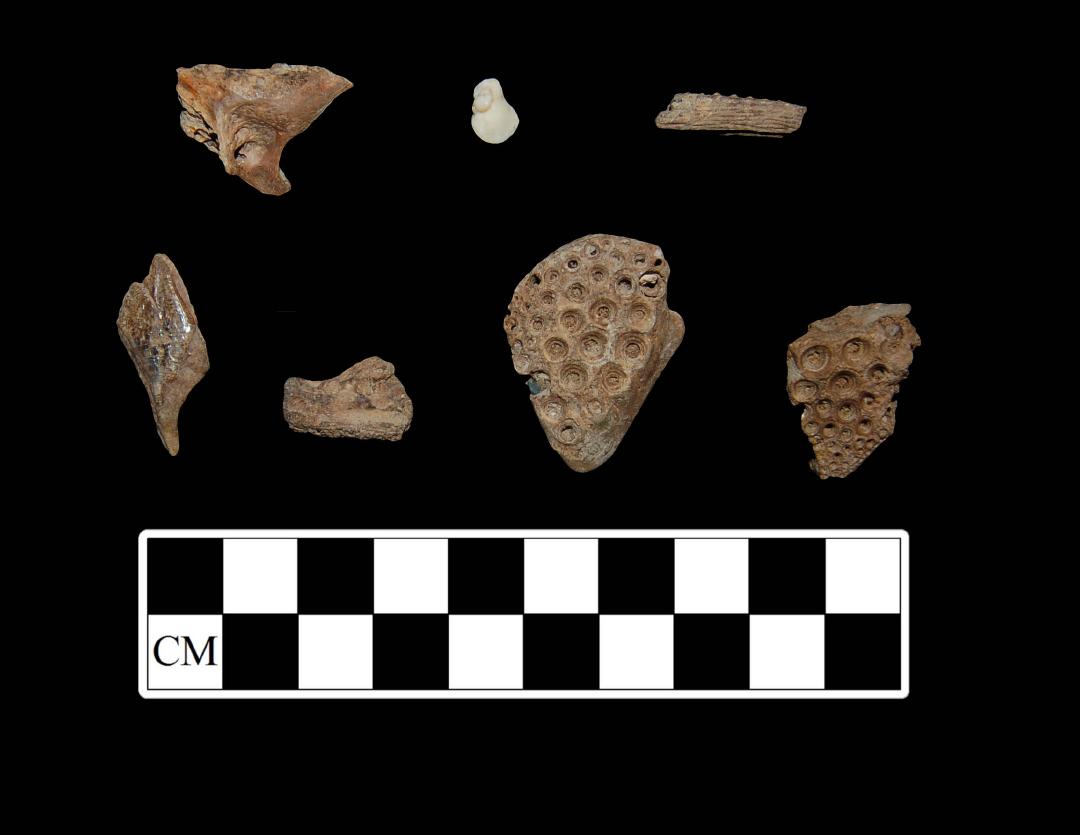
Artifacts from French Colonial levels at Madame John’s Legacy. Left to right: cowrie shell; red-slipped hand-built shell-tempered pottery; tortoise shell gaming piece.
Cowrie shells of this species, the so-called money cowrie, native to the Maldives in the Indian Ocean, have been used as currency in various forms for over a thousand years. Cowries became widespread in West Africa after the Portuguese established trade with India in 1515. They fluctuated in the extent that they were used by the various peoples of the West and West Central African coast, but they were particularly associated with the Kingdoms of Benin and the Kongo, and with peoples along the Niger River. Cowries were valued not just as currency in the Atlantic trade but were also used as ornaments and as magical items, moving into and out of multiple spheres of exchange over long use lives. In the U.S., while cowries were used in the Native American trade in the Colonial era, they are most often associated with archaeological contexts involving enslaved Africans, where they have been cited as potentially emblematic of African connections. The red-filmed hand-built pottery is likely of indigenous origin and has been reported at a number of sites in southeast Louisiana. Given such wares’ particular prevalence in places in which Native Americans interacted socially with colonizers, some of the best explanations for their distribution focus on the role of the objects themselves in such negotiations. In New Orleans, these red-slipped wares seem to be associated with the period after the 1729 Natchez revolt, after which diplomacy with Native groups became an increasing concern for Colonial authorities. Artifacts like this point to the intimate contacts in the Pascal-Marin household between colonizers, enslaved Africans, and indigenous populations, whose knowledge and labor sustained the growing settlement. | Source: Image courtesy of UNO Department of Anthropology and Sociology.