Popp's Bandstand
Text
John F. Popp was a park visitor with a penchant for classic style architecture and music. He was determined to construct a bandstand for the park that was harmonious with the other newly constructed buildings.
On July 4, 1917, Popp's Bandstand was dedicated during a wartime festival. When musicians were not playing, families would gather to watch the "vitascope," one of the first types of motion picture projectors.
Files
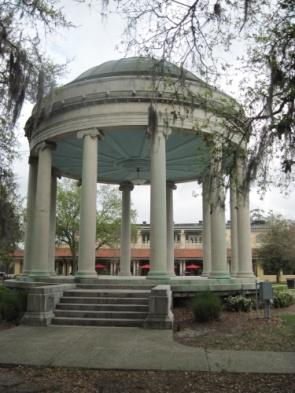
Bienville Park or City Park?
In 1926, the bandstand hosted a debate over a name change to the park. Some citizens and organizations rallied behind the name Bienville Park. The police were called because the crowd was large and volatile. In the end, the park's board felt that the majority of the public preferred the name City Park so the name persevered. Image courtesy of Kimberly Jochum.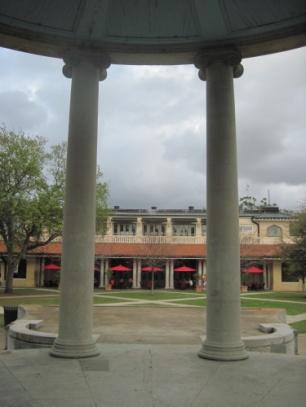
Architect Emile Weil
The previous music platform had been rebuilt several times; Architect Emile Weil designed the new one. Image courtesy of Kimberly Jochum.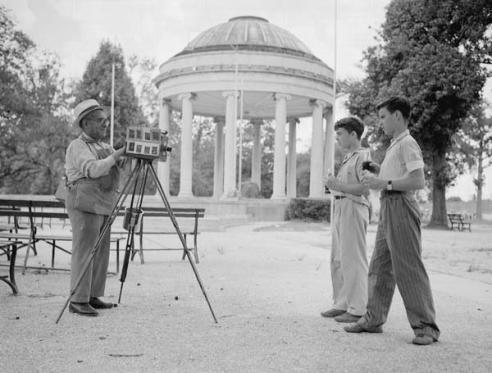
Formal photographs in the park.
A local photographer takes pictures of two boys in the park during the 1930's. The park and its various structures remain popular for amateur and professional photographers. Image courtesy of Wikimedia Commons.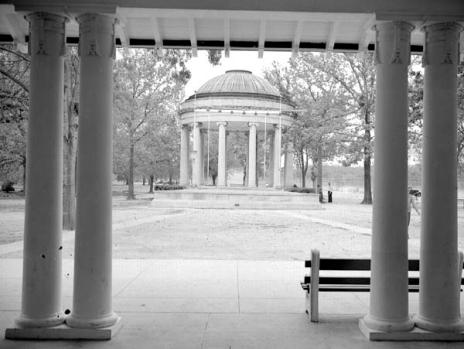
Sitting in the shade, under the Casino Building, looking towards the park's bandstand, donated by John Popp.
Image courtesy of New Orleans Wikimedia Commons.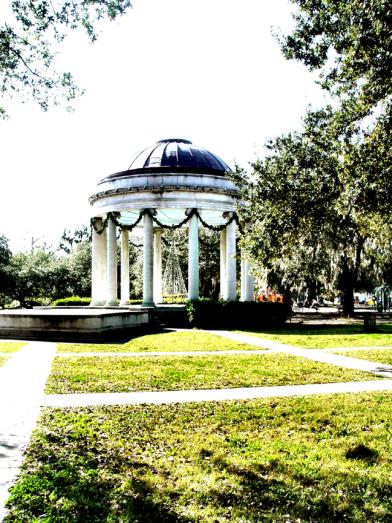
Popp's Fountains decorated for the Holiday season.
Image courtesy of John DeMajo www.museumofyesterday.org .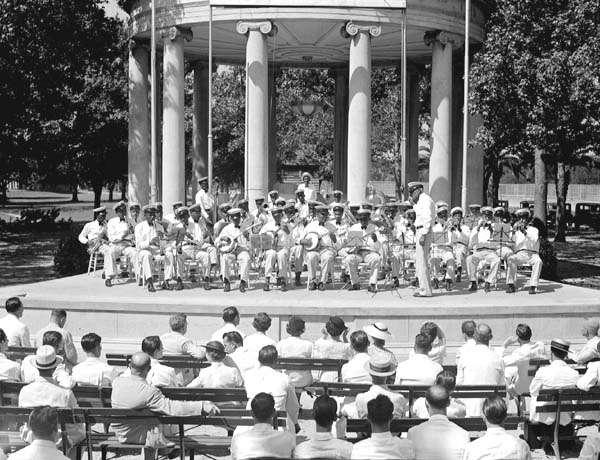
WPA Concert
WPA concert in 1935, part of the Federal Music Project, at Popp's Bandstand. Image courtesy of Wikimedia Commons.Map
Show Comments