<?xml version="1.0" encoding="UTF-8"?>
<feed xmlns="http://www.w3.org/2005/Atom">
  <title type="text">New Orleans Historical</title>
  <updated>2026-08-24T00:40:33+00:00</updated>
  <generator uri="http://framework.zend.com" version="1.12.20">Zend_Feed_Writer</generator>
  <link rel="alternate" type="text/html" href="https://mail.neworleanshistorical.org/"/>
  <link rel="self" type="application/atom+xml" href="https://mail.neworleanshistorical.org/items/browse?output=rss2"/>
  <id>https://mail.neworleanshistorical.org/</id>
  <author>
    <name>New Orleans Historical</name>
    <uri>https://mail.neworleanshistorical.org</uri>
  </author>
  <link rel="hub" href="https://pubsubhubbub.appspot.com/"/>
  <entry>
    <title type="html"><![CDATA[Zulu Social Aid and Pleasure Club]]></title>
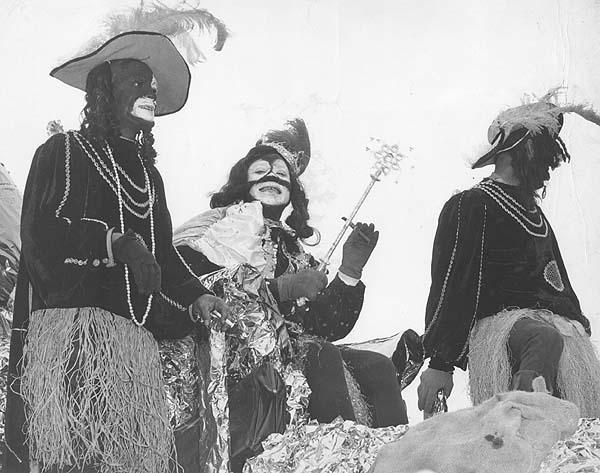
    <summary type="html"><![CDATA[<p><strong><em>One of the most widely sought after Mardi Gras throws is the famed Zulu Coconut. Given out annually on their Mardi Gras parade, the hand-decorated Zulu coconut, created by members of Zulu Social Aid and Pleasure Club, has become a staple to New Orleanians and visitors alike. </em></strong></p><img src="https://mail.neworleanshistorical.org/files/fullsize/88b8fbe3c9f19668e5d46cf35229859e.jpg" alt="Louis Armstrong reigning as King Zulu, 1949. " /><br/><p>First appearing in 1909 as the Zulus, the group first had its origins in a club comprised of a group of Black men called “The Tramps.” Social groups such as the Tramps worked as communal bonds and financial insurance for members of the Black community. In 1915, Zulu paraded with their first floats, a spring wagon decorated with palmetto leaves and moss, carrying men dressed in grass skirts and black face paint. Instead of the traditional "throws" of glass beads, they handed out coconuts purchased from local markets. In 1916, in the notarial office of Gabriel Fernandez, the Zulu Social Aid and Pleasure Club incorporated.</p><p>In the early years of Zulu, the king would arrive by barge on the New Basin Canal, where he disembarked to throngs of people and lead the parade through of back streets of the Lower Garden District, Back o Town, and Treme neighborhoods.  The reign of Louis Armstrong as king in 1949 gave the club international notoriety and fame, and was the first time a celebrity monarch represented a New Orleans Carnival club.  </p><p>In 1969, the city of New Orleans invited Zulu to join the official route and celebration on St. Charles Avenue and Canal Street preceding Rex, where they are a center attraction Mardi Gras morning. But Zulu breaks the standard Uptown route to still pass down Basin Street and Orleans Ave through the historically Black Treme neighborhood. During the 1970s and 1980s membership expanded and helped grow the size of the parade and number of floats.</p><p>Throughout the years, Zulu Social Aid and Pleasure Club has become a stable to New Orleans communities, providing Christmas baskets to needy families, contributing scholarship funds, and adopting schools. And of course, every year providing coconuts to visitors and New Orleanians of each generation. Today, Zulu Social Aid and Pleasure Club's headquarters is located at 732 North Broad Street.</p><p><em><strong><a href="https://mail.neworleanshistorical.org/items/show/1469">For more (including 3 images) view the original article</a></strong></em></p>]]></summary>
    <published>2019-04-01T20:59:57+00:00</published>
    <updated>2026-07-15T16:20:26+00:00</updated>
    <link rel="alternate" type="text/html" href="https://mail.neworleanshistorical.org/items/show/1469"/>
    <id>https://mail.neworleanshistorical.org/items/show/1469</id>
    <author>
      <name>August Darbonne</name>
    </author>
  </entry>
  <entry>
    <title type="html"><![CDATA[Zora Neale Hurston: Dust Tracks on the Road in Algiers, LA.]]></title>
    <summary type="html"><![CDATA[<img src="https://mail.neworleanshistorical.org/files/fullsize/17a332563d4d1749a06a4c8f4eea1f1e.jpg" alt="&quot;Portrait of Zora Neale Hurston.&quot;" /><br/><p>On August 6, 1928, Zora Neale Hurston wrote a letter from 7 Bellville Court, Algiers, Louisiana, to Langston Hughes in which she writes "I have landed in the kingdom of Marie Laveau and expect to wear her crown someday” (Kaplan, 124). In Algiers, Hurston rented “a 3 room house in a splendid neighborhood from the point of view of collecting material” (Kaplan, 124). At this time, according to Mona Lisa Saloy, folklorist at Dillard University, “Algiers was a bedroom community largely populated by the waiters, waitresses, educators, and especially musicians, merchant seaman, sailors, and railroad folk who could not afford to live in downtown New Orleans.” </p><p>Most of the details about Hurston’s stay in Belleville Court, then the heart of the black community, comes from an interview in 2009 with Mrs. Naomi [Willis] Grooms, who was 12 years old when Hurston came to live in Algiers (Saloy). According to Mrs. Grooms, who was 92 at the time of the interview, “the house Hurston rented, and indeed all of Belleville Court, was owned by a "well-established Black land owner, a Mr. Joubert from the area’” (Grooms quoted in Saloy). </p><p>Although Hurston was friendly with all the children, she chose young Naomi to be her helper, sending the girl on errands to the Black-owned corner store on Belleville and Lemarc Streets, called Joe Lewis, “for foodstuffs (lots of bread, beans and rice).” Among her other tasks were “scrubbing the wide plank floors at Zora's house... and keeping the entire house clean.” Naomi’s was “to take no money from the nice educated lady who needed to research and write most of all” (Grooms quoted in Saloy). Hurston was welcomed to the neighborhood, and Grooms remembers that she “wrote furiously . . . pounding relentlessly on that typewriter; she was a sight working at home and writing day and night” (quoted in Saloy). Even so, she was very friendly and spent time chatting on porches, interacting with neighbors and children, “sharing an iced tea on occasion, passing the time while watching the night sky some evenings” (Grooms quoted in Saloy). </p><p>In the late 1920s, Zora Neale Hurston went back and forth across the Mississippi from New Orleans to Algiers. She also traveled to Alabama, Florida, and Mississippi, gathering the material, the stories that would become her book, <i>Mules and Men</i> (1935), which captures the authentic voices and documents the lives, culture, and experiences of the people she encountered (Saloy). The magnitude of this effort cannot be minimized; it is a testimony to Hurston’s commitment and ethnographic skills and a gift to be appreciated by the generations.</p><p><em><strong><a href="https://mail.neworleanshistorical.org/items/show/1455">For more (including 10 images) view the original article</a></strong></em></p>]]></summary>
    <published>2019-02-20T22:31:51+00:00</published>
    <updated>2026-07-15T16:20:27+00:00</updated>
    <link rel="alternate" type="text/html" href="https://mail.neworleanshistorical.org/items/show/1455"/>
    <id>https://mail.neworleanshistorical.org/items/show/1455</id>
    <author>
      <name>Ann Cobb&amp;#32;&amp;amp;&amp;#32;Kathryn O&amp;#039;Dwyer, editor</name>
    </author>
  </entry>
  <entry>
    <title type="html"><![CDATA[Youth Empowerment Project]]></title>
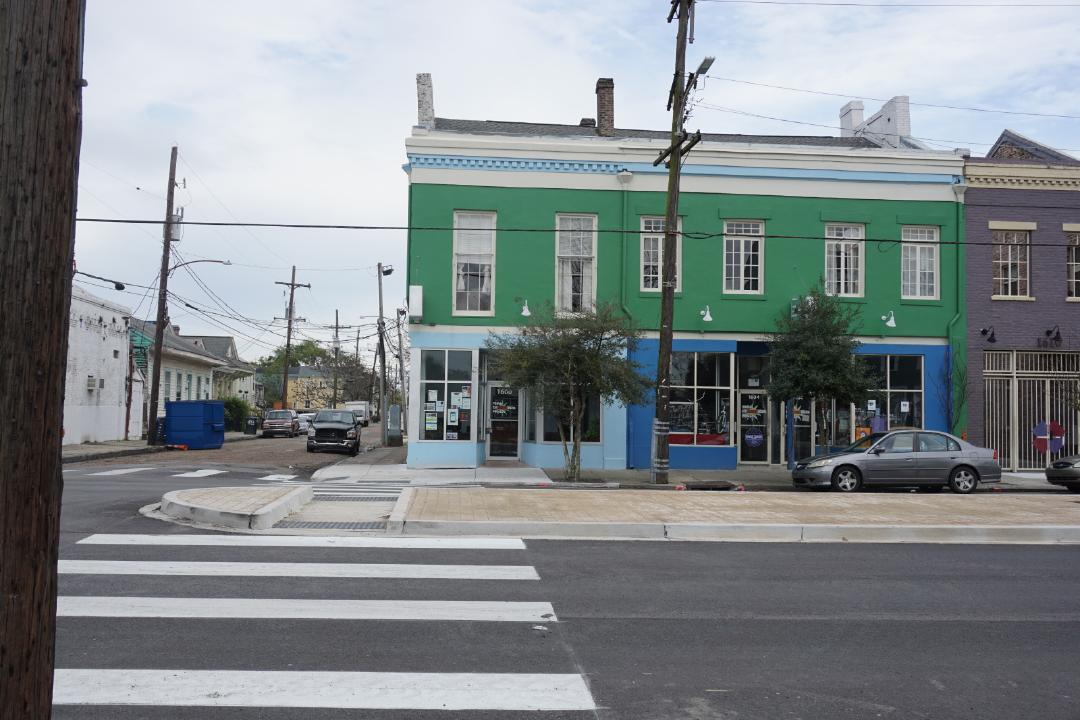
    <summary type="html"><![CDATA[<p><strong><em>YEP envisions a community where all people have access to the opportunities, skills, resources and relationships they need to actualize their potential.</em></strong></p><img src="https://mail.neworleanshistorical.org/files/fullsize/6cb0f2b4d741ba0c1fddd2fdefbbac75.jpg" alt="Youth Empowerment Project" /><br/><p>The Youth Empowerment Project (YEP), a community-based non-profit is clear about their vision: “Yep envisions a community where all people have access to the opportunities, skills, resources, and relationships they need to actualize their potential.”  The organization supports “opportunity youth” in New Orleans – young people who are not connected to school or employment.  Starting out with 25 youths YEP has become (after 12 years) the largest and most comprehensive youth-focused organization in the city.  Currently YEP operates 11 programs focusing on community-based skills such as education, mentoring, and employment readiness.  In addition to intensive preparation for the high school equivalency/GED, YEP also provides job training for 16-24-year old’s by providing work at either YEP Thrift Works, YEP Design Works, or YEP Bike Works – businesses that they operate on the boulevard.</p><p><em><strong><a href="https://mail.neworleanshistorical.org/items/show/1413">For more (including 3 images) view the original article</a></strong></em></p>]]></summary>
    <published>2018-04-09T06:37:32+00:00</published>
    <updated>2026-07-15T16:20:27+00:00</updated>
    <link rel="alternate" type="text/html" href="https://mail.neworleanshistorical.org/items/show/1413"/>
    <id>https://mail.neworleanshistorical.org/items/show/1413</id>
    <author>
      <name>Jennie Garcia, Adriana Bennett,&amp;#32;&amp;amp;&amp;#32;Dr. Michelle Thompson</name>
    </author>
  </entry>
  <entry>
    <title type="html"><![CDATA[Young Men’s Hebrew Association&#039;s Athenaeum ]]></title>
    <summary type="html"><![CDATA[<img src="https://mail.neworleanshistorical.org/files/fullsize/b84f249fca73a1ba97f1d6859056acd7.jpg" alt="&quot;The Athenaeum.&quot;" /><br/><p>“One of the handsomest structures in the city will be the new building of the Young Men’s Hebrew Association,” [1] said an article from the New Orleans States when the Athenaeum opened in 1896. With various Jewish families from the New Orleans area wanting to join together to form an association, the Athenaeum was born after a November 22, 1891 meeting at the Grunewald Hotel where the organization, Young Men’s Hebrew Association (YMHA), was proposed. [2] This became a site for social gathering for New Orleans socialites, various musical acts from around the world, and, of course, the betterment of Jewish men until the building burnt down first on January 17, 1905, and then for a second time in 1937. [3]</p><p>The YMHA was originally instituted to advance the mental, moral, social, and physical improvement of young Jewish men. The first was established in New York on March 22, 1874 at the home of Dr. Simeon Leo with the board of directors including Isaac S. Isaacs, Adolph L. Sanger, Oscar S. Straus, Lewis May, and others. After, similar organizations sprouted throughout the United States in such cities as Philadelphia, St. Louis, San Francisco, Louisville, Washington D.C., and New Orleans. [4]</p><p>With the Jewish population growing and expanding in New Orleans, many young Jewish families began wanting to form an organization, named a Young Men’s Hebrew Association. After several attempts, a meeting at the Grunewald Hotel proposed the organization to 300 gentlemen gathered there and thus started the New Orleans branch of the YMHA, the Athenaeum. [2]</p><p>The Athenaeum was built at 1205 St. Charles Avenue, on the corner of St. Charles and Clio St. The first floor included a parlor, a library, a chess and checkers room which adjoined to the library, a large billiard room with three billiards and three pool tables, a committee room, a smoking/lounging room, and a lodging room with a capacity for 150 people. The second floor opened up with a spacious foyer which adjoined to a ballroom. The plans for the building were by Mr. D. Einseidel, and the building company was T. Carey and Co. [5]</p><p>For many years the meeting of the courts of Rex and Pickwick Club at midnight on Mardi Gras day, the official end of Carnival, took place in the Athenaeum’s ballroom. [2] However, the krewe of Pickwick Club did not allow Jews in its membership, showing that even though the Athenaeum was socially prominent, there were still signs of segregation. </p><p><em><strong><a href="https://mail.neworleanshistorical.org/items/show/1084">For more (including 2 images) view the original article</a></strong></em></p>]]></summary>
    <published>2016-03-06T20:27:42+00:00</published>
    <updated>2026-07-15T16:20:30+00:00</updated>
    <link rel="alternate" type="text/html" href="https://mail.neworleanshistorical.org/items/show/1084"/>
    <id>https://mail.neworleanshistorical.org/items/show/1084</id>
    <author>
      <name>Timothy Rodriguez&amp;#32;&amp;amp;&amp;#32;Kathryn O&amp;#039;Dwyer, Editor</name>
    </author>
  </entry>
  <entry>
    <title type="html"><![CDATA[Yellow Fever Hospital, Excavations at Thurgood Marshall School]]></title>
    <summary type="html"><![CDATA[<img src="https://mail.neworleanshistorical.org/files/fullsize/c1057b7035fb7d78a93186bf48ec134d.jpg" alt="Thurgood Marshall School" /><br/><p>In 2017, Federal Emergency Management Agency (FEMA) funded the repairs to Thurgood Marshall School caused by the Hurricane Katrina levee breaches. The site had been a school for over one hundred years. By 1884 it had been repurposed from a historical mansion that had been constructed on the site as part of a residential estate in the early 1800s. The remains of both the mansion and the schoolhouse were located within the modern footprint of the damaged school. In this case, the process of repairing the school could have destroyed any underground historical remains so, in compliance with federal law, FEMA conducted archaeological excavations at the property prior to repair. The excavations uncovered two privies – outhouses - one that’s contents dated to when the historical schoolhouse had been used as a quarantine hospital during the Yellow Fever Epidemic (1897), and the other to when Hannah Ford, the school caretaker, lived and worked at the school property (1890s-1913). Excavation of the privy used during the Yellow Fever Epidemic exposed debris relating to turn-of-the-century medical equipment including chamber pots, invalid feeders, nursing bottles, and glass disinfectant containers. Much of the material in the privy was burned, displaying clues of how medical professionals were attempting to sanitize items that had come into contact with the sick. The second privy contents related to the life of Hannah Ford. As a widow, she became the school caretaker and lived on the grounds with her school-aged children. The contents of her privy included porcelain figurines, a cake plate, and a highly decorated Imari/Arita porcelain vase. The contents, albeit scarce, suggested that Hannah Ford enjoyed baking, entertaining, and decorating her home with beautiful things while she took care of the school children.</p><p><i>Adapted from an exhibit originally published on GNOARCH.com.</i></p><p><em><strong><a href="https://mail.neworleanshistorical.org/items/show/1732">For more (including 5 images) view the original article</a></strong></em></p>]]></summary>
    <published>2025-11-25T21:51:43+00:00</published>
    <updated>2026-07-15T16:20:24+00:00</updated>
    <link rel="alternate" type="text/html" href="https://mail.neworleanshistorical.org/items/show/1732"/>
    <id>https://mail.neworleanshistorical.org/items/show/1732</id>
    <author>
      <name>Staff at Federal Emergency Management Agency (FEMA)&amp;#32;&amp;amp;&amp;#32;UNO &amp;#039;s Archaeological and Curation Facility (UNO ARC)</name>
    </author>
  </entry>
  <entry>
    <title type="html"><![CDATA[WWII Conductorettes and Motorettes]]></title>
    <summary type="html"><![CDATA[<img src="https://mail.neworleanshistorical.org/files/fullsize/04eaea834a93177490e8f8b259c941aa.jpg" alt="Mary Fischer, 1943, First Woman Transit Operator" /><br/><p>During the Second World War, a labor shortage developed as men began to serve in the armed forces. Women were increasingly encouraged to take over responsibilities on the home front. Women took jobs of all types: skilled and unskilled, manual and office. While men served overseas, women assumed support roles in the military and worked in various defense plants. Though not as celebrated, women also worked in one of the city's most visible industries. </p><p>From 1943 through early 1946, more than two hundred females from rural areas throughout the South as well as New Orleans neighborhoods worked on the streetcars. Positions with New Orleans Public Service, Inc. (NOPSI) paid significantly higher wages than the drug store and retail clerk positions typically afforded women. NOPSI trained the women alongside male recruits, and each woman was responsible for the same duties: operating the cars and performing impromptu maintenance; collecting transit fares; keeping the cars on schedule; and enforcing racial segregation within the transit vehicles. In Southern cities, African-American males were never considered for employment as transit operators.</p><p>Monitoring and adjusting the race screen proved to be the most difficult part of their job. Despite protests from the NAACP, federal officials refused to suspend the practice of racial segregation in the city. In many instances, white as well as black soldiers and sailors who had trained at bases throughout the South chafed at the Jim Crow requirement as they passed through the city on their way overseas. Soldiers often threw the "race screen" signs out of the windows. Military Police and New Orleans Police officers provided support for the women operators and arrested soldiers who protested the practice.</p><p>Once the men returned, the women were required to leave their positions. Most were informed when they showed up to work their shifts. Many were upset to see newly returned military veterans -- not just former transit operators -- assuming these jobs. The last women were released by February 1946. Some women transitioned into other jobs while many returned to household work. Transit company documents suggest that women earned the same rate of pay as men, but many of the women report being paid a bit less than the men, presumably to placate their male co-workers. Fifty years later during a 1993 reunion of the operators, a woman named Anna was celebrated because she had refused to "give up her badge" until threatened with arrest. Women would not serve as streetcar operators again until the mid-1970s, following advances made by the Civil Rights and Women's Rights movements.</p><p>Images are from the private collections of the late Mary Fischer, New Orleans' first woman transit operator, and the late Albert McCloskey Browne, former streetcar conductor, bus operator and accident claims investigator. </p><p><em><strong><a href="https://mail.neworleanshistorical.org/items/show/492">For more (including 6 images&#32;&amp;&#32;5 videos) view the original article</a></strong></em></p>]]></summary>
    <published>2012-12-07T00:35:34+00:00</published>
    <updated>2026-07-15T16:20:34+00:00</updated>
    <link rel="alternate" type="text/html" href="https://mail.neworleanshistorical.org/items/show/492"/>
    <id>https://mail.neworleanshistorical.org/items/show/492</id>
    <author>
      <name>Michael Mizell-Nelson</name>
    </author>
  </entry>
  <entry>
    <title type="html"><![CDATA[William Sydney Porter: Becoming O. Henry]]></title>
    <summary type="html"><![CDATA[<img src="https://mail.neworleanshistorical.org/files/fullsize/91a431cca416c7906723a1ba1f86dbdd.jpg" alt="O. Henry " /><br/><p>In February 1896, William Sydney Porter was indicted for embezzlement of funds from the First National Bank in Austin, Texas, where he had been recently employed. In July of that year, instead of returning to Austin to face trial, Porter hopped on a train for New Orleans leaving behind his wife, Athol, and their young daughter, Margaret. It is speculated that Porter was just a pawn in the bank’s scheme and that he was framed for the crime.</p><p>Being on the run from the law, Porter was cautious about how much attention he brought on himself, therefore not much information exists about his stay in New Orleans. In a 1922 <i>Times</i>-<i>Picayune</i> article, Porter’s widow claimed that her late husband spent his first nights in New Orleans sleeping on a bench in Lafayette Square Park. Porter later procured lodging in a rooming house across the street from the Old Absinthe House at 238 Bourbon Street. </p><p>In New Orleans, Porter wrote the for local newspapers the <i>Times-Picayune</i> and the <i>New</i> <i>Orleans Delta. </i>He socialized with other reporters and journalists at the nearby bars in and around the French Quarter, such as Begue’s Restaurant and the Tobacco Plant Saloon on Gravier Street. It was in New Orleans where Porter picked up the pen name, O. Henry. The most famous story of Porter’s acquiring his <i>nom de plume</i> involves a night of drinking with fellow <i>Times-Picayune</i> employee Ernst Hoepner (described as a talented but pugnacious artist with “alcoholic tendencies”), at the Tobacco Plant Saloon. Anxious bar patrons were calling out to the bartender “Oh, Henry, another of the same!” </p><p>After a few months in New Orleans, O. Henry left for Honduras. Honduras did not have an extradition treaty with the U.S. and was therefore a perfect place for the author to lie low. Porter kept in touch with his wife, Athol, while he was away. He sent her coded letters with illustrations that gave away his whereabouts. While in South America, he received word that his wife was gravely ill, prompting him to stop running. Porter made the trip back to Texas to be with his wife before she died.</p><p>On April 25, 1898, the day the Spanish-American War began, O. Henry was sent to a federal penitentiary in Columbus, Ohio, to serve a five-year sentence. He was released in 1901 and moved to New York City, where he remarried and quickly became one of the most predominant figures in American literature until his death on June 5, 1910. Some of Porter’s most famous works include <i>The Gift of the Magi</i> (1905), <i>The Ransom of Red Chief</i> (1907), and <i>The Caballero’s Way</i> (1907). Today the O. Henry Prize Stories is a prestigious award given annually to twenty short stories of merit. </p><p>Despite his brief stint in New Orleans, Porter developed a deep affinity for the city. He used New Orleans as the setting for four of his short stories, and is quoted by his widow as declaring there are “only two cities in the world – New York and New Orleans." Porter’s former home on Bourbon Street housed several restaurants over the years, most famously the Vieux Carré Restaurant, owned by the famous restauranteur family, the Brennans. </p><p>Today, Bourbon Cowboy, a popular bar where patrons can ride a mechanical bull, occupies the house where O. Henry once lived.</p><p><em><strong><a href="https://mail.neworleanshistorical.org/items/show/961">For more (including 7 images) view the original article</a></strong></em></p>]]></summary>
    <published>2015-12-04T16:42:51+00:00</published>
    <updated>2026-07-15T16:20:31+00:00</updated>
    <link rel="alternate" type="text/html" href="https://mail.neworleanshistorical.org/items/show/961"/>
    <id>https://mail.neworleanshistorical.org/items/show/961</id>
    <author>
      <name>Woody Brown</name>
    </author>
  </entry>
  <entry>
    <title type="html"><![CDATA[White Supremacist Presence During Integration of UNO]]></title>
    <summary type="html"><![CDATA[<img src="https://mail.neworleanshistorical.org/files/fullsize/46e8f1f85cab36da442b4e67101d4048.jpg" alt="Assembly" /><br/><p>Looking north from the library commons towards Lake Pontchartrain, you can spy the old brick smokestack near the edge of the campus. The smokestack is the only original structure remaining from the decommissioned naval air station that once stood on university grounds.
Arnolie told of her first impression of the new campus: “I can’t believe this is what they are trying to keep me out of,” she recalled thinking. “The classrooms were made out of hangers, airplane hangers, and the heat was terrible.” </p><p>Local members of the Ku Klux Klan tried to turn up that heat, even after integrated classes were underway. One morning, just days into school, students were greeted by a KKK flag flying atop the smokestack (pictured below) along with anti-integration signs around campus.</p><p>Not to be outdone by the Klan, the White Citizens Council of Greater New Orleans, according to <em>The Times-Picayune</em>, “asked the board of supervisors to close the school rather than conduct classes on an integrated basis.” </p><p>Even the LSU Board of Supervisors publicly declared hostilities. According to an article appearing in <em>The Louisiana Weekly</em>, Sept. 20, 1958, the board issued a statement reading in part: “This board wishes to point out that any Negro student whose enrollment is forced upon this university enters as an unwanted metriculant.”</p><p>“The atmosphere was not a welcoming one,” Narcisse recalled.</p><p><em><strong><a href="https://mail.neworleanshistorical.org/items/show/822">For more (including 2 images) view the original article</a></strong></em></p>]]></summary>
    <published>2014-05-12T15:03:17+00:00</published>
    <updated>2026-07-15T16:20:32+00:00</updated>
    <link rel="alternate" type="text/html" href="https://mail.neworleanshistorical.org/items/show/822"/>
    <id>https://mail.neworleanshistorical.org/items/show/822</id>
    <author>
      <name>Becky Retz</name>
    </author>
  </entry>
  <entry>
    <title type="html"><![CDATA[Wharf Rats, the Plague, and Public Health]]></title>
    <summary type="html"><![CDATA[<img src="https://mail.neworleanshistorical.org/files/fullsize/27589eb81a98543cfbfa33ce7c97c653.jpg" alt="Rat Trappers" /><br/><p>New Orleans has been a major port since the early 18th century. Until the 1960's, warehouses stood along this part of the river. These warehouses, or wharves, used to teem with the infamous "wharf rats" that infested the area's buildings and shipping yards. They arrived as stowaways on the ships and settled here. </p><p>In the early 20th century, these rats caused quite a scare by reintroducing the Bubonic Plague to New Orleans. On June 28, 1914, at 713 St. Joseph Street, a resident of the Volunteers of America Home died of the Bubonic Plague. A large population of rats was discovered inside of his home. Panic ensued and the areas around the present day warehouse district and Lafayette Square were quarantined. Thirty people became ill, but only ten people died of this highly contagious disease. The low fatality rate was due to a city-wide effort to eradicate the rodents. The municipal government instituted new regulations regarding the disposal of garbage and encouraged private  citizens to set out rat poison. Many New Orleans residents could still recall the 1905 outbreak of Yellow Fever and, fearful of similar death rates, were eager to cooperate with the local government's eradication efforts. </p><p>In the 1930s and early 1940s, the Works Progress Administration undertook several programs to abate rodent problems throughout the city. </p><p>The 1950 thriller, Panic in the Streets, took inspiration from the 1914 scare, though the disease depicted in the film is Pneumonic not Bubonic.</p><p>In the 1960s, the wharves along this stretch of the river (that is, the area by Jackson Square) were demolished and replaced by the Moonwalk on which you now stand. The removal of these wharves eliminated the majority of the rat population in this area.</p><p>To move toward the next stop, where you will learn about the city's mules, face inland and walk along Decatur St. toward Jackson Square. The mules should already be in sight.</p><p><em><strong><a href="https://mail.neworleanshistorical.org/items/show/131">For more (including 6 images) view the original article</a></strong></em></p>]]></summary>
    <published>2012-04-25T18:37:35+00:00</published>
    <updated>2026-07-15T16:20:35+00:00</updated>
    <link rel="alternate" type="text/html" href="https://mail.neworleanshistorical.org/items/show/131"/>
    <id>https://mail.neworleanshistorical.org/items/show/131</id>
    <author>
      <name>Alison Laurence&amp;#32;&amp;amp;&amp;#32;John Lee</name>
    </author>
  </entry>
  <entry>
    <title type="html"><![CDATA[West Rigolets Lighthouse]]></title>
    <summary type="html"><![CDATA[<img src="https://mail.neworleanshistorical.org/files/fullsize/34c95f11ebe0845d92217eea8374f887.jpg" alt="Coast Guard Photo of West Rigolets Lighthouse" /><br/><p>From your position in the parking lot, look towards the overpass leading northeast. Underneath the bridge, you can see the point where the Rigolets Pass snakes towards Lake Ponchartrain. West Rigolets Lighthouse stood at the head of this peninsula.</p><p>The West Rigolets Lighthouse was built in 1855 to mark the entrance to the Rigolets from Lake Pontchartrain. During the Civil War, it was occupied by Union troops who used a ship's lantern to signal passing vessels. The lighthouse was operable until 1945 when an electric signal was built nearby. The light was sold to a private owner and stood until Hurricane Katrina dislodged it from its pilings. It has since been removed but is remembered as being an important part of commerce and the defense of New Orleans. </p><p>Photographs are all that remains of the lighthouse. If you look at the second image included here, you can see the pilings above the waterline where the lighthouse used to stand prior to 2005.</p><p><em><strong><a href="https://mail.neworleanshistorical.org/items/show/97">For more (including 2 images) view the original article</a></strong></em></p>]]></summary>
    <published>2012-03-28T22:38:02+00:00</published>
    <updated>2026-07-15T16:20:36+00:00</updated>
    <link rel="alternate" type="text/html" href="https://mail.neworleanshistorical.org/items/show/97"/>
    <id>https://mail.neworleanshistorical.org/items/show/97</id>
    <author>
      <name>New Orleans Historical</name>
    </author>
  </entry>
  <entry>
    <title type="html"><![CDATA[Wedell-Williams Air Service Makes Its Mark]]></title>
    <summary type="html"><![CDATA[<img src="https://mail.neworleanshistorical.org/files/fullsize/21dee72cad690178a26fba3d9b528b79.jpg" alt="The Wedell-Williams Crew with the #44" /><br/><p>The Wedell-Williams Air Service pilots entered air races across the country from 1928 through 1935. These races kept the viewers in suspense as the aircraft circled the pylons that marked the race course. The crowds usually only saw a portion of the race due to the immense size of the race course, making for short periods of excitement followed by long periods offering nothing to watch.</p><p>By the 1930s, air races learned to incorporate more than just racing in order to attract larger audiences, so race coordinators would include parachute jumps, aerial stunts, and military flight demonstrations. </p><p>Though he struck people as shy and reserved, Jimmie Wedell loved to show off to the crowd whenever he flew in air shows. Wedell entered the 1930 races with the We-Will Jr. The National Air Derby put Wedell in contention with the nation’s greatest pilots, but a problem with his plane in Los Angeles as well as a stop to help a downed pilot on the way to Chicago caused Wedell to lose.</p><p>Racers often coped with mechanical problems, and Wedell was fortunate never to experience a devastating crash during his races. Other pilots were not so lucky. Merle Nelson died during the Pan-American Air Races in 1934 when his plane caught fire.  This crash and others did not help to abate the general public's fear of flying, which was prevalent in the 1930s. Air service and airplane manufacturer advertizing campaigns sought to educate the public about the comfort and speed of air travel to help relieve fears. Such efforts worked for many who realized that flying could be no more dangerous or uncomfortable than riding in a car or taking a train. </p><p>Each year, Wedell-designed planes fared better in competition. At the National Air Races held in Chicago in August 1930, Wedell won third in the men’s 25 mile free-for-all. In 1932, Wedell and Jimmy Haizlip, piloting the #92, broke two of Jimmy Doolittle’s speed records. Haizlip accomplished this in the 1932 Bendix race and Wedell did the same in a transcontinental trip from Mexico City to Ottawa. The high point came in 1933, when Wedell, flying his iconic #44, broke the land speed record; later in the year he won the Thompson Trophy at the 1933 National Air Races. Though Wedell had much earlier won the trust of Harry Williams, his financial baker, these 1933 accomplishments proved that Williams made the right choice in backing Wedell’s ideas.</p><p><em><strong><a href="https://mail.neworleanshistorical.org/items/show/689">For more (including 9 images) view the original article</a></strong></em></p>]]></summary>
    <published>2013-11-29T19:35:18+00:00</published>
    <updated>2026-07-15T16:20:33+00:00</updated>
    <link rel="alternate" type="text/html" href="https://mail.neworleanshistorical.org/items/show/689"/>
    <id>https://mail.neworleanshistorical.org/items/show/689</id>
    <author>
      <name>Teresa M. Thessen</name>
    </author>
  </entry>
  <entry>
    <title type="html"><![CDATA[Wedell-Williams Air Service Goes Coast to Coast]]></title>
    <summary type="html"><![CDATA[<img src="https://mail.neworleanshistorical.org/files/fullsize/8c7498b938fdc4362b152db1803fa692.jpg" alt="Bringing NOLA Closer to the Rest of the Country" /><br/><p>The Wedell-Williams Air Service clearly took little time to establish itself in New Orleans.  In July 1929, two months after Wedell and Williams founded the company, Wedell inaugurated a route to St. Louis, MO.  In the same month, the air service opened a line from New Orleans to Shreveport, establishing an airport there as well.  </p><p>When the Great Depression began in November 1929, the air service had to downsize, but it managed to expand the New Orleans–Shreveport route to include Dallas and Fort Worth.  By July 1, 1930, a line to Houston opened through Patterson and Beaumont, TX.    The company could not evade the debilitating effects of the Great Depression for long, though.  By the end of 1931, the air service discontinued air transportation altogether in favor of building and racing planes.</p><p>One of the problems for the air service besides the bad economic environment was the contention for mail routes.  In early 1931, the air service failed to attain a mail route and had to shrink the air service even more. Many small airlines had problems securing airmail contracts, and some of them accused the Postal Service of unfair practices.  </p><p>President Franklin Roosevelt tried to resolve this issue, which became known as the Air Mail Scandal, on February 9, 1934 by issuing an executive order to cancel all airmail contracts in favor of the military.  This move proved disastrous, for the military pilots did not know the routes and often crashed.  Ultimately, the airmail routes reverted to civilian hands with the condition that all previous holders of government contracts would not receive consideration.  This allowed previously ignored air services to secure airmail contracts. The Wedell-Williams Air Service would eventually obtain a mail route from New Orleans to Houston.</p><p>During that brief hiatus from transportation, the air service focused on what had made their reputation: building and racing planes. Jimmie Wedell, Jimmy Haizlip, his wife Mary Haizlip, and Roscoe Turner attained fame flying in Wedell’s designs.  Wedell and Turner flew in races before 1932 and won some awards, but in the 1932 racing season, the air service had its dream team.</p><p>1933 was the height of Wedell’s aviation career, breaking numerous records and winning numerous races. The year also saw the re-establishment of transportation lines to Texas, which carried people and mail to Houston and connecting flights across the country. The Air Service remained a local business, but it gained a national reach.</p><p><em><strong><a href="https://mail.neworleanshistorical.org/items/show/684">For more (including 9 images) view the original article</a></strong></em></p>]]></summary>
    <published>2013-11-27T01:38:01+00:00</published>
    <updated>2026-07-15T16:20:33+00:00</updated>
    <link rel="alternate" type="text/html" href="https://mail.neworleanshistorical.org/items/show/684"/>
    <id>https://mail.neworleanshistorical.org/items/show/684</id>
    <author>
      <name>Teresa M. Thessen</name>
    </author>
  </entry>
  <entry>
    <title type="html"><![CDATA[Warren House (Washington Campus)]]></title>
    <summary type="html"><![CDATA[<img src="https://mail.neworleanshistorical.org/files/fullsize/2025d1af6062bf7ade9b8b86e064d20f.jpg" alt="Old Warren House." /><br/><p>Built soon after the end of the Civil War, Warren House was later named after Mrs. Newcomb's deceased husband, Warren Newcomb. The building was secured by the Tulane Educational Fund for Newcomb College in 1903 and served as a residence hall for the students of Newcomb until the 1918 move to the Broadway campus.</p><p>A "new" residence hall, also called Warren House, was built there in 1928. The older Warren House was part of the New Orleans Theological seminary (1918-1953) until  it passed into private ownership. </p><p><em><strong><a href="https://mail.neworleanshistorical.org/items/show/343">For more view the original article</a></strong></em></p>]]></summary>
    <published>2012-08-03T00:33:08+00:00</published>
    <updated>2026-07-15T16:20:35+00:00</updated>
    <link rel="alternate" type="text/html" href="https://mail.neworleanshistorical.org/items/show/343"/>
    <id>https://mail.neworleanshistorical.org/items/show/343</id>
    <author>
      <name>Newcomb College Institute  </name>
    </author>
  </entry>
  <entry>
    <title type="html"><![CDATA[Warren House]]></title>
    <summary type="html"><![CDATA[<img src="https://mail.neworleanshistorical.org/files/fullsize/a3fb0744a34657d4a9697a7344392148.jpg" alt="Aerial View of Warren Hall" /><br/><p>The construction of Doris Hall was followed in 1928 by the construction of a larger dormitory, Warren Newcomb House.</p><p>Warren House is named for the husband of Josephine Louise, and in 1952, an additional wing was successfully added, expanding the dorm to house around 178 students, most of whom were sophomores and juniors.</p><p>Warren is presently a coed dorm for sophomores and juniors, and is also home to a handful of freshmen males.</p><p>To continue the walking tour, please proceed to Dixon Hall, campus building numbers 68-70.</p><p><em><strong><a href="https://mail.neworleanshistorical.org/items/show/172">For more (including 5 images) view the original article</a></strong></em></p>]]></summary>
    <published>2012-05-01T16:10:50+00:00</published>
    <updated>2026-07-15T16:20:35+00:00</updated>
    <link rel="alternate" type="text/html" href="https://mail.neworleanshistorical.org/items/show/172"/>
    <id>https://mail.neworleanshistorical.org/items/show/172</id>
    <author>
      <name>Newcomb College Institute&amp;#32;&amp;amp;&amp;#32; Lauren Dean</name>
    </author>
  </entry>
  <entry>
    <title type="html"><![CDATA[Waldo Burton Memorial Home]]></title>
    <summary type="html"><![CDATA[<img src="https://mail.neworleanshistorical.org/files/fullsize/be335f16b962b805e9f469e721e6b23b.jpg" alt="&quot;3320 South Carrollton&quot;" /><br/><p>The Waldo Burton Memorial Home was a boy's home operated by the Society for the Relief of Destitute Orphan Boys (a Presbyterian organization dating to 1824). The building itself was built and donated by Mr. and Mrs. William Lafayette Burton in 1921 and named after their son, who died in 1914. Burton had earned his fortune in the cypress lumbering industry. Boys ranging in age from six to sixteen resided in the home when it first opened.</p><p>The Society for the Relief of Destitute Boys only served white, Protestant orphans in the 1800s. The sponsoring organization operated various homes across the city before settling into its Carrollton location. Following the modern civil rights movement, the institution integrated. The facility remains in use as a residential facility for boys.</p><p><em><strong><a href="https://mail.neworleanshistorical.org/items/show/422">For more view the original article</a></strong></em></p>]]></summary>
    <published>2012-11-11T23:06:45+00:00</published>
    <updated>2026-07-15T16:20:34+00:00</updated>
    <link rel="alternate" type="text/html" href="https://mail.neworleanshistorical.org/items/show/422"/>
    <id>https://mail.neworleanshistorical.org/items/show/422</id>
    <author>
      <name>Michael Calabrese&amp;#32;&amp;amp;&amp;#32;Kathryn O&amp;#039;Dwyer, Editor</name>
    </author>
  </entry>
  <entry>
    <title type="html"><![CDATA[Valena Cecelia MacArthur Jones: New Orleans Educator 1872-1917]]></title>
    <summary type="html"><![CDATA[<img src="https://mail.neworleanshistorical.org/files/fullsize/76c0eab3109eab38d0f13378ec2d5978.jpg" alt="Valena Cecelia MacArthur Jones" /><br/><p>Valena Cecelia MacArthur Jones is a notable Louisiana educator. Born in Bay St. Louis, Mississippi in 1872, MacArthur Jones moved to New Orleans to attend Straight College is 1892. [1] Straight College and New Orleans University merged in 1930, and formed Dillard University, and was named, "...in honor of James Hardy Dillard, a distinguished academician dedicated to educating African Americans." [2]</p><p>After college, MacArthur Jones became the "principal of the Bay St. Louis Negro School,"  which she left in 1897 and moved back to New Orleans. [1] In New Orleans, she taught, "...in the 'coloured' schools of the integrated New Orleans School system from 1897 to 1901." [2]. During her time in the New Orleans School system, she was voted the, "...most popular African-American teacher in the city." [1]</p><p>Though she left the education system in 1901 to marry Reverend Robert R. Jones is 1901, she remained interested in education and religion, and began to help her husband, "...edit the Southwestern Christian Advocate, a paper put out by the African Methodist Episcopalian Church." [1] </p><p>MacArthur Jones died on the 13th of January 1917 in New Orleans, where she was buried. [1] A public school was named for her, after her death and, "...in 1923, the normal school for African American teachers was renamed the Valena C. Jones Normal School." [2] Undoubtedly, MacArthur Jones shaped the lives of her pupils, who would have gone on to apply their skills that they learned from her to help better New Orleans and mold it into what it has become today. </p><p><em><strong><a href="https://mail.neworleanshistorical.org/items/show/560">For more view the original article</a></strong></em></p>]]></summary>
    <published>2013-03-07T04:22:52+00:00</published>
    <updated>2026-07-15T16:20:34+00:00</updated>
    <link rel="alternate" type="text/html" href="https://mail.neworleanshistorical.org/items/show/560"/>
    <id>https://mail.neworleanshistorical.org/items/show/560</id>
    <author>
      <name>Lauren Dean</name>
    </author>
  </entry>
  <entry>
    <title type="html"><![CDATA[Upstairs Lounge Fire, 1973: News Coverage]]></title>
    <summary type="html"><![CDATA[<img src="https://mail.neworleanshistorical.org/files/fullsize/084b2ce97292ef2897d350bbdc7bad53.jpg" alt="&quot;29 Killed in Quarter Blaze,&quot; Times Picayune, June 25, 1973." /><br/><p>National press coverage of the Upstairs Lounge fire was rather light and short-lived considering the scale of the crime. Coverage in New Orleans was insensitive and callous; newspaper reporters described “bodies stacked up like pancakes” and groups of “mass charred flesh.” The New Orleans States-Item detailed the investigation of the fire, mentioning that “in one corner, workers stood knee-deep in bodies [and] … the heat had been so intense, many were cooked together.”</p><p>In its front-page article about the fire, The Times-Picayune featured a photograph of the burned body of MCC pastor Reverend William R. Larson stuck in between the burglar bars blocking a window on Chartres Street. Eyewitness Stewart Butler remembers, “The press and news sources treated this horribly. The Times-Picayune printed the names of those who perished in that fire. If they had been in the closet, they weren’t in the closet anymore.”</p><p>The sensationalized and homophobic reporting of the local and national press reached its zenith when WVUE Channel 8 reported, on air live, an anonymous phone call saying that “the bar was fire-bombed by a vigilante group that has declared war on homosexuals in New Orleans. The caller, a woman, said the group calls itself “Black Momma, White Momma.” The news anchor went on to say that the group was made up of “several women, as well as five men, who have been sexually attacked by homosexuals.” The newscaster concluded by stating that the caller “said the group is planning more attacks and has maps outlining their future targets.”</p><p>Only the alternative newspaper the Vieux-Carre Courier editorialized against the horrible visual and written representations of the fire victims; the mainstream media quickly lost interest and little else was published about the fire and the ensuing investigation. One of the most likely suspects in the arson investigation later committed suicide. The crime has never been officially solved.</p><p><em><strong><a href="https://mail.neworleanshistorical.org/items/show/517">For more (including 4 images) view the original article</a></strong></em></p>]]></summary>
    <published>2013-01-03T09:16:36+00:00</published>
    <updated>2026-07-15T16:20:34+00:00</updated>
    <link rel="alternate" type="text/html" href="https://mail.neworleanshistorical.org/items/show/517"/>
    <id>https://mail.neworleanshistorical.org/items/show/517</id>
    <author>
      <name>Jennifer Conerly, Drue Hardegree, Robert Rickey, August Darbonne, ed.,&amp;#32;&amp;amp;&amp;#32;Charlotte Willcox, ed.</name>
    </author>
  </entry>
  <entry>
    <title type="html"><![CDATA[Upstairs Lounge Fire, 1973: In Memoriam]]></title>
    <summary type="html"><![CDATA[<img src="https://mail.neworleanshistorical.org/files/fullsize/74d715bcdf2321a6b750547390346872.jpg" alt="&quot;Deacon Says Arsonist Involved in Fire,&quot; 1973, Baton Rouge Advocate." /><br/><p>The Upstairs Lounge had served as the home of a religious denomination, the Metropolitan Community Church; however, no church would allow a prayer service for those who died, except for the pastor of St. George’s Episcopal Church. Father Bill Richardson held a small prayer service for the fire victims on June 25, 1973, for about 100 people, and he was severely criticized for it.</p><p>On July 1, St. Mark’s United Methodist Church held a larger prayer service and memorial for the victims of the Upstairs Lounge; almost 300 people attended. This memorial was more public than </p><p>the one at St. George’s, and many journalists and photographers waited outside the church to expose members of the closeted gay community in New Orleans.</p><p>Stewart Butler attended the July 1st services, and he remembers that everyone was offered the option of exiting through a back door of the church in order to avoid being potential stigma and harassment from affiliation with the memorial. No one chose this option; instead, everyone decided to face the media and present a unified front to honor those who had died in the fire.</p><p>In the decade after the fire, a museum exhibit presented the history and contributions of the New Orleans Fire Department, but the tragedy of the Upstairs Lounge, with the largest number of fire-related deaths in city history, was not included. In 2003, after thirty years of neglect from the larger community, a plaque dedicated to the victims was installed on the sidewalk in front of the door that led to the Upstairs Lounge.</p><p>The plaque is small and embedded in the sidewalk, so not many people notice it. The fire is featured in some city tours, but these are mostly ghost tours that focus on supernatural phenomena instead of emphasizing the victims’ humanity and acknowledging the cultural and political effect of the fire. Such tours do not mention the implications that the fire had for the city’s LGBT community. Many believe that in the long term, the Upstairs Lounge massacre served as New Orleans’ version of the Stonewall Rebellion in that it catalyzed LGBT community unification, organization, and resistance.</p><p>The Upstairs Lounge Fire was the largest mass killing of LGBT people in United States history until the tragic shooting at Pulse Nightclub in Orlando, Florida on June 12, 2016. The Pulse tragedy led to an outpouring of LGBT solidarity worldwide, and a renewed interest in the history of the Upstairs Lounge Fire. </p><p>These stories are shared in memory of those who perished in the Upstairs Lounge fire:</p><p>Joseph Henry Adams</p><p>Reginald Adams, Jr.</p><p>Guy D. Anderson</p><p>Joe William Bailey</p><p>Luther Boggs</p><p>Louis Horace Broussard</p><p>Herbert Dean Cooley</p><p>Donald Walter Dunbar</p><p>Adam Roland Fontenot</p><p>David Stuart Gary</p><p>Horace "Skip" Getchell</p><p>John Thomas Golding, Sr.</p><p>Gerald Hoyt Gordon</p><p>Glenn Richard "Dick" Green</p><p>James Walls Hambrick</p><p>Kenneth Paul Harrington</p><p>Rev. William R. Larson (MCC Pastor)</p><p>Ferris LeBlanc </p><p>Robert "Bob" Lumpkin</p><p>Leon Richard Maples</p><p>George Steven Matyi</p><p>Clarence Josephy McCloskey, Jr.</p><p>Duane George "Mitch" Mitchell (MCC Assistant Pastor)</p><p>Larry Stratton</p><p>Mrs. Willie Inez Warren</p><p>Eddie Hosea Warren </p><p>James Curtis Warren</p><p>Dr. Perry Lane Waters, Jr.</p><p>Douglas Maxwell Williams</p><p>Three unknown white males buried in New Orleans’ Potter’s Field remain unidentified.</p><p><em><strong><a href="https://mail.neworleanshistorical.org/items/show/513">For more (including 3 images) view the original article</a></strong></em></p>]]></summary>
    <published>2012-12-29T13:28:51+00:00</published>
    <updated>2026-07-15T16:20:34+00:00</updated>
    <link rel="alternate" type="text/html" href="https://mail.neworleanshistorical.org/items/show/513"/>
    <id>https://mail.neworleanshistorical.org/items/show/513</id>
    <author>
      <name>Jennifer Conerly, Drue Hardegree, Robert Rickey, August Darbonne, ed.,&amp;#32;&amp;amp;&amp;#32;Charlotte Willcox, ed.</name>
    </author>
  </entry>
  <entry>
    <title type="html"><![CDATA[Upstairs Lounge Fire, 1973: 32 Deaths]]></title>
    <summary type="html"><![CDATA[<img src="https://mail.neworleanshistorical.org/files/fullsize/77654bb81ea2fba57a64111322513953.jpg" alt="Upstairs Lounge, Iberville Street entrance" /><br/><p>June 24, 1973 seemed like any other night at the Upstairs Lounge. The Metropolitan Community Church had just finished a worship service and was hosting a social event with free beer and food for about 125 people. As the night went on, this number dwindled to about 60, almost all remaining people being dedicated members of the church. Around 8:00 pm, the buzzer rang at the only entrance to the Upstairs Lounge. When the door was buzzed open from the upstairs bar, someone doused the wooden staircase with lighter fluid and then threw a lighted torch into the stairwell. The flames rushed into the Lounge very quickly, and the entire bar was on fire within minutes. </p><p>Jimmy Massacci, owner of the building, and his father, also a previous owner, both witnessed the fire. Massacci believes the arsonist was a regular at the bar, due to his familiarity with the door buzzer system used by the patrons. He stated that since the door on Iberville Street “was kept locked, whoever did it had to be a regular and had to know the routine.”</p><p>According to Stewart Butler, “Because of the materials that covered the walls of the stairwell and the upstairs, it went up like a fireball very, very quickly. Buddy Rasmussen, who was the bartender that night, knew that there was a fire escape in [a back] room [and] called for people to follow him. Undoubtedly some didn’t hear him, and by then some were already enveloped in flames. He managed to get out quite a number; I don’t know how many.”</p><p>Had the Upstairs Lounge building had been outfitted with proper fire safety measures, most of the congregation would have survived. The single emergency exit was not marked, however, and bars covered the windows.</p><p>Butler remembers, “I walked around and I was just absolutely horrified, mortified, in total shock at what was going on, because some of the patrons were trying to get out of the windows, notwithstanding the bars. Actually, I understand one person did manage to squeeze out between the bars and get out that way, but there were others who were totally burned to death up against the bars trying to get out.”</p><p>Massacci now operates the Jimani Bar on the first floor of the building. The former site of the Upstairs Lounge is used as a storage space.</p><p><em><strong><a href="https://mail.neworleanshistorical.org/items/show/511">For more (including 4 images) view the original article</a></strong></em></p>]]></summary>
    <published>2012-12-29T13:00:21+00:00</published>
    <updated>2026-07-15T16:20:34+00:00</updated>
    <link rel="alternate" type="text/html" href="https://mail.neworleanshistorical.org/items/show/511"/>
    <id>https://mail.neworleanshistorical.org/items/show/511</id>
    <author>
      <name>Jennifer Conerly, Drue Hardegree, Robert Rickey, August Darbonne, ed.,&amp;#32;&amp;amp;&amp;#32;Charlotte Willcox, ed.</name>
    </author>
  </entry>
  <entry>
    <title type="html"><![CDATA[Upstairs Lounge Arson, 1973: Aftermath]]></title>
    <summary type="html"><![CDATA[<img src="https://mail.neworleanshistorical.org/files/fullsize/ab3617206999f5f2b03ee53ff70cae8b.jpg" alt="New Orleans Fire Department Report" /><br/><p>Thirty-two people died in the Upstairs Lounge Fire, making it the deadliest fire in the history of New Orleans. In the fire’s aftermath, many New Orleans residents revealed prejudice against LGBT people and culture. Survivor Stewart Butler recalls the silence he had to endure the day after the fire: “The next morning I still -- so many people, especially those who witnessed any of it were almost immobile. I had to go to work, and I was in the closet at work, so I couldn’t say one word about it.”</p><p>Of the 32 people that died in the fire, four of the bodies were unclaimed because the families refused to identify them out of fear that others would find out that their loved ones were gay. Many members of the New Orleans community, even those who were assigned to investigate the fire, either largely disregarded the fire or refused to take it seriously.</p><p>Many people with strong religious convictions had interpreted the fire as a form of divine retribution, punishing those for being gay. Instead of releasing the unidentified bodies to the Metropolitan Community Church for proper burials, the city buried the four bodies together in a potter’s field cemetery. In addition to this blatant disregard for the victims and the survivors, no one was ever prosecuted for the crime.</p><p><em><strong><a href="https://mail.neworleanshistorical.org/items/show/512">For more (including 4 images) view the original article</a></strong></em></p>]]></summary>
    <published>2012-12-29T13:05:01+00:00</published>
    <updated>2026-07-15T16:20:34+00:00</updated>
    <link rel="alternate" type="text/html" href="https://mail.neworleanshistorical.org/items/show/512"/>
    <id>https://mail.neworleanshistorical.org/items/show/512</id>
    <author>
      <name>Jennifer Conerly, Drue Hardegree, Charlotte Willcox, ed.,&amp;#32;&amp;amp;&amp;#32;August Darbonne, ed.</name>
    </author>
  </entry>
  <entry>
    <title type="html"><![CDATA[Upstairs Lounge: Gay Culture &amp; the Metropolitan Community Church]]></title>
    <summary type="html"><![CDATA[<img src="https://mail.neworleanshistorical.org/files/fullsize/7f6a86b8da82aee2771e4c808fa2d93d.jpg" alt="The Upstairs Lounge" /><br/><p>In the early 1970s, LGBT culture in New Orleans remained hidden from the public eye. Instead of openly expressing sexuality and engaging in public displays of affection, most LGBT people were “in the closet” and would socialize in bars that catered to the gay community.</p><p>On Halloween day in 1970, the Upstairs Lounge opened to cater to the less affluent gay and lesbian people of New Orleans. Higher-class patrons frequented bars on Bourbon Street closer to the Marigny, while the area closer to Canal Street, the “Gay Triangle” catered to the working class, similar to the Stonewall Inn in New York City.  These LGBT clubs were centers of the community and often served as social spaces for purposes other than recreation, such as community organizing and freedom of expression.</p><p>The 1970s was a progressive decade for LGBT individuals in New Orleans. The Gay Liberation Front began to organize in late 1970. The short-lived group organized some of the first gay political demonstrations in New Orleans, such as protests against police brutality. 1972 saw the first Southern Decadence festival arise, which would lead to one of the biggest LGBT oriented festivals in New Orleans. </p><p>A frequent patron of the Upstairs Lounge, Stewart Butler, remembers, “The Upstairs Lounge was more of -- I thought -- a social club than it was a bar. All sorts of different activities took place there. They had occasion to sing, ‘We Shall Overcome’ with a ‘gay and straight together’ verse in it and that was sort of a rouser, if you will.”</p><p>Patrons often used a piano and a cabaret stage for entertainment, including shows and parties. Its reputation as a social club led the Upstairs Lounge to become a welcome home for the Metropolitan Community Church (MCC), which established itself in the early 1970s. The MCC was the first openly gay church in the United States, and members often faced discrimination. MCC Pastor Reverend William R. Larson and Assistant Pastor Duane George “Mitch” Mitchell would regularly host social events for church members and members of the gay community.</p><p><em><strong><a href="https://mail.neworleanshistorical.org/items/show/510">For more (including 2 images&#32;&amp;&#32;1 video) view the original article</a></strong></em></p>]]></summary>
    <published>2012-12-29T12:55:26+00:00</published>
    <updated>2026-08-24T00:40:33+00:00</updated>
    <link rel="alternate" type="text/html" href="https://mail.neworleanshistorical.org/items/show/510"/>
    <id>https://mail.neworleanshistorical.org/items/show/510</id>
    <author>
      <name>Jennifer Conerly, Drue Hardegree, Robert Rickey, August Darbonne, ed.,&amp;#32;&amp;amp;&amp;#32;Charlotte Willcox, ed.</name>
    </author>
  </entry>
  <entry>
    <title type="html"><![CDATA[UNO Administrators and Integration]]></title>
    <summary type="html"><![CDATA[<p>Head back toward the bus stop, passing the amphitheater on your right and the administration building on your left. The administration building is a rather nondescript edifice, reflective of the role played by LSUNO's early administrators in the school's integration process.</p><p>To help ease initial hostilities and bring order to the campus, the founding dean, Homer Hitt, released a statement to the student body, threatening suspension or expulsion of any student “found to be guilty of disorderly conduct,” as reported by <em>The Times-Picayune</em> on Sept. 18, 1958. The day after this statement, the KKK flags and signs had showen up on campus. </p><p>By October, four white students were suspended for “conduct unbecoming college students,” according to the newspaper. However, there was little to no other action taken by the administration to curb harassment, according to members of the 55. </p><p>The year before, the U.S. Army had shown up to escort black students to Central High in Little Rock, Arkansas. The black students who showed up at LSUNO in 1958 were on their own. The administration provided no security - not even anyone in authority - to ensure the students' personal safety, members of the 55 recalled. </p><p>In fact, a local TV news outlet was allowed to set up cameras on top of one of the school buildings everyday. Black students came to dread any time they had to enter Building 5, because when they did, white students would gather to play for the cameras. For more of this story, see the first video below.</p><p>And while security officers were assigned to guard a parking lot where black students parked, their presence apparently didn't deter vandalism, some of which could have had deadly consequences. Fontenette recalled returning to a friend's car at the end of the day for a ride home. As soon as his friend started up the car, all the wheels fell off. Someone had entered the guarded lot, removed all the car's lug nuts, and replaced the hub caps. Despite the fact that a more capable vandal may have killed these students (by only loosening the nuts so that the wheels would fly off when the vehicle was moving), school officials took no action, Fontenette said. </p><p>In the second video below, Fontenette also recalls the first time he ever saw the dean come out of his office to address a situation. Fontenette arrived at school to find a female friend, Pi, unable to enter the campus because white students barred her way. Most often, the only recourse for students was to try and wait it out. </p><p>Walk past the bus stop to Milneburg Road.
In the 19<sup>th</sup> century, Milneburg was the name of the town where UNO now stands. The five miles of cypress swamp and farm land between the town and New Orleans proper provided enough space for Milneburg to develop into a small resort. There, musicians of all ethnicities formed bands and, together, they helped to develop jazz. Half a century later, in the same place, black and white people were not even allowed to eat together in the university cafeteria.</p><p>Cross Milneburg Road and walk toward the cafeteria, located in the University Center (the large building on the left, across from the administration building).</p><p><em><strong><a href="https://mail.neworleanshistorical.org/items/show/819">For more (including 2 videos) view the original article</a></strong></em></p>]]></summary>
    <published>2014-05-06T19:38:36+00:00</published>
    <updated>2026-07-15T16:20:32+00:00</updated>
    <link rel="alternate" type="text/html" href="https://mail.neworleanshistorical.org/items/show/819"/>
    <id>https://mail.neworleanshistorical.org/items/show/819</id>
    <author>
      <name>Becky Retz</name>
    </author>
  </entry>
  <entry>
    <title type="html"><![CDATA[Trinity Lutheran Church ]]></title>
    <summary type="html"><![CDATA[<img src="https://mail.neworleanshistorical.org/files/fullsize/0c4ab74af15192cd25b292eb6008b9de.jpg" alt="Trinity Lutheran Church, Exterior" /><br/><p>In the 1870s, Lutheran residents of Algiers met with pastors from three existing Lutheran churches in New Orleans, including St. Paul (established 1840), Zion (established 1847), and  St John (established 1852), and resolved to begin services for members of their denomination in Algiers. On June 28, 1875, Trinity Lutheran Church of New Orleans was established at 620 Eliza Street. Originally called the German Evangelical Lutheran Trinity Congregation in Algiers [Deiler, 100-101], the first service took place on September 19, 1875. The cornerstone for a church building was laid on October 24, 1875, following the purchase of two lots at Olivier and Eliza Streets.  The church, built in just ten weeks, was dedicated on January 2, 1876.</p><p>The current wooden structure was built in 1911 and renovated in 1946.  During Hurricane Katrina, the steeple blew off the building, exposing the interior to additional damage. The congregation restored the church, complete with its historic altar, stained glass windows, and carved pews, although the steeple belfry is now enclosed.</p><p><em><strong><a href="https://mail.neworleanshistorical.org/items/show/1519">For more (including 5 images) view the original article</a></strong></em></p>]]></summary>
    <published>2019-08-01T22:33:24+00:00</published>
    <updated>2026-07-15T16:20:26+00:00</updated>
    <link rel="alternate" type="text/html" href="https://mail.neworleanshistorical.org/items/show/1519"/>
    <id>https://mail.neworleanshistorical.org/items/show/1519</id>
    <author>
      <name>Leann Logsdon&amp;#32;&amp;amp;&amp;#32;Ann Cobb, Editor</name>
    </author>
  </entry>
  <entry>
    <title type="html"><![CDATA[Toxic Chemicals Deposited at Agriculture Street Landfill]]></title>
    <summary type="html"><![CDATA[<img src="https://mail.neworleanshistorical.org/files/fullsize/bb3934df97cdcc9823fc6c6243e69f97.jpg" alt="The hazard symbol for highly toxic substances according to directive 67/548/EWG by the European Chemicals Bureau.
" /><br/><p>In 1948, facing increased public health concerns, the Louisiana State Legislature passed a law prohibiting open-air landfills in highly populated areas. [1] However, New Orleans city officials sidestepped this law to continue operating Agriculture Street Landfill (ASL) by transforming the dump into a so-called "sanitary landfill." At ASL, the implementation of sanitary landfill procedures included spraying the dump with Dichlorodiphenyltrichloroethane (DDT). [2] DDT, a powerful insecticide, is now infamous for its detrimental environmental impact and carcinogenic capacity.</p><p>Before 1956, ASL operators regularly sprayed the chemical Malathion to kill flies. After a particularly intense fly infestation in 1956, the city oversaw “experimental spraying” with Diazinon. [3] In 2009, the Environmental Protection Agency (EPA) designated Malathion a probable carcinogen. [4] Diazinon is toxic to humans, negatively impacting cardiovascular, respiratory, and nervous systems. In 2004, the EPA outlawed the residential use of Diazinon.</p><p>In the 2018 interview featured below, longtime Gordon Plaza resident Shannon Rainey describes discovering toxic chemicals in her backyard.</p><p><em><strong><a href="https://mail.neworleanshistorical.org/items/show/1503">For more (including 1 video) view the original article</a></strong></em></p>]]></summary>
    <published>2019-05-03T18:57:45+00:00</published>
    <updated>2026-07-15T16:20:26+00:00</updated>
    <link rel="alternate" type="text/html" href="https://mail.neworleanshistorical.org/items/show/1503"/>
    <id>https://mail.neworleanshistorical.org/items/show/1503</id>
    <author>
      <name>Kathryn O&amp;#039;Dwyer</name>
    </author>
  </entry>
</feed>