<?xml version="1.0" encoding="UTF-8"?>
<feed xmlns="http://www.w3.org/2005/Atom">
  <title type="text">New Orleans Historical</title>
  <updated>2026-08-24T00:32:54+00:00</updated>
  <generator uri="http://framework.zend.com" version="1.12.20">Zend_Feed_Writer</generator>
  <link rel="alternate" type="text/html" href="https://mail.neworleanshistorical.org/"/>
  <link rel="self" type="application/atom+xml" href="https://mail.neworleanshistorical.org/items/browse?output=rss2"/>
  <id>https://mail.neworleanshistorical.org/</id>
  <author>
    <name>New Orleans Historical</name>
    <uri>https://mail.neworleanshistorical.org</uri>
  </author>
  <link rel="hub" href="https://pubsubhubbub.appspot.com/"/>
  <entry>
    <title type="html"><![CDATA[Madame Josephine Decuir]]></title>
    <summary type="html"><![CDATA[<img src="https://mail.neworleanshistorical.org/files/fullsize/f501fdc7087bd0455bd2fc83a8bc3c1c.jpg" alt="&quot;The Mississippi at New Orleans,&quot; an 1872 sketch by Alfred R. Waud. " /><br/><p><span style="font-weight: 400;">By the 1870s, steamboats carried passengers up and down the Mississippi River, docking in the ports of major cities like New Orleans. Here, in July 1872, Captain John Benson denied Josephine Decuir née Dubuclet entry into the women’s cabin on the steamer </span><i><span style="font-weight: 400;">Governor Allen</span></i><span style="font-weight: 400;"> explicitly because she was a woman of color, and the women’s cabin was reserved white women only. She was also not allowed to take her meal at a table until all white passengers finished first. Madame Decuir sued Captain Benson for racial discrimination, joining a legacy of women of color who used litigation in the courts to gain rights denied to them during the Reconstruction era. Madame Decuir’s lawsuit against Captain Benson was the first legal case to challenge segregation after the Civil War.</span>
<span style="font-weight: 400;">Madame Decuir spent the entirety of the American Civil War in France, living in a social environment where she was treated as equal to white women. She came from a family of Black Creoles who spoke French, enslaved others, and owned plantations. Her brother, Antoine Dubuclet, had political influence and served as the Louisiana State </span><span style="font-weight: 400;">Treasurer</span><span style="font-weight: 400;"> after the Civil War. In 1866, when she returned home to Louisiana, Decuir boarded the main cabin of the </span><i><span style="font-weight: 400;">Lafourche, </span></i><span style="font-weight: 400;">but Captain Barranco denied her access, explaining that segregation was the custom on all steamships. Her prior experiences in France, pride in her family’s status, and Creole identity inspired her to affirm her right to equality. When Madame Decuir boarded the </span><i><span style="font-weight: 400;">Governor Allen</span></i><span style="font-weight: 400;"> with her lawyers seven years later, she understood the power of them bearing witness to this practice of segregation that directly violated her rights guaranteed under the Louisiana State Constitution of 1868. </span>
<span style="font-weight: 400;">Decuir’s legal case began in the New Orleans courts and progressed to the United States Supreme Court (SCOTUS) in 1877, at the end of Reconstruction. Her lawyers argued that Article 13 of Louisiana’s 1868 State Constitution as well as an 1869 statute afforded her equal access to all modes of transportation regardless of race. Madame Decuir never attended court, but her testimony demonstrated a level of intent equal to other women of color who did. Thirty-one women of color, like Madame Decuir, challenged segregation on common carriers from 1855-1914. Decuir relied on her gender and social class to demonstrate that she was a well-respected woman and therefore deserved access to the women’s cabin. At the local courts, other steamship captains testified as witnesses on behalf of Captain Benson to affirm the practice of segregation. In response, Decuir’s case called upon Creole men of color to describe the conditions of the segregated ships. After these testimonies, the judge awarded Decuir $1,000 in damages at which point Captain Benson appealed to the State Supreme Court which upheld the local decision. As a result, Captain Benson’s lawyers requested that SCOTUS add this case to the docket.</span>
<span style="font-weight: 400;">By the time the case reached SCOTUS, the dynamics had changed. First, Captain Benson died and his widow, Eliza Jane Hall, became the administrator. As a white woman, she represented the institution of segregation that justified racial separation for the protection of white women. The court was more concerned with Decuir’s race than her gender. Additionally, R.H. Marr, a staunch white supremacist who defended the Colfax Massacre and instigated the <a href="https://neworleanshistorical.org/tours/show/8">Battle of Liberty Place</a>, joined as co-counsel for the defense. In </span><i><span style="font-weight: 400;">Hall v. Decuir </span></i><span style="font-weight: 400;">(1877), the Supreme Court overturned the Louisiana Supreme Court’s ruling. Even though Decuir’s stint on the </span><i><span style="font-weight: 400;">Governor Allen</span></i><span style="font-weight: 400;"> remained within the state of Louisiana, the court made a decision on intrastate affairs--because the boat traveled to other states after Decuir disembarked--fell under the jurisdiction of Congress. Therefore, Louisiana’s civil rights laws protecting Black citizens from racial segregation were nullified by federal powers.</span>
<span style="font-weight: 400;">This ruling demonstrates how SCOTUS intentionally dismantled Black citizenship rights and rolled back federal protections. </span><i><span style="font-weight: 400;">Hall v. Decuir</span></i><span style="font-weight: 400;"> set the stage for the doctrine of separate but equal by nullifying civil rights laws against segregation. As a Creole woman of color, Decuir’s protest against racially discriminatory practices foreshadowed the arguments of the Comité des Citoyens. Years before the Comité, she fought for public rights to guarantee her dignity and status. Justice Harlan also cited the </span><i><span style="font-weight: 400;">Hall v. Decuir</span></i><span style="font-weight: 400;"> ruling in his lone dissent in </span><i><span style="font-weight: 400;">Plessy v. Ferguson</span></i><span style="font-weight: 400;">. </span><i><span style="font-weight: 400;">Hall v. Decuir</span></i><span style="font-weight: 400;"> demonstrates how Black women like Decuir were a part of the legacy of defying and challenging the practice of segregation and their involvement in racial justice movements.</span></p><p><em><strong><a href="https://mail.neworleanshistorical.org/items/show/1693">For more (including 4 images) view the original article</a></strong></em></p>]]></summary>
    <published>2022-11-26T03:19:13+00:00</published>
    <updated>2026-07-15T16:20:24+00:00</updated>
    <link rel="alternate" type="text/html" href="https://mail.neworleanshistorical.org/items/show/1693"/>
    <id>https://mail.neworleanshistorical.org/items/show/1693</id>
    <author>
      <name>Jordan Hammon, edited by Adam D. Coste, Jessica Dauterive, and Lauren Smith </name>
    </author>
  </entry>
  <entry>
    <title type="html"><![CDATA[Louis A. Martinet and Albion Tourgée]]></title>
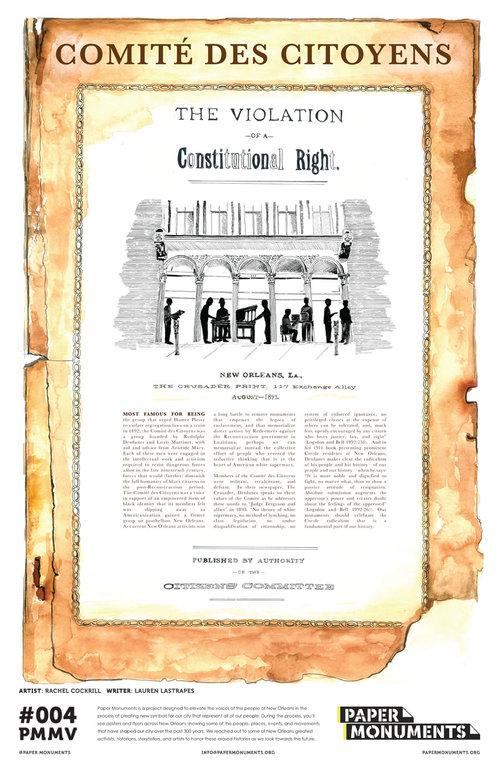
    <summary type="html"><![CDATA[<img src="https://mail.neworleanshistorical.org/files/fullsize/dcfb47fc79a48381bbcc54bc9a375dfa.jpg" alt="The Cabildo, circa 1880-1910. " /><br/><p>Louis A. Martinet was a key player in the fight for civil rights in New Orleans. Born December 28, 1849, his multiracial identity as the son of a free woman of color and a Belgian man placed him within the community of Creoles of color in Louisiana. Joining other Black men elected to political office during the Reconstruction era, Martinet represented his hometown of St. Martinville in the state legislature at the age of twenty-three. He later earned his law degree from Straight University Law School in 1876 as its first Black graduate, setting a precedent for people of color to follow. </p><p>In 1889, Martinet founded <i>The Crusader </i>newspaper in New Orleans to report on racial violence and civil rights issues in Louisiana. Shortly after the 1890 Separate Car Act (SCA) was introduced in the state legislature, he wrote in protest of the law and vowed a legal challenge. The next year, Martinet, joined by Rodolphe Desdunes and other Creole leaders such as <a href="https://neworleanshistorical.org/items/show/1703?tour=134&index=2">Aristide Mary</a> and <a href="https://neworleanshistorical.org/items/show/1697?tour=134&index=1">C. C. Antoine</a>, and formed the <a href="https://neworleanshistorical.org/items/show/1405"><i>Comité des Citoyens </i></a>(Citizen’s Committee) to mount the legal challenge to the SCA. <i>The Crusader</i> became the megaphone for the <i>Comité</i>’s politics and ideas about public rights. </p><p>Albion Tourgée, a white northerner, learned about the SCA and the work of the <i>Comité </i>by reading Black newspapers including <i>The Crusader</i>. Tourgée had dedicated his life to civil rights as a lawyer, legislator, and writer, specifically using his writing to advocate for Black rights. In his column, <i>A Bystander’s Notes, </i>he criticized the SCA as a violation of the 14th amendment and praised Martinet and the <i>Comité</i> for their protests. Martinet offered Tourgée the entire <i>Comité</i>’s fund of $1,412.70 to take the case to the United States Supreme Court (SCOTUS), but Tourgée refused to take the funds and offered his legal services pro bono. </p><p>In their correspondence, Tourgée and Martinet devised a legal strategy. Originally, Tourgée proposed that a woman of color who could pass as white board a train car reserved for white travelers. He deliberately wanted a white-passing person to highlight the arbitrary nature of racial classifications because the SCA allowed train conductors to determine a person’s race to enforce the law. Martinet, however, worried that the local context of racial fluidity in New Orleans might foil the plan. “People of tolerably fair complexion, even if unmistakably colored, enjoy here a large degree of immunity from the accursed prejudice,” Martinet wrote Tourgée. Nevertheless, he agreed to Tourgée’s plan and enacted a first attempt that failed after Judge John Ferguson ruled the SCA did not apply to interstate travel. For the second attempt, he selected Homer Plessy, a shoemaker of a fraction of African descent, to board a train traveling within Louisiana. Martinet also convinced the railroad company to cooperate with the plan and hired a private investigator to ensure Plessy’s safe arrest within the racial tensions and violence in Louisiana. </p><p>The strategy succeeded, and Plessy was arrested on June 7, 1892 for violating the SCA. Judge Ferguson upheld his conviction in the New Orleans court, and the <i>Comité</i>’s lawyers appealed the case through the Louisiana Supreme Court, housed in the Cabildo where you are standing, until it reached the U.S. Supreme Court in 1896. A miscommunication caused Martinet to miss the oral arguments in Washington D.C., but his influence was evident in Tourgée’s radical argument. He asserted that the 14th Amendment extended citizenship, guaranteed due process and equal protection under the law, and nullified states’ legal authority to define citizenship. His arguments also emphasized that racial categories are arbitrary and therefore cannot be a sound reason for legal discrimination. Finally, Tourgée asked the justices how they would feel as Black people subject to the SCA: “What humiliation, what rage would then fill the judicial mind!” Through these comments, Tourgée reflected the ideas of dignity central to public rights and citizenship that Martinet and Desnudes held and expressed in <i>The Crusader</i>. </p><p>In a 7-1 decision, the Supreme Court upheld precedents established during the last three decades that narrowed the scope of federal protections of the rights of Black citizens. It ruled that citizenship and racial segregation fell under the authority of the state, ultimately deciding that segregation was legal as long as the accommodations were equal, codifying the doctrine of “separate but equal” that ushered in an era of Jim Crow rule. After this decision, the <i>Comité </i>dissolved and Martinet closed <i>The Crusader </i>offices for lack of funding that same year, turning to a career in medicine. </p><p>The blow to civil rights in <i>Plessy v. Ferguson </i>did not end racial activism or Martinet’s influence, however. The sole dissent by Justice John Marshall Harlan asserted that the U.S. Constitution was “color-blind,” providing activists with judicial backing to work toward federal civil rights protections. Today, a group of African American attorneys make up the Greater New Orleans Louis A. Martinet Legal Society, devoted to honoring Martinet’s legacy through support for Black lawyers, pro bono work, and community service. Martinet understood the long-term impacts of his efforts and that it was up to those who followed him to continue fighting for civil rights. Writing to Tourgée in 1893, he said, “you may not live to see the fruit of your labors and sacrifice, or to receive the gratitude of those benefitted by them. It will be reserved to future generations to properly and justly estimate them.” </p><p><em><strong><a href="https://mail.neworleanshistorical.org/items/show/1686">For more (including 10 images) view the original article</a></strong></em></p>]]></summary>
    <published>2022-09-26T14:48:38+00:00</published>
    <updated>2026-07-15T16:20:24+00:00</updated>
    <link rel="alternate" type="text/html" href="https://mail.neworleanshistorical.org/items/show/1686"/>
    <id>https://mail.neworleanshistorical.org/items/show/1686</id>
    <author>
      <name>Lauren Smith, edited by Jessica Dauterive</name>
    </author>
  </entry>
  <entry>
    <title type="html"><![CDATA[Streets on the Table: Introduction]]></title>
    <summary type="html"><![CDATA[<img src="https://mail.neworleanshistorical.org/files/fullsize/8ae1ffbafcb933f9fe7af913ea1ef10a.jpg" alt="Statue of Robert E. Lee in Richmond, Virginia. " /><br/><p>In 2019, the New Orleans City Council launched a city-wide effort to change the names of streets honoring white supremacists. While the city implemented its renaming efforts, a clear need for an educational component to give context to the changes presented itself. Filling the gap, public history graduate students at the University of New Orleans created projects to illuminate the work of the Street Renaming Commission. </p><p>Produced by the Midlo Center for New Orleans Studies, Streets on the Table is a podcast that reflects on the historical relevance of both the old and new street names. Hosted by two UNO graduate students, the podcast highlights the lives and histories unrecognized in the commemorative landscape. Listeners will learn about artists, self-liberating people, educators, scientists, and many others underrepresented in street signs, public memorials, and historical narratives. </p><p>Episodes were released on a rolling basis throughout the summer of 2022. Scroll to the bottom of the media list to listen to the introduction episode. </p><p><a href="https://sites.google.com/view/fromroberteleetomamad/from-robert-e-lee-to-mama-d"><i>For more resources, visit From Robert E. Lee to Mama D.</i></a></p><p><em><strong><a href="https://mail.neworleanshistorical.org/items/show/1674">For more (including 6 images&#32;&amp;&#32;1 audio file) view the original article</a></strong></em></p>]]></summary>
    <published>2022-04-19T14:45:03+00:00</published>
    <updated>2026-07-15T16:20:25+00:00</updated>
    <link rel="alternate" type="text/html" href="https://mail.neworleanshistorical.org/items/show/1674"/>
    <id>https://mail.neworleanshistorical.org/items/show/1674</id>
    <author>
      <name>Public history graduate students at the University of New Orleans</name>
    </author>
  </entry>
  <entry>
    <title type="html"><![CDATA[Shirley Thompson]]></title>
    <summary type="html"><![CDATA[<img src="https://mail.neworleanshistorical.org/files/fullsize/a54de62a487fe19e9e2fa083c9d2d0f5.jpg" alt="1961 arrest photo of CORE member Shirley Thompson as Freedom Rider" /><br/><p><span style="font-weight: 400;">Shirley Thompson, the youngest of the Thompson sisters,  joined the New Orleans Congress of Racial Equality (CORE) Freedom Rides as they tested the Interstate Commerce Commission’s desegregation of bus transit. At eighteen years old, and just a few days after graduating from George Washington Carver High School, Shirley boarded her first Freedom Ride on June 6, 1961, to Jackson, Mississippi. [1] </span>
<span style="font-weight: 400;">The previous Freedom Rides into Mississippi were met with violence, an increase in jail penalties from two months to four, and a request from President John F. Kennedy to the Freedom Riders for a “cooling-off period.” However, CORE leaders remained diligent in their protests and continued ahead with their Freedom Rides and sit-ins across Mississippi. [2] Because of CORE members’ vigor and determination to fight white supremacy, police jailed activists for their continued acts of civil disobedience, imprisoning Riders in the Parchman State Penitentiary when local jails exceeded capacity.</span>
<span style="font-weight: 400;">Police arrested Shirley Thompson for “breach of peace” while attempting a sit-in within a waiting room. Given the increased sentence of four months, police took Shirley to the Parchman State Penitentiary. [3] While there, Shirley stated that “she was slapped by police officers.” [4] CORE activist Abdul Aziz Khaalis documented the brutalities at Parchman State Penitentiary in his diary</span><i><span style="font-weight: 400;">, </span></i><span style="font-weight: 400;">later published online as a series entitled </span><i><span style="font-weight: 400;">Letters to My Children. </span></i><span style="font-weight: 400;">Khaalis stated: </span>
<p style="text-align: center;"><span style="font-weight: 400;">"Yes, they took our mattresses from us. We still sang freedom songs. Yes, they took our clothes. Yes, we froze when our bodies touched the steel bunks with the air turned on high. Yes, we were eaten by insects released from jars into the cell block with the air turned off and the windows closed to make it hot like hell as we were bitten and eaten everywhere. Yes, they dragged a screaming white Freedom Rider past our cells. They had a wrist breaker attached to his right arm. It was a handcuff with big screws that hit the nerve points in his wrist. It was attached to a chain with a wooden handle. They dragged him, flipped the chain, making his body flip like a fish from the agony he experienced, and I felt it In my cell and still hear his screams when I have the memory. Yes, they put stuff in our food to give us the runs. Yes, they were devil-mean hateful jailers." [5] </span>
<span style="font-weight: 400;">While newspapers reported one piece of Shirley’s testimony from within the walls of Parchman State Penitentiary, Shirley likely faced other violence as well. Jean Thompson posted a bond for her sister and the prison released her. Shirley’s release date is unknown. </span>
<span style="font-weight: 400;">Before her death at age 47, Shirley also participated in the 1962 Louisiana Freedom Summer, 1962 Mississippi Freedom Summer, and 1963 March on Washington alongside her sister Alice Marie Thompson. </span></p><p><em><strong><a href="https://mail.neworleanshistorical.org/items/show/1653">For more (including 5 images) view the original article</a></strong></em></p>]]></summary>
    <published>2022-02-11T03:14:05+00:00</published>
    <updated>2026-07-15T16:20:25+00:00</updated>
    <link rel="alternate" type="text/html" href="https://mail.neworleanshistorical.org/items/show/1653"/>
    <id>https://mail.neworleanshistorical.org/items/show/1653</id>
    <author>
      <name>Kalie A. Dutra&amp;#32;&amp;amp;&amp;#32;Kathryn O&amp;#039;Dwyer, Editor </name>
    </author>
  </entry>
  <entry>
    <title type="html"><![CDATA[Jean Thompson]]></title>
    <summary type="html"><![CDATA[<img src="https://mail.neworleanshistorical.org/files/fullsize/0513edfc9db756a5d1cbfb62e7d8aec2.jpg" alt="1961 arrest photo of CORE member Jean Thompson as Freedom Rider" /><br/><p><span style="font-weight: 400;">On May 24, 1961, Jean Thompson, at age 19, participated in the Freedom Ride from Montgomery, Alabama to Jackson, Mississippi as civil rights activists tested the Interstate Commerce Commission’s desegregation of bus transit. Jean’s bus was the first to make it safely to its destination in Mississippi. Previously, white groups acted violently to activists and burned Freedom Ride buses. [1] This safe arrival was short-lived. According to the Times-Picayune, city police arrested Jean along with eleven other riders “moments after they alighted from their buses and set foot in a white waiting room at the bus terminal.” [2] </span>
<span style="font-weight: 400;">Jean and the other Congress of Racial Equality (CORE) Freedom Riders refused to move from the white waiting room after police ordered them to leave. The police then immediately booked the riders on “two counts of refusing to move on when ordered by police and causing a breach of the peace.” [2] The following day, Jean appeared in front of the municipal court led by Judge James L. Spencer. CORE’s attorney advocated for the riders stating that all people have the right to travel. Judge Spencer did not alleviate the penalties and charged Jean and the other riders with the maximum penalty of a $500 fine and up to six months in jail. [2] </p>
<span style="font-weight: 400;">Though documents do not detail when police released Jean Thompson, Jean participated in another Freedom Ride later that year. </p>
<span style="font-weight: 400;">On November 14, 1961, Jean and her sister, Alice, joined CORE in their Freedom Ride from Hattiesburg to Poplarville, Mississippi. In Hattiesburg, Jean and Alice stepped off the bus and went into the bus station cafe. [3] There were no arrests at this stop, though Jean, Alice, and other CORE women members rendered a successful sit-in at the all-white cafe and women’s bathroom. Police escorted the riders back to their bus and they continued on to Poplarville. [4] In Poplarville, police arrested Alice for stepping off the bus and participating in a sit-in. Jean remained on the bus and returned to New Orleans. </span>
<span style="font-weight: 400;">Jean Thompson participated in several other activist demonstrations including the Freedom Highways Project, the 1962 Louisiana Freedom Summer, and the 1962 Mississippi Freedom Summer. Today, she speaks on her time during the civil rights movement and advocates for special needs communities. [5]</span></p><p><em><strong><a href="https://mail.neworleanshistorical.org/items/show/1652">For more (including 4 images&#32;&amp;&#32;1 audio file) view the original article</a></strong></em></p>]]></summary>
    <published>2022-02-11T02:32:24+00:00</published>
    <updated>2026-07-15T16:20:25+00:00</updated>
    <link rel="alternate" type="text/html" href="https://mail.neworleanshistorical.org/items/show/1652"/>
    <id>https://mail.neworleanshistorical.org/items/show/1652</id>
    <author>
      <name>Kalie A. Dutra&amp;#32;&amp;amp;&amp;#32;Kathryn O&amp;#039;Dwyer, Editor</name>
    </author>
  </entry>
  <entry>
    <title type="html"><![CDATA[Alice Marie Thompson]]></title>
    <summary type="html"><![CDATA[<img src="https://mail.neworleanshistorical.org/files/fullsize/a23706c673f8eea96071ceaa5b9de452.jpg" alt="Photo of Alice Thompson with Doratha Smith, Jerome Smith, George Raymond, Julia Aaron, New Orleans CORE." /><br/><p><span style="font-weight: 400;">On November 1, 1961, Alice Marie Thompson joined other New Orleans Congress of Racial Equality (CORE) members to test the Interstate Commerce Commission’s new policy of bus desegregation at the New Orleans Trailways bus terminal located on Loyola Avenue. [1] Information regarding the test’s impact on Riders or the New Orleans community has little documentation. However, according to Julia Aaron-Humbles, another New Orleans activist, some locals regularly took care of the New Orleans CORE members, providing housing, food, nurturing, and training to prepare those like Alice for the violence ahead. [2] </span>
<span style="font-weight: 400;">On November 14, Alice Marie Thompson and other CORE members tested bus desegregation in Hattiesburg and Poplarville, Mississippi. The police arrested Alice and charged her with a “breach of peace.” [3] The mayor of Poplarville, Pat Hyde, fined Alice Thompson $250.00 and sentenced her to two months in jail. The police released Alice, along with two other activists, Frank Nelson and Patricia Smith, through a paid bond. [4]</span>
<span style="font-weight: 400;">On November 29, 1961, Alice also joined in the testing of bus desegregation in McComb, Mississippi along with her sister, Jean. While there, a mob of white people attacked Alice and other CORE members, shouting “Kill ‘em! Kill ‘em.” [5] According to the New York Times writer Claude Sitton, Alice and the other CORE members fled the bus terminal, rested for the evening, and then attempted a sit-in at a local cafe after a reported gas leak at the bus terminal. </span><span style="font-weight: 400;">White men attacked the CORE members, kicking and shoving them through the cafe door onto the street. [6] </span>
<span style="font-weight: 400;">Though the Freedom Ride to McComb was the last for Alice Thompson, she continued to engage in other civil rights activism including the 1962 Louisiana Freedom Summer, the 1962 Mississippi Freedom Summer, and the 1963 March on Washington, known for Dr. Martin Luther King’s “I Have a Dream Speech.” [7]  </span></p><p><em><strong><a href="https://mail.neworleanshistorical.org/items/show/1651">For more (including 4 images) view the original article</a></strong></em></p>]]></summary>
    <published>2022-02-08T03:33:56+00:00</published>
    <updated>2026-07-15T16:20:25+00:00</updated>
    <link rel="alternate" type="text/html" href="https://mail.neworleanshistorical.org/items/show/1651"/>
    <id>https://mail.neworleanshistorical.org/items/show/1651</id>
    <author>
      <name>Kalie A. Dutra&amp;#32;&amp;amp;&amp;#32;Kathryn O&amp;#039;Dwyer, Editor</name>
    </author>
  </entry>
  <entry>
    <title type="html"><![CDATA[Dorothy Day: Journalist, Activist, Catholic Worker Movement Founder]]></title>
    <summary type="html"><![CDATA[<img src="https://mail.neworleanshistorical.org/files/fullsize/51e11e4144e45af3719a07b3515a22c4.jpg" alt="Advertisement for Dorothy Day&#039;s piece &quot;The Thrills of 1924&quot;" /><br/><p><span>In 1924, journalist and political activist Dorothy Day lived in an apartment at 520 St. Peter Street while writing for the </span><i><span>New Orleans Item</span></i><span>. D</span><span>uring her short time working at the </span>newspaper<i><span>,</span></i><span> Day wrote articles generally concerned with the <a href="https://neworleanshistorical.org/items/show/1601">culture of dance halls</a>, alcohol, and gambling in the city. Day also conducted interviews with</span><span> personalities like Italian</span><span> </span><span>actress Eleonora Duse, Governor Henry L. Fuqua, and boxing legend Jack Dempsey. [1]</span><span> </span>
<span>Before her arrival in New Orleans, Dorothy Day was a political activist. Day was a suffragette, arrested for picketing the Wilson White House, and went on a hunger strike while imprisoned. In 1927, Day converted to Catholicism</span><span> and later founded the Catholic Worker Movement in New York with Frenchman Pierre Maurin. [2] The Catholic Worker Movement is an organization dedicated to aiding the poor by engaging in labor organizing, nonviolent protests against war and violence, establishing </span><span>cooperatives, and advocating for human rights</span><span>. [3]</span><span> <span class="TextRun BCX0 SCXW118747359"><span class="NormalTextRun BCX0 SCXW118747359">In 1933, Day co-founded</span></span><span class="TextRun BCX0 SCXW118747359"><span class="NormalTextRun BCX0 SCXW118747359"> <em>Catholic Worker</em>, </span></span><span class="TextRun BCX0 SCXW118747359"><span class="NormalTextRun BCX0 SCXW118747359">a radical Christian newspaper covering workers’ rights and social issues, and served as its editor until her death in 1980. </span></span></span></p><p><em><strong><a href="https://mail.neworleanshistorical.org/items/show/1602">For more (including 5 images) view the original article</a></strong></em></p>]]></summary>
    <published>2020-06-30T23:00:28+00:00</published>
    <updated>2026-07-15T16:20:25+00:00</updated>
    <link rel="alternate" type="text/html" href="https://mail.neworleanshistorical.org/items/show/1602"/>
    <id>https://mail.neworleanshistorical.org/items/show/1602</id>
    <author>
      <name>Joseph LeDesma</name>
    </author>
  </entry>
  <entry>
    <title type="html"><![CDATA[Aimée Potens Residence]]></title>
    <summary type="html"><![CDATA[<img src="https://mail.neworleanshistorical.org/files/fullsize/0a75d3268cc3fe1ca47cfa0567afc4f6.jpg" alt="Aimée Potens" /><br/><p><span style="font-weight: 400;">Aimée Potens was the mother of <a href="https://neworleanshistorical.org/items/show/1542?tour=104&index=3">Louis Charles</a> and <a href="https://neworleanshistorical.org/items/show/1545?tour=104&index=6">Jean Baptiste Roudanez</a>, the founder and publisher of  </span><i><span style="font-weight: 400;">L’Union</span></i><span style="font-weight: 400;">, the South’s first black newspaper, and the </span><a href="https://neworleanshistorical.org/items/show/1539?tour=104&index=0"><i><span style="font-weight: 400;">New Orleans Tribune</span></i></a><span style="font-weight: 400;">, America’s first black daily newspaper. </span><span style="font-weight: 400;">She was born to an enslaved woman in the French colony of Saint-Domingue (now Haiti) in the late eighteenth century. [1] Aimée</span><span style="font-weight: 400;"> eye-witnessed the long arc of Atlantic and Carribean world history: slavery; the Haitian revolution; exodus to colonial Louisiana; the Louisiana Purchase; territorial plantation life; all things </span><i><span style="font-weight: 400;">de couleur libre</span></i><span style="font-weight: 400;"> in antebellum New Orleans; the Civil War; emancipation; the birth of the South’s first Civil Rights movement via her sons’ activism; and in her final years the triumph and failure of Reconstruction.</p><span style="font-weight: 400;">Potens escaped the ferocity of the Haitian revolution as an infant in arms, eventually finding a home on the sugar plantations of St. James Parish Louisiana. There she had children with another Saint-Domingue refugee, Jean Louis Roudanez. There she honed her skills as a healer. And there, those long, strong hands delivered babies, enslaved and free. </p><span style="font-weight: 400;">Aimée later lived as a </span><i><span style="font-weight: 400;">femme de couleur libre </span></i><span style="font-weight: 400;">or free woman of color in antebellum New Orleans. By then a single mother, she raised her children in one of the largest and most prosperous free black communities in the United States. Madame Potens proudly wore a </span><i><span style="font-weight: 400;">tignon</span></i><span style="font-weight: 400;">, the headscarf required in colonial times as a reminder of “inferior” status. In the nineteenth century, Marie Laveau and other New Orleans women of African descent defiantly sported the </span><i><span style="font-weight: 400;">tignon</span></i><span style="font-weight: 400;"> as a symbol of beauty.  And like the voodoo priestess, family lore reveals Aimée as a powerful and proud healer—“a tall mulatress of stately mein”—who walked the streets liked she owned the city. [1] Potens, her surname, suggests potent heritage. Indeed, in her day, free women of color were powerful in many ways, often owning property and managing businesses in the French Quarter and the </span><i><span style="font-weight: 400;">Faubourgs</span></i><span style="font-weight: 400;"> Tremé and Marigny. </p><a href="https://neworleanshistorical.org/items/show/1544?tour=104&index=5"><span style="font-weight: 400;">Aimée Potens is entombed in St. Louis Cemetery No. 2., Square 3.</span></a></p><p><em><strong><a href="https://mail.neworleanshistorical.org/items/show/1547">For more (including 3 images) view the original article</a></strong></em></p>]]></summary>
    <published>2019-11-10T01:37:01+00:00</published>
    <updated>2026-07-15T16:20:26+00:00</updated>
    <link rel="alternate" type="text/html" href="https://mail.neworleanshistorical.org/items/show/1547"/>
    <id>https://mail.neworleanshistorical.org/items/show/1547</id>
    <author>
      <name>Mark Charles Roudané</name>
    </author>
  </entry>
  <entry>
    <title type="html"><![CDATA[Economy Hall]]></title>
    <summary type="html"><![CDATA[<img src="https://mail.neworleanshistorical.org/files/fullsize/4161ad923efc5c1bfcc1bfe8a988cb7a.jpg" alt="Economy Hall" /><br/><p><span style="font-weight: 400;">Soon after Union forces seized New Orleans from the Confederacy in 1862, calls for equality reverberated among free people of color. Hundreds assembled at frequent mass meetings and rallies at Economy Hall in the heart of Faubourg Tremé. There, boisterous crowds listened to speakers advocate for racial democracy and the enfranchisement of all men of African descent. The newspapers </span><i><span style="font-weight: 400;">L’Union</span></i><span style="font-weight: 400;">, and later the </span><a href="https://neworleanshistorical.org/items/show/1539?tour=104&index=0"><i><span style="font-weight: 400;">New Orleans Tribune</span></i></a><span style="font-weight: 400;">, frequently promoted and reported on these dramatic gatherings. </span><span style="font-weight: 400;">“</span><i><span style="font-weight: 400;">Grande Assemblée à L’Économie, Immense Enthousiasme</span></i><span style="font-weight: 400;">,”</span><span style="font-weight: 400;"> recounted </span><i><span style="font-weight: 400;">L’Union</span></i><span style="font-weight: 400;"> in 1863. [1] “A vast and enthusiastic assemblage met last evening at Economy Hall,” reported the </span><i><span style="font-weight: 400;">Tribune</span></i><span style="font-weight: 400;"> in 1864. [2] “One of the most largely attended assemblies ever held in this city met last night at Economy Hall,” declared the </span><i><span style="font-weight: 400;">Tribune</span></i><span style="font-weight: 400;"> in 1865.</p><span style="font-weight: 400;">In December 1863, Economy Hall played host to over 1,000 free men of color as they signed a petition demanding the right to vote. The document boldly proclaimed, “We are men, treat us as such.” Attached to it was an addendum that included “those born slaves” in the demand. [3] </span><i><span style="font-weight: 400;">New Orleans Tribune </span></i><span style="font-weight: 400;">publisher <a href="https://neworleanshistorical.org/items/show/1545?tour=104&index=6">Jean Baptiste Roudanez</a> and Arnold Bertonneau, veteran of the First Louisiana Native Guard, delivered the aforementioned petition to President Abraham Lincoln in the White House. The petition influenced the President, who likely saw political advantage in restricting the vote to free blacks only. Lincoln quickly asked Louisiana’s governor to consider limited black enfranchisement, and the President addressed the issue in his last public address. Lincoln's suggestion was ignored by the governor and state legislature. [4]</p><span>Economy Hall held benefit programs, sponsored by the </span><i><span>New Orleans Tribune</span></i><span>, featuring classical composers of color. Victor-Eugène Macarty, Basile Barés, Edmond Dédé, and others performed to help fund the </span><i><span>Tribune</span></i><span>’s Freedmen’s Aid Association. [5] “The cause of universal suffrage is every day becoming more popular with the young people of our city. Two balls will be given today at Economy Hall in behalf of the favorite cause,” reported the </span><i><span>Tribune</span></i><span>. “One will be a children’s ball, which will be given at 4 o’clock and last til 8. Then young men and young ladies will come out in their best attires, in their gay and glittering dresses, and their quadrilles and waltzes will last til morning.” [6]</span></p><p><em><strong><a href="https://mail.neworleanshistorical.org/items/show/1546">For more (including 2 images) view the original article</a></strong></em></p>]]></summary>
    <published>2019-11-03T03:43:43+00:00</published>
    <updated>2026-08-24T00:32:54+00:00</updated>
    <link rel="alternate" type="text/html" href="https://mail.neworleanshistorical.org/items/show/1546"/>
    <id>https://mail.neworleanshistorical.org/items/show/1546</id>
    <author>
      <name>Mark Charles Roudané</name>
    </author>
  </entry>
  <entry>
    <title type="html"><![CDATA[Residence of Jean Baptiste Roudanez]]></title>
    <summary type="html"><![CDATA[<img src="https://mail.neworleanshistorical.org/files/fullsize/7fa88673c15588ee1a19785657b5decd.jpg" alt="1514 Dumaine" /><br/><p><span style="font-weight: 400;">Jean Baptiste Roudanez (1815-1895), a free man of color, served as publisher of </span><i><span style="font-weight: 400;">L’Union</span></i><span style="font-weight: 400;">, the South’s first black newspaper, and the </span><a href="https://neworleanshistorical.org/items/show/1539?tour=104&index=0"><i><span style="font-weight: 400;">New Orleans Tribune</span></i></a><span style="font-weight: 400;">, America’s first black daily newspaper. Dr. Louis Charles Roudanez, the </span><i><span style="font-weight: 400;">Tribune’s</span></i><span style="font-weight: 400;"> founder, was Jean Baptiste’s younger brother. Jean Baptiste Roudanez’s home still stands on Dumaine Street in the Faubourg Tremé. </p><span style="font-weight: 400;">In 1864, he traveled from this residence, alongside Arnold Bertonneau, a fellow free man of color and veteran of the First Louisiana Native Guard, to present President Lincoln with a <a href="https://neworleanshistorical.org/items/show/1546?tour=104&index=6">petition signed by almost 1,000 free men of color,</a> demanding black men’s right to vote. The Petition righteously proclaimed “WE ARE MEN, TREAT US AS SUCH!” Roudanez and Bertonneau impressed Lincoln, and the President quickly penned a request to Louisiana’s governor to consider limited black enfranchisement. The Petition’s demand for voting rights for </span><i><span style="font-weight: 400;">all</span></i><span style="font-weight: 400;"> men of African descent, “WHETHER BORN SLAVE OR FREE,” [1] was realized in September 1867, nearly 3 years before the Fifteenth Amendment was ratified. Black Louisianans turned out in large numbers, electing many delegates of African descent to the upcoming state constitutional convention. </span><i></i><span style="font-weight: 400;">Following his meeting with Lincoln, Jean Baptiste Roudanez and Arnold Bertonneau toured New England to speak at abolitionist meetings. Roudanez met Frederick Douglass in Boston and made a lasting impression upon him. Douglass later wrote to Jean Baptiste, stating he read the Tribune “with very great pleasure. I am proud that a press so true and wise is devoted to the interests of liberty and equality in your Southern latitude.” [2] Douglass felt the paper was an essential tool for the success of the abolitionist movement. </p><span style="font-weight: 400;">Jean Baptiste Roudanez testified before the 1864 Freedmen’s Inquiry Commission investigation of the condition of enslaved Louisianans. The Commission's report described him as "a free mulatto creole of New Orleans, a man of great intelligence and probity, who had been employed as an engineer and mechanic upon many of the sugar plantations in the region of the country under consideration. No man could have had a more thorough acquaintance with plantation life than he, and no man in the city of his residence bears a higher reputation for truth and sobriety.” Roudanez told the Commission "Upon some plantations the women were worked as hard as the men, and were kept at labor in every stage of pregnancy, even up to the moment of delivery. The overseers had the run of all the field women, and if one of them refused, an occasion was soon found for subjecting her to a severe punishment. The practice of indiscriminate intercourse...was a source of great suffering to these women. Frequently the jealous wife would procure them to be whipped...The tortures inflicted upon these helpless favorites of the husband by the infuriated wife, in order to render them less attractive to the husband, are not to be described." [3]</p><a href="https://neworleanshistorical.org/items/show/1544?tour=104&index=5"><span style="font-weight: 400;">Jean Baptiste Roudanez is entombed in St. Louis Cemetery No. 2., Square 3.</span></a></p><p><em><strong><a href="https://mail.neworleanshistorical.org/items/show/1545">For more (including 4 images) view the original article</a></strong></em></p>]]></summary>
    <published>2019-11-03T03:41:32+00:00</published>
    <updated>2026-07-15T16:20:26+00:00</updated>
    <link rel="alternate" type="text/html" href="https://mail.neworleanshistorical.org/items/show/1545"/>
    <id>https://mail.neworleanshistorical.org/items/show/1545</id>
    <author>
      <name>Mark Charles Roudané</name>
    </author>
  </entry>
  <entry>
    <title type="html"><![CDATA[Tombs of Jean Baptiste Roudanez and his mother Aimée Potens]]></title>
    <summary type="html"><![CDATA[<img src="https://mail.neworleanshistorical.org/files/fullsize/5dd69faa338385f60d5ac088a6e0f041.jpg" alt="Tomb of Jean Baptiste Roudanez and his mother Aimée Potens, marked Delacroix" /><br/><p><span style="font-weight: 400;">Jean Baptiste Roudanez, publisher of </span><i><span style="font-weight: 400;">L’Union</span></i><span style="font-weight: 400;">, the South’s first black newspaper, and the </span><a href="https://neworleanshistorical.org/items/show/1539?tour=104&index=0"><i><span style="font-weight: 400;">New Orleans Tribune</span></i></a><span style="font-weight: 400;">, America’s first black daily newspaper, is entombed alongside his mother <a href="https://neworleanshistorical.org/items/show/1547?tour=104&index=8">Aimée Potens</a>, a free woman of color, in Square 3 of St. Louis Cemetery No. 2. This section of St. Louis Cemetery No. 2 honors many civil rights pioneers of African descent, including Henriette Delille, Rodolphe Desdunes, Arthur Esteves, André Callioux, Jordan Noble, Marie Couvent, P.B.S. Pinchback, Oscar Dunne and many others. Square 3 has been described as “the greatest collection of memorials to African-American achievement in the world.”  </p><p>Roudanez and fellow activist Arnold Bertonneau delivered a historic petition to President Lincoln on March 12, 1864, demanding the right to vote. Signed by almost 1,000 free men of color from New Orleans, the document righteously proclaimed “WE ARE MEN, TREAT US AS SUCH!” For the first time, Louisianans of African descent boldly entered the whitest house in America, the inner sanctum of the country’s authority. They were frustrated with Lincoln’s gradualism and general failure to support the growing national movement for racial equality. [1]</p><span style="font-weight: 400;">The petition’s demand for voting rights for </span><i><span style="font-weight: 400;">all</span></i><span style="font-weight: 400;"> men of African descent, “WHETHER BORN SLAVE OR FREE,” [2] was realized in September 1867, nearly 3 years before the Fifteenth Amendment was ratified. Black Louisianans turned out in large numbers, electing </span><span style="font-weight: 400;">an almost equal number of black and white</span><span style="font-weight: 400;"> delegates who would go on to create the South’s most radical Reconstruction state constitution.</span></p><p><em><strong><a href="https://mail.neworleanshistorical.org/items/show/1544">For more (including 2 images) view the original article</a></strong></em></p>]]></summary>
    <published>2019-11-03T00:56:55+00:00</published>
    <updated>2026-07-15T16:20:26+00:00</updated>
    <link rel="alternate" type="text/html" href="https://mail.neworleanshistorical.org/items/show/1544"/>
    <id>https://mail.neworleanshistorical.org/items/show/1544</id>
    <author>
      <name>Mark Charles Roudané</name>
    </author>
  </entry>
  <entry>
    <title type="html"><![CDATA[Tomb of Dr. Louis Charles Roudanez]]></title>
    <summary type="html"><![CDATA[<img src="https://mail.neworleanshistorical.org/files/fullsize/362f9232813fbc84afe572449dd227cc.jpg" alt="Roudanez Tomb" /><br/><p><span>Faubourg Tremé is home to the oldest existing cemetery in the City of New Orleans, St. Louis Cemetery No. 1. <a href="https://neworleanshistorical.org/items/show/1542?tour=104&index=3">Dr. Louis Charles Roudanez</a>, founder of the </span><a href="https://neworleanshistorical.org/items/show/1539?tour=104&index=0"><span>New Orleans Tribune</span></a><span>, America’s first black daily newspaper, is entombed in the Roudanez family tomb located in Alley 9. The doctor’s wife, Célie Saulay, and several of their children are also in this tomb. Access is permitted only with approved tour guides. When in the cemetery, be sure to ask your guide to see the Roudanez tomb.</p><span>On March 11, 2015, a historical marker was unveiled at the tomb site to honor Dr. Louis Charles Roudanez and his civil rights advocacy during the Civil War and Reconstruction Eras. The marker reads:</p>
<div class="qowt-stl-normal0" style="text-align: center;"><span>DR. LOUIS CHARLES ROUDANEZ</p><p>1823-1890</span></div>

<div class="qowt-stl-normal0" style="text-align: center;"><span>“LIBERTY MUST BE THE SAME FOR ALL MEN. IF LIBERTY IS QUALIFIED, THOSE WHO POSSESS THE</span></div>
<div class="qowt-stl-normal0" style="text-align: center;"><span>LEAST RIGHTS ARE NOT REALLY FREE. WE DEMAND THEREFORE, LIKE ALL OTHER CITIZENS:</span></div>
<div class="qowt-stl-normal0" style="text-align: center;"><span>THE RIGHT TO COME AND GO;</span></div>
<div class="qowt-stl-normal0" style="text-align: center;"><span>THE RIGHT TO VOTE;</span></div>
<div class="qowt-stl-normal0" style="text-align: center;"><span>THE RIGHT TO PUBLIC INSTRUCTION;</span></div>
<div class="qowt-stl-normal0" style="text-align: center;"><span>THE RIGHT TO HOLD PUBLIC OFFICE;</span></div>
<div class="qowt-stl-normal0" style="text-align: center;"><span>THE RIGHT TO BE JUDGED, TREATED AND GOVERNED ACCORDING TO THE COMMON LAW.”</span></div>
<div class="qowt-stl-normal0" style="text-align: center;"><span> -</span><span>New Orleans Tribune</span><span>, January 24, 1865</p></div>

<div class="qowt-stl-normal0" style="text-align: center;"><span>LOUIS CHARLES ROUDANEZ WAS A VISIONARY FREE MAN OF COLOR, DOCTOR, AND JOURNALIST. GREATLY INFLUENCED BY REVOLUTIONS IN SAINT-DOMINGUE AND FRANCE, AND ANGERED BY SLAVERY AND RACIAL INJUSTICE, HE TOOK UP THE CAUSE OF EQUALITY DURING THE CIVIL WAR AND RECONSTRUCTION ERAS. IN 1862, DR. ROUDANEZ, PAUL TRÉVIGNE, AND JEAN BAPTISTE ROUDANEZ FOUNDED </span><span>L’UNION</span><span>, THE SOUTH’S FIRST BLACK NEWSPAPER. IN 1864, DR. ROUDANEZ LAUNCHED </span><span>LA TRIBUNE DE LA NOUVELLE</span><span>ORLÉANS</span><span> (</span><span>THE NEW ORLEANS TRIBUNE</span><span>), THE FIRST BLACK DAILY NEWSPAPER IN THE UNITED STATES. WITH HIS </span><span>TRIBUNE</span><span> COLLEAGUES AND A DYNAMIC COMMUNITY OF FREE AND FREED PERSONS OF AFRICAN DESCENT, ROUDANEZ COURAGEOUSLY ATTACKED RACISM IN THE FACE OF SOME OF THE NATION’S WORST VIOLENCE. HE WAS THE GUIDING FORCE BEHIND ONE OF THE MOST RADICAL AND INFLUENTIAL JOURNALS OF ITS TIME. THE </span><span>TRIBUNE</span><span>’S CRUSADE LED TO BLACK ENFRANCHISEMENT, THE CREATION OF A GROUNDBREAKING STATE CONSTITUTION WITH STRONG EQUAL RIGHTS PROVISIONS, AND THE ELECTION OF MANY BLACK REPRESENTATIVES. THE VISION OF DR. ROUDANEZ, ARTICULATED IN PRINT AND MANIFESTED IN SOCIAL PROTEST, FORGED ONE OF THE MOST IMPORTANT CIVIL RIGHTS CAMPAIGNS IN AMERICAN HISTORY. </span></div></p><p><em><strong><a href="https://mail.neworleanshistorical.org/items/show/1543">For more (including 3 images) view the original article</a></strong></em></p>]]></summary>
    <published>2019-11-03T00:49:21+00:00</published>
    <updated>2026-07-15T16:20:26+00:00</updated>
    <link rel="alternate" type="text/html" href="https://mail.neworleanshistorical.org/items/show/1543"/>
    <id>https://mail.neworleanshistorical.org/items/show/1543</id>
    <author>
      <name>Mark Charles Roudané</name>
    </author>
  </entry>
  <entry>
    <title type="html"><![CDATA[Residence and Medical Practice of Dr. Louis Charles Roudanez and Family]]></title>
    <summary type="html"><![CDATA[<p><strong><em><span style="font-weight: 400;">Dr. Louis Charles Roudanez was a visionary free man of color, doctor, and journalist. Angered by slavery and racial injustice, he took up the cause of equality during the Civil War and Reconstruction eras, and founded two of New Orleans’ premier black newspapers, L’Union and the New Orleans Tribune.</span></em></strong></p><img src="https://mail.neworleanshistorical.org/files/fullsize/1c7fbfb396b1e8f29cc96b17218be87e.jpg" alt="Dr. Louis Charles Roudanez" /><br/><p><span style="font-weight: 400;">Like many free people of color in New Orleans, Dr. Louis Charles Roudanez was wealthy, grew up with the French language, attended Catholic Church, and received much of his education in Paris. <a href="https://neworleanshistorical.org/items/show/1547?tour=104&index=8">Roudanez’s parents</a> were racially mixed refugees from the French colony of Saint-Domingue (Haiti), leaving after the island’s successful slave rebellion began in 1791. [1] </p><span style="font-weight: 400;">Roudanez was inspired by the 1848 French Revolution, after which the Second Republic abolished slavery and extended the vote to men of color. While in France studying at the faculté de médecine de la Sorbonne, Roudanez was a student of prominent republican activists and reportedly took to the barricaded streets of revolutionary Paris. [2] Dr. Roudanez graduated with honors from the faculté de médecine, widely believed to be the best medical school in the world. He returned to the United States and received a second medical degree from Dartmouth College in 1856. </p><span style="font-weight: 400;">Returning to New Orleans after his many years of study, Dr. Roudanez found the city had changed significantly. The South’s largest metropolis had an expanding white majority and was becoming more Americanized. Free people of color, while enjoying some measure of liberty, were increasingly denied “privileges” of citizenship, inter-racial marriage, public accommodation and education. Upon his homecoming, the doctor encountered a much more severely restricted and antagonistic racial environment, one which undoubtedly angered a spirit steeped in the values of <em>liberté, egalité et fraternité</em>. [3] </p><span style="font-weight: 400;">In 1857, Roudanez married Célie Saulay, a free woman of color, at a ceremony held in St. Louis Cathedral. The couple raised eight children together, all likely born at the Roudanez residence. The doctor established a successful medical practice, serving clients without regard to race or ability to pay. </p><span style="font-weight: 400;">In 1862, Dr. Roudanez, along with Paul Trévigne and <a href="https://neworleanshistorical.org/items/show/1545?tour=104&index=6">Jean Baptiste Roudanez</a>, founded </span><i><span style="font-weight: 400;">L’Union</span></i><span style="font-weight: 400;">, the South’s first black newspaper. In 1864, Roudanez launched </span><a href="https://neworleanshistorical.org/items/show/1539?tour=104&index=0"><i><span style="font-weight: 400;">La</span></i><i><span style="font-weight: 400;"> Tribune de la Nouvelle Orléans</span></i></a><span style="font-weight: 400;"> (the </span><i><span style="font-weight: 400;">New Orleans Tribune</span></i><span style="font-weight: 400;">), the first black daily newspaper in the United States. With his </span><i><span style="font-weight: 400;">Tribune</span></i><span style="font-weight: 400;"> colleagues and a dynamic community of free and freed persons of African descent, Dr. Roudanez courageously attacked racism in the face of some of the nation’s worst violence. He was the group’s guiding force and undoubtedly wrote for the paper as well. </span><i><span style="font-weight: 400;">Tribune</span></i><span style="font-weight: 400;"> editor Houzeau wrote that “Dr. Roudanez…steadfastly demanded and claimed his rights to their fullest extent with a strength of soul that I always admired.” [4] Roudanez was a brilliant rhetorician who crafted stirring essays. “The time has come for all true radicals to make equality a practical thing in Louisiana,” he wrote. “Let them have the will; let them be well awaked to the importance and the character of that reform; let them above all, insist upon it, on every occasion and at any time.” [5] </span>
<span style="font-weight: 400;">In 1879, soon after the fall of Reconstruction and mounting racial discrimination in New Orleans, Dr. Roudanez’s wife, daughters, and youngest son permanently relocated to Paris, France. Dr. Roudanez remained in New Orleans for the rest of his life alongside his eldest sons. </p><span style="font-weight: 400;"><a href="https://neworleanshistorical.org/items/show/1543?tour=104&index=4">Dr. Louis Charles Roudanez is entombed in St. Louis Cemetery No. 1.</a> </p><span style="font-weight: 400;">The Roudanez family home was torn down sometime around in the 1920s. Today a parking lot stands in its place.</span></p><p><em><strong><a href="https://mail.neworleanshistorical.org/items/show/1542">For more (including 3 images) view the original article</a></strong></em></p>]]></summary>
    <published>2019-11-03T00:39:28+00:00</published>
    <updated>2026-07-15T16:20:26+00:00</updated>
    <link rel="alternate" type="text/html" href="https://mail.neworleanshistorical.org/items/show/1542"/>
    <id>https://mail.neworleanshistorical.org/items/show/1542</id>
    <author>
      <name>Mark Charles Roudané</name>
    </author>
  </entry>
  <entry>
    <title type="html"><![CDATA[Mechanics&#039; Institute Massacre]]></title>
    <summary type="html"><![CDATA[<img src="https://mail.neworleanshistorical.org/files/fullsize/c527cf04e0bcb869f21b39b8a772a088.jpg" alt="&quot;Timely Warning...&quot;" /><br/><p><span style="font-weight: 400;">On July 30, 1866, black Republicans attempted to reconvene the Louisiana constitutional convention in an effort to secure voting rights. Held at the Mechanics' Institute, a large crowd of black spectators was present as well. The gathering was attacked by an angry white mob that included police and firemen. [1] According to the </span><a href="https://neworleanshistorical.org/items/show/1539?tour=104&index=0"><i><span style="font-weight: 400;">Tribune</span></i></a><span style="font-weight: 400;">, "black men were assassinated by scores. They fell inside of the hall, outside of the building, in the neighboring streets, and even in distant parts of the city, where they were tracked like dogs." [2] </span><i><span style="font-weight: 400;">Tribune</span></i><span style="font-weight: 400;"> editor Jean-Charles Houzeau witnessed the bloodbath and heard the assassins shout "To the Tribune!" He claimed the newspaper was saved by a detail of black soldiers. [3]</p><span style="font-weight: 400;">Louisiana was clearly incapable of reconstructing itself. The horror in New Orleans became an enormous national news story, tipping the fall congressional elections heavily in favor of Radical Republicans and significantly damaging President Johnson's policies of accommodation with ex-Confederates. The new Republican controlled Congress wasted no time in passing four aggressive Reconstruction Acts. Louisiana was to be treated like a conquered enemy, and for the state to be readmitted to the Union, it had to create a new state constitution with strong equal rights provisions.</p><span style="font-weight: 400;">In late 1867 and early 1868, the constitutional convention in Louisiana drafted and enacted the most sweeping and radical state constitution in the American South. This historic body was composed of an almost equal number of black and white delegates. Many of the </span><i><span style="font-weight: 400;">Tribune</span></i><span style="font-weight: 400;"> platforms were realized in the new charter, including black men’s right vote. The new state legislature included many black representatives. They would go on to enact the most far reaching and progressive legislation in the American South, including, unique to the entire south, an integrated public school system that was in place in New Orleans from 1872 to 1877. [4]</p><span style="font-weight: 400;">Harper's Weekly devoted an entire issue to the massacre, including the grim full page graphic illustration "Timely Warning to Union Men. The New Orleans Convention or Massacre," which appeared on September 8, 1866.</span></p><p><em><strong><a href="https://mail.neworleanshistorical.org/items/show/1541">For more (including 3 images) view the original article</a></strong></em></p>]]></summary>
    <published>2019-11-03T00:29:48+00:00</published>
    <updated>2026-07-15T16:20:26+00:00</updated>
    <link rel="alternate" type="text/html" href="https://mail.neworleanshistorical.org/items/show/1541"/>
    <id>https://mail.neworleanshistorical.org/items/show/1541</id>
    <author>
      <name>Mark Charles Roudané</name>
    </author>
  </entry>
  <entry>
    <title type="html"><![CDATA[New Orleans Tribune Offices After November 1866: Growing Readership in the Reconstruction Era]]></title>
    <summary type="html"><![CDATA[<img src="https://mail.neworleanshistorical.org/files/fullsize/e941a63c67589950dacd9618e0e406eb.jpg" alt="122 &amp; 124 Exchange Alley, New Orleans LA. " /><br/><p><span style="font-weight: 400;">In November 1866, the </span><a href="https://neworleanshistorical.org/items/show/1539?tour=104&index=0"><i><span style="font-weight: 400;">Tribune</span></i></a><span style="font-weight: 400;"> moved from its offices on Conti Street to 122-124 Exchange Alley. These new digs were in the shadow of the St. Louis Hotel (site now occupied by the Omni Royal Orleans Hotel). The St. Louis Hotel housed a large antebellum slave exchange. As free men of color, the men of the </span><i><span style="font-weight: 400;">Tribune</span></i><span style="font-weight: 400;"> had witnessed the horror and degradation of the city's many slave pens and auction blocks, where over the years over 100,000 souls were stored, assigned a price, and sold as living property.</p><span style="font-weight: 400;">The </span><i><span style="font-weight: 400;">Tribune</span></i><span style="font-weight: 400;"> grew and by 1866 claimed a daily circulation of 3,000. Readership was largely in the Afro-Creole community of New Orleans, but the newspaper made a point of its distribution to newly freed people, with whom it recognized the necessity of being “united in a common thought: the actual liberation from social and political bondage.” [1] The paper was read throughout Louisiana and the Gulf South. The journal claimed a wide following in the Union Army. Members of the United States Senate and House of Representatives received every issue, and Radical Republicans in Congress corresponded frequently. Over 15 Northern newspapers, including the </span><i><span style="font-weight: 400;">Chicago Tribune</span></i><span style="font-weight: 400;"> and the </span><i><span style="font-weight: 400;">Philadelphia Enquirer</span></i><span style="font-weight: 400;">, reprinted news from the </span><i><span style="font-weight: 400;">Tribune</span></i><span style="font-weight: 400;">, greatly expanding its reach. [2] News from correspondents in many cities, including Boston, Paris, and Mexico City, was published regularly. The words of Victor Hugo and Guiseppe Garibaldi appeared within its pages, and the paper circulated among republican intellectuals in Europe. [3] It was regarded with great interest by Northern abolitionists, including Frederick Douglass, who wrote to </span><i><span style="font-weight: 400;">Tribune</span></i><span style="font-weight: 400;"> publisher <a href="https://neworleanshistorical.org/items/show/1545?tour=104&index=6">Jean Baptiste Roudanez</a>, “I read it with very great pleasure. I am proud that a press so true and wise is devoted to the interests of liberty and equality.” [4] The </span><i><span style="font-weight: 400;">Tribune</span></i><span style="font-weight: 400;"> kept all these audiences informed about the treatment of black Louisianans, bearing witness to their struggle as Reconstruction unfolded. </span></p><p><em><strong><a href="https://mail.neworleanshistorical.org/items/show/1540">For more view the original article</a></strong></em></p>]]></summary>
    <published>2019-10-30T22:06:27+00:00</published>
    <updated>2026-07-15T16:20:26+00:00</updated>
    <link rel="alternate" type="text/html" href="https://mail.neworleanshistorical.org/items/show/1540"/>
    <id>https://mail.neworleanshistorical.org/items/show/1540</id>
    <author>
      <name>Mark Charles Roudané</name>
    </author>
  </entry>
  <entry>
    <title type="html"><![CDATA[L’Union, the South’s First Black Newspaper and New Orleans Tribune, America’s First Black Daily Newspaper]]></title>
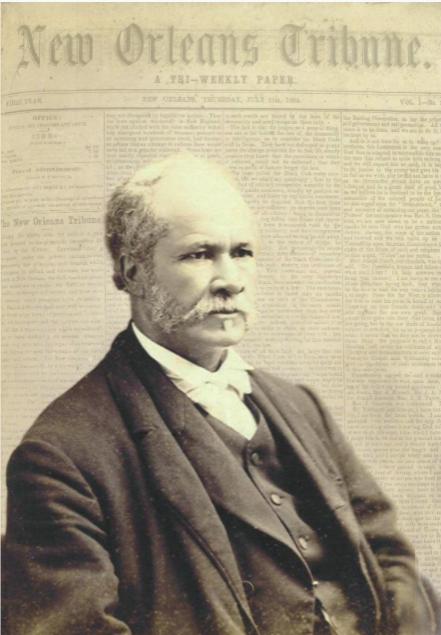
    <summary type="html"><![CDATA[<img src="https://mail.neworleanshistorical.org/files/fullsize/7211d102d95525b1740e49caea2160be.jpg" alt="527 Conti Street" /><br/><p>You are standing in front of the <i>L’Union</i> and the<i> New Orleans Tribune building</i>, the birthplace of civil rights history in the Crescent City. Here, surrounded by the howling madness of the Civil War, these two radical journals condemned slavery and fought for the rights of all of African descent. The black community rallied around the <i>Tribune</i> and organized one of the most important freedom movements in American history. The <i>Tribune</i>’s crusade led to black enfranchisement, integrated public schools, the creation of a groundbreaking state constitution with strong equal rights provisions, and the election of many black state representatives.</p><p>The <i>New Orleans Tribune</i> (<i>la</i><i> Tribune de la Nouvelle Orléans</i>) proclaimed itself an “organ of the oppressed” and defiantly vowed to “spare no means at our command” to promote equality for all people of African descent. [1] Bravely challenging the very foundations of white supremacy, the <i>Tribune</i> was in the vanguard of a monumental struggle for racial democracy. </p><p>Both newspapers were founded by <a href="https://neworleanshistorical.org/items/show/1542?tour=104&index=3">Dr. Louis Charles Roudanez</a>, a free man of color.<i> L’Union</i> was unleashed in 1862 soon after Union forces seized the city. The <i>New Orleans Tribune </i>debuted on July 21, 1864. Publishing over 1,300 issues in the five years of its existence, the <i>Tribune</i> concentrated on matters of central importance to all of African descent: suffrage; an equitable labor and land system to replace slavery; the condition of the emancipated; the creation of integrated public transportation and school systems; the black military; Union policies of accommodation with planters; Louisiana’s constitutional conventions; local and national elections; Reconstruction politics and legislation; and much more. </p><p>The <i>Tribune</i> arose from <i>les gens de couleur libres</i>, the community of free people of color who lived in the Vieux Carré and the Faubourgs Tremé and Marigny. Racially mixed, French-speaking, and Catholic, this prosperous, politically astute and assertive group was one of the largest of its kind in the United States. [2] Of African, Caribbean, European and First Nations ancestries, free people of color resulted from unlawful but tolerated inter-racial relationships during the colonial and antebellum periods. Their very existence contradicted the foundational idea of slave society, that racial inferiority was part of the natural order. Moreover, white elites worried that free people of color offered the enslaved hope for their own liberation.</p><p>The <i>Tribune</i> was bilingual from the start, two pages in English and two in French. The English-language section was a strategic effort to expand the journal’s message outside of the francophone community of free people of color that had been served by the newspaper’s predecessor, <i>L’Union</i>. That new audience grew to include those who had been enslaved, with whom the <i>Tribune</i> identified. “They are of us, and we love them as we do ourselves. We are the organ of the oppressed, without distinction.” [3]</p><p><em><strong><a href="https://mail.neworleanshistorical.org/items/show/1539">For more (including 6 images) view the original article</a></strong></em></p>]]></summary>
    <published>2019-10-30T21:54:38+00:00</published>
    <updated>2026-07-15T16:20:26+00:00</updated>
    <link rel="alternate" type="text/html" href="https://mail.neworleanshistorical.org/items/show/1539"/>
    <id>https://mail.neworleanshistorical.org/items/show/1539</id>
    <author>
      <name>Mark Charles Roudané</name>
    </author>
  </entry>
  <entry>
    <title type="html"><![CDATA[A Movement Without Marches: Black Women in Public Housing]]></title>
    <summary type="html"><![CDATA[<img src="https://mail.neworleanshistorical.org/files/fullsize/075ea57850e4c130ba9c4e8e9ae2c546.jpg" alt="Paper Monuments Poster #006: A Movement Without Marches: Black Women in Public Housing" /><br/><p>Starting in the 1920s and increasing exponentially in the 1930s, and onwards, the urban landscape of New Orleans, like many urban municipalities across the country, began to change as a result of a series of racially restrictive covenants and zoning ordinances, New Deal housing policies, local government blight and slum clearance initiatives, and real estate and banking practices.  These changes took root with the passage of several federal and state acts, key among them was the Home Owners’ Loan Corporation Act of 1933, the National Housing Act of 1934 that established the Federal Housing Administration (FHA), and the Housing Act of 1937, also known as the Wagner-Steagall Bill, which created the United States Housing Authority. The formation of the Home Owners Loan Corporation (HOLC) established by Congress to refinanced mortgages in default to prevent foreclosures, and HOLC’s subsequent color-coded Residential Security Maps, or redlining maps, to measure real estate risk assessment of neighborhoods based on the racial demographics set up a discriminatory practice of urban divestment and exclusion. Outlined in the lending protocols of the FHA’s Underwriting Handbook, the practice of redlining institutionalized racial residential segregation, discriminatory housing practices in mortgage lending, and divestment in urban communities. The establishment of the Housing Authority of New Orleans (HANO) by the Louisiana Housing Act of 1936 coupled with the passage of the federal Housing Act of 1937, charged with coordinating and financing the construction of public housing developments in urban settings, set the stage for the displacement and relocation of low-income Black residents in public housing in the city. </p><p>In 1938 New Orleans became the first city in the country to receive federal funding under the Housing Act of 1937, codifying racial residential segregation in public housing and the social positioning of black residents, particularly low-income black women, in the city for decades to come through the public demonization of their subsidy-status and punitive socials policies that justified their mistreatment. For decades, nearly all mortgages underwritten by the FHA supported white families, while private banks frequently discriminated against Black households seeking mortgage assistance in the neighborhoods in which they resided. Slum clearance and urban renewal projects disproportionally uprooted black communities, and the locations chosen for public housing developments both displaced and confined black people to racially and economically segregated neighborhoods.  Within its first three years, HANO secured $30 million in federal loan contracts for the construction of public housing, and by the time the U.S. entered World War II in 1942, the first six public housing developments in the city were completely occupied.</p><p>Four developments were reserved for Black occupancy</p><p>— the Magnolia (1941) Lafitte (1941), Calliope (1942), St. Bernard (1942) and the two developments for white occupancy — the St. Thomas (1941) and Iberville (1941).  </p><p>By 1957, HANO was the fourth largest public housing authority in the country managing over 10,000 units or public housing, with Desire (1956) being the biggest development.  Low-income black women found it difficult to find places to live in this continually changing housing landscape as racial and gender stereotypes, biases, and fears combined in insidious ways rendering public housing, for many, their only ‘choice.’  Public housing became sites of housing security, contradictions, activism, demonization, violence, community, poverty, and isolation. </p><p>Hidden within the history of public and subsidized housing in New Orleans are narratives of black women who engaged in a movement without demonstrations.  </p><p>Circumscribed by opportunity and discrimination, possibilities and restrictions, affordability and surveillance, low-income black woman organized to improve the lives of public housing residents, transform housing policies, advance tenant rights, encourage resident engagement, support policy changes, and participate in community building efforts through partnerships and collaborations.  </p><p>With the formal incorporation of The New Orleans Public Housing Tenants, Inc. in 1972, and the establishment of the Community Services Department at HANO in 1974, public housing residents significantly increased involvement in shaping management decision-making affecting their communities. </p><p>Through resident councils, the New Orleans Citywide Tenant Council, and interactions with housing officials, black women challenged poor maintenance policies, fought against illegal and unfair evictions, sponsored neighborhood clean-ups, created programs for senior citizens, developed recreational and after school enrichment programs for youth, organized against police brutality, established community centers and resident management corporations, formed non-traditional resident councils, created work opportunities for residents, partnered with local groups establishing child care centers and health clinics, hosted cultural events, advocated for safe and healthy housing conditions, and worked daily to address the impact of economic and housing-related poverty, violence, and substance addiction. Black women challenged dominant stereotypes purported by the media, elected officials, and others that criminalized their poverty, family size and composition, and residential neighborhoods.   Resident leaders engaged with and reshaped housing institutions as they fought to improve the living conditions of their families and communities. Unable to actualize rights gained during the Civil Rights Movement, low-income black women in New Orleans, like many of their counterparts in urban cities across the country, developed mechanisms to address the harsh circumstances of the everyday violence of racist and sexist housing policies and the irresponsibility of government actions that accompanied living in public housing. Although limited by their housing options, the biographies, political agency, activism, struggles, triumphs, setbacks, experiences, and advocacy efforts of low-income black women—and the communities that supported them—is often invisible or marginalized in historical narratives of black freedom struggle and women’s liberation movements. </p><p>Here we acknowledge some of the women who transformed public housing in New Orleans: </p><p>Ursula Spencer, Mildred R. Taylor, Dorothy Allen, Lolita King, Hilda LeBlanc, Viney D. Reynolds, Donna Johnigan, Yvonne Marrero, Augusta Kerry, Barbara Villere, Debra Davis, Kathleen Matthews, Desiree Williams, Cynthia Wiggins, Leah Green, Birgil Green, Dianne Lee, Angela Winfrey, Lillie Clark, </p><p>Constant Haynes, Christopher Homes, Karen Johnson, Marla Taylor, Demetria Farve, Barbara Jackson, Fannie McKnight, Helen Lane, Crystal Jones, Barbara Carter, Beverly Magee, Yvonne Miles, Laura Johnson, Irene B. Griffin, Cynthia Doughty, Laura French, Delores Morrel, Sharon Jasper, Theresa Nicholas, Kim Piper, Stephanie Mingo, Kawana Jasper, Julie Andrews, Jessie Brock, and Ollie Pendleton.</p><p><em><strong><a href="https://mail.neworleanshistorical.org/items/show/1536">For more (including 2 images) view the original article</a></strong></em></p>]]></summary>
    <published>2019-09-30T22:16:04+00:00</published>
    <updated>2026-07-15T16:20:26+00:00</updated>
    <link rel="alternate" type="text/html" href="https://mail.neworleanshistorical.org/items/show/1536"/>
    <id>https://mail.neworleanshistorical.org/items/show/1536</id>
    <author>
      <name>Paper Monuments, shana griffin, Storyteller,&amp;#32;&amp;amp;&amp;#32;CeCe Givens, Artist</name>
    </author>
  </entry>
  <entry>
    <title type="html"><![CDATA[Gordon Plaza Residents&#039; Present Day Political Activism ]]></title>
    <summary type="html"><![CDATA[<img src="https://mail.neworleanshistorical.org/files/fullsize/ecdf3d1d151a7021e58a0b2ec6eb5d17.jpg" alt="Protestors carry a banner during RISE for Cancer Alley Rally in Gordon Plaza and St. James Parish." /><br/><p>For decades, residents of Gordon Plaza engaged (and continue to engage) in political activism to spread public awareness about toxic contamination in their neighborhood. Residents hope to achieve fair and just relocation from their tainted properties. Recently, the New Orleans People's Assembly partnered with Gordon Plaza residents to organize several events to increase public awareness of these injustices.</p><p>On September 8th, 2018, the Gordon Plaza neighborhood hosted “RISE for Cancer Alley,” a political rally tying together issues of environmental racism faced by the people of Gordon Plaza and residents living near petrochemical plants along the Mississipi River. Later that day, the rally made its way to St. James where toxic pollutants produced by petrochemical plants are destroying the health and wealth of black homeowners. </p><p>On October 26th, 2018, activists staged "Asphyxiated: Exposing Gordon Plaza" in front of St. Louis Cathedral. Some actors coughed and wheezed, while others wore signs with the names of past politicians who turned a blind eye to the injustices faced by residents of Gordon Plaza. Performed in the heart of the French Quarter, this protest demanded residents and visitors alike to recognize the plight of community members residing just three miles away.</p><p>In 2024-2025, the City of New Orleans completed a voluntary buyout of residential properties. But for some former residents the fight is still not over. A federal lawsuit, filed in May of 2026 alleges that the city is prioritizing other payments over millions owed in a class-action lawsuit for compensation for emotional distress and property damage.</p><p><p class="p1">As of 2025, the houses and buildings of Gordon Plaza no longer exist. They were torn down to make way for a a solar farm. In the videos below, longtime Gordon Plaza resident Shannon Rainey shares her decades of political activism.</p><p>To support the residents of Gordon Plaza: </p><p>Follow New Orleans People’s Assembly for more details on how to get involved on their website https://gordonplaza.com/</p><p><em><strong><a href="https://mail.neworleanshistorical.org/items/show/1500">For more (including 6 images&#32;&amp;&#32;2 videos) view the original article</a></strong></em></p>]]></summary>
    <published>2019-04-29T20:40:37+00:00</published>
    <updated>2026-07-15T16:20:26+00:00</updated>
    <link rel="alternate" type="text/html" href="https://mail.neworleanshistorical.org/items/show/1500"/>
    <id>https://mail.neworleanshistorical.org/items/show/1500</id>
    <author>
      <name>Lones Gagnard&amp;#32;&amp;amp;&amp;#32;Kathryn O&amp;#039;Dwyer, Editor</name>
    </author>
  </entry>
  <entry>
    <title type="html"><![CDATA[Gordon Plaza Deemed EPA Superfund Site]]></title>
    <summary type="html"><![CDATA[<img src="https://mail.neworleanshistorical.org/files/fullsize/6ef8c538d7570fe9cca362a27936eeeb.jpg" alt="Newspaper clip showing EPA workers collecting soil in Gordon Plaza neighborhood." /><br/><p>By 1985, just four years after the first residents moved into Gordon Plaza, state environmentalists recommended testing soil and air in the Gordon Plaza subdivision to determine the extent of hazardous wastes underneath the houses that were built over an old landfill. Testing performed at the site of the new Moton Elementary School in 1983-1984 revealed high levels of toxic chemicals in the soil. Due to their proximity to the contaminated school site, Gordon Plaza residents demanded the testing of their own soil. It was at this point that residents discovered their homes were built on the former Agricultural Street Landfill, where many of the growing industries of New Orleans dumped their toxic chemicals and garbage for over fifty years. [1] A Times-Picayune article from October 3, 1986, states that “residents and local environmentalists were still concerned with the toxic chemicals after Environmental Protection Agency (EPA) officials told them that lead was the only one in over 130 toxic chemicals discovered in levels high enough to generate health concerns.” </p><p>Following a sewage leak in 1993, concerns over the toxicity of Gordon Plaza land surfaced once again. Despite earlier assertions that the pollutant levels were not dangerous, the EPA designated the Gordon Plaza subdivision as a Superfund site in 1994. The initial reaction of the community was positive because they believed they would be able to get access to funding for relocation, however, this would not prove to be the result. The EPA encouraged people not to dig in their yards or gardens. Relocation of Gordon Plaza residents was not considered as a solution by the EPA. In 1994, the first class-action lawsuit was filed by Press Park and Gordon Plaza residents against the city of New Orleans, the New Orleans school board, and two unnamed construction companies, for knowingly putting their houses in a contaminated area. In 2001 the EPA oversaw the installation of a layer of topsoil on Gordon Plaza properties to form a barrier from the toxic land. This soil was washed away by flooding during Hurricane Katrina.</p><p>In the videos below, longtime Gordon Plaza resident Shannon Rainey discusses the impact that toxic chemicals buried underneath Gordon Plaza have had on her, her family, and her neighbors. </p><p><em><strong><a href="https://mail.neworleanshistorical.org/items/show/1466">For more (including 3 images&#32;&amp;&#32;2 videos) view the original article</a></strong></em></p>]]></summary>
    <published>2019-03-18T00:10:03+00:00</published>
    <updated>2026-07-15T16:20:26+00:00</updated>
    <link rel="alternate" type="text/html" href="https://mail.neworleanshistorical.org/items/show/1466"/>
    <id>https://mail.neworleanshistorical.org/items/show/1466</id>
    <author>
      <name>Kathryn O&amp;#039;Dwyer, Shelby Loyacano,&amp;#32;&amp;amp;&amp;#32;Ella McIntire</name>
    </author>
  </entry>
  <entry>
    <title type="html"><![CDATA[Constructing Gordon Plaza]]></title>
    <summary type="html"><![CDATA[<img src="https://mail.neworleanshistorical.org/files/fullsize/28aa18fe6fc1f93983c8bf797e19809a.jpg" alt="&quot;Mayor Ernest N. Morial (center); Councilman Philip Ciaccio (left); Councilman Lambert Boissier (right); others unidentified&quot;" /><br/><p>In the 1970s, under the administrations of Mayors “Moon” Landrieu and his successor “Dutch” Morial, the city planned and built housing for elderly and low-income families on the former site of Agriculture Street Landfill (ASL). </p><p>The city of New Orleans was able to fund this development with federal money available through the Department of Housing and Urban Development (HUD) via Community Development Block Grant Program (CDBG/CD Grant) under the auspices of improving Desire Community Housing, a public housing complex build near ASL in the 1950s. Throughout the nation, low-income public housing complexes like Desire were created by the federal government beginning in the 1930s. Although they alleviated the housing shortage created by the depression economy, these complexes were segregated by design, ushering in a new era of systematic racial segregation in the United States. [1] </p><p>Federal policies of developing segregated housing while simultaneously refusing to ensure home mortgages in racially mixed areas, a policy known as redlining, made rentals in public housing like Desire Projects one of few options for African-American households until the Fair Housing Act of 1968. [2] By 1975, Press Park and Gordon Plaza Apartments for the Elderly expanded these public housing options. Gordon Plaza was designed as a residential development for low-income homebuyers in areas directly adjacent to Desire Housing Project, which, because of the segregated history of public housing, was primarily African-American.</p><p>Construction of single-family homes, apartments in Press Park, and the Senior Center in Gordon Plaza began in 1978. On August 26, 1979, an advertisement listed in the Times Picayune alerted the public that “applications are now being accepted for 128 units of Gordon Plaza Elderly and Handicapped Complex… All apartments will be under the Section 8 Subsidy Programs.” Advertisements for Gordon Plaza properties clearly targeted low-income families and senior citizens. By 1981, residents begin to move into the Gordon Plaza neighborhood. </p><p>Soon after the development opened, city officials began to receive complaints concerning deficiencies at Gordon Plaza and Press Park. In a letter to the mayor's office and Community Improvement Agency dated June 26, 1980, Philip C. Ciaccio, Councilman of District E, stated: </p><p>"I attended a ceremony at the Gordon Plaza Apartments for the Elderly at the end of May and observed that the meeting room was extremely warm because several of the air-conditioning units were inoperative...I took the time to discuss the existence of various deficiencies in the building...I am particularly disturbed by the apparent run-around they are getting, particular the brand new air-conditioning units that are inoperable." [3] Enclosed with this letter was a list of complaints about the development, five pages long.</p><p>In the videos below, longtime Gordon Plaza resident Shannon Rainey shares her experiences purchasing a home in Gordon Plaza.</p><p><em><strong><a href="https://mail.neworleanshistorical.org/items/show/1465">For more (including 6 images&#32;&amp;&#32;2 videos) view the original article</a></strong></em></p>]]></summary>
    <published>2019-03-18T00:03:42+00:00</published>
    <updated>2026-07-15T16:20:27+00:00</updated>
    <link rel="alternate" type="text/html" href="https://mail.neworleanshistorical.org/items/show/1465"/>
    <id>https://mail.neworleanshistorical.org/items/show/1465</id>
    <author>
      <name>Kathryn O&amp;#039;Dwyer, Shelby Loyacano,&amp;#32;&amp;amp;&amp;#32;Elizabeth Williams</name>
    </author>
  </entry>
  <entry>
    <title type="html"><![CDATA[Local Residents Demand Closure of Agriculture Street Landfill]]></title>
    <summary type="html"><![CDATA[<img src="https://mail.neworleanshistorical.org/files/fullsize/9d9df5493f94fc9df33ea280f5a0bf60.jpg" alt="&quot;Brandishing a sign which calls for the removal of the Agriculture St. dump...&quot;" /><br/><p><span style="font-weight: 400;">Throughout the 1950s, the local community suffered from horrible stenches, pest infestations, and smoke emanating from </span><span style="font-weight: 400;">Agriculture Street Landfill (ASL)</span><span style="font-weight: 400;">. Spontaneous combustion commonly occurred at the site when incompatible wastes came in contact underground, garnering ASL the nickname “Dante’s Inferno.” [1]</span><span style="font-weight: 400;"> In October of 1950, police guided motorists through the streets surrounding ASL at 10 miles per hour due to low visibility caused by smoke emanating from the landfill. [2]</span><span style="font-weight: 400;"> In October of 1956, eight public schools stopped serving hot lunches due to a severe fly infestation at the dump. [3]</span><span style="font-weight: 400;">Residents near ASL began to make public complaints and eventually organized legal and political action against the landfill. One resident quoted in a local newspaper article said “the cost in depreciation of land in the close proximity of this landfill has been tremendous.” [4]</span><span style="font-weight: 400;"> In 1951, neighborhood residents made a failed attempt to sue the City for its negligent operation of the landfill. [5]</span><span style="font-weight: 400;"> In 1955, residents of the Eighth and Ninth Wards picketed the landfill. Residents quoted in local media coverage of the protest condemned ASL's "menacing operations" and "the deplorable conditions it inflicted upon the neighborhood." [6]</span>
<span style="font-weight: 400;">City officials responded to these protests with a plan to construct a supposedly odorless and smokeless incinerator on Florida Avenue just ten blocks from ASL. [7] </span><span style="font-weight: 400;"> Community members, outraged that the incinerator would remain so close to their homes, circulated a petition to bar its construction. [8]</span><span style="font-weight: 400;"> </span>
<span style="font-weight: 400;">In 1957, the City closed the landfill because it could not accommodate any more trash. City officials celebrated the closure of ASL and called for the redevelopment of the blighted site. Councilman Glenn P. Clasen asserted that the land would be “restored and developed to provide additional housing within a very few years,” aiding in the “progress and growth [of] the rest of our city.” [9]</span><span style="font-weight: 400;"> While overlooking mounds of rubbish during a landfill inspection, Councilman Victor H. Shiro proclaimed: “I’d like to see the day when this is a beautiful subdivision.” [10]</span>
<span style="font-weight: 400;">In September of 1965, following the destruction wrought by Hurricane Betsy, the City temporarily reopened ASL to accommodate excess trash produced by the storm. [11]</span><span style="font-weight: 400;"> The City did not place any restrictions on these deposits and every day trucks delivered 300 loads of hurricane debris and trash to ASL. Much of this refuse contained high levels of toxic lead and arsenic. [12]</span><span style="font-weight: 400;"> Though sanitation officials stated that “emergency burning of garbage in long-unused landfill locations [would] cease as soon as practicable,” ASL did not close again until the summer of 1966. [13]</p><span>Despite long-standing public concerns regarding the safety of repurposing landfills, City officials continued to support the redevelopment of ASL. [14]</span><span> In the 1970s, the City began construction of</span><span> Gordon Plaza, a low-income housing project targeted at first-time home buyers, atop the toxic landfill.</span></p><p><em><strong><a href="https://mail.neworleanshistorical.org/items/show/1464">For more (including 2 images) view the original article</a></strong></em></p>]]></summary>
    <published>2019-03-17T21:38:59+00:00</published>
    <updated>2026-07-15T16:20:27+00:00</updated>
    <link rel="alternate" type="text/html" href="https://mail.neworleanshistorical.org/items/show/1464"/>
    <id>https://mail.neworleanshistorical.org/items/show/1464</id>
    <author>
      <name>Kathryn O&amp;#039;Dwyer</name>
    </author>
  </entry>
  <entry>
    <title type="html"><![CDATA[Agriculture Street Landfill Opening and Operations]]></title>
    <summary type="html"><![CDATA[<img src="https://mail.neworleanshistorical.org/files/fullsize/376884cafd832862e15b70ca145ea044.jpg" alt="Trash heap at the Agricultural Street Landfill." /><br/><p><span style="font-weight: 400;">In 1909, </span><span style="font-weight: 400;">Agriculture Street Landfill (ASL)</span><span style="font-weight: 400;"> opened to accommodate trash produced by half of New Orleans residents. ASL occupied 95 acres of previously undeveloped swampland surrounded by Abundance Street, Industry Street, and the Northeastern Railroad Company tracks. The new landfill received trash via train cars. Employees either burned the deposits in open fires or buried them underground. [1, 2]</span> <span style="font-weight: 400;"> By 1912, employees began freely using toxic disinfectants to treat infestations and stenches permeating from the landfill. [3]</span><span style="font-weight: 400;"> In 1914, landfill operators oversaw the erection of an incinerator. [4]</span>
<span style="font-weight: 400;">Through the 1930s, the amount of waste produced in New Orleans dramatically increased. Trash deposits overloaded the ASL incinerator and employees once again burned excess garbage in the open air. In 1939, the Works Progress Administration refurbished the incinerator, tripling its daily capacity. [5, 6]</span> <span style="font-weight: 400;"> </span>
</p><p><span style="font-weight: 400;">City officials did not enforce sanitary regulations at ASL. In 1957, City Sanitation Director George M. Rittiner said it was "only necessary to use six- to 10- inch cover" when remediating the landfill’s trash laden soil, even though he acknowledged the regulations recommended two feet of cover. [7]</span> <span style="font-weight: 400;">As garbage mounted at ASL, residents of the surrounding neighborhood expressed growing dissatisfaction with the landfill’s unsanitary conditions. </span></p><p><em><strong><a href="https://mail.neworleanshistorical.org/items/show/1463">For more (including 2 images) view the original article</a></strong></em></p>]]></summary>
    <published>2019-03-17T20:30:13+00:00</published>
    <updated>2026-07-15T16:20:27+00:00</updated>
    <link rel="alternate" type="text/html" href="https://mail.neworleanshistorical.org/items/show/1463"/>
    <id>https://mail.neworleanshistorical.org/items/show/1463</id>
    <author>
      <name>Kathryn O&amp;#039;Dwyer</name>
    </author>
  </entry>
  <entry>
    <title type="html"><![CDATA[City Hall Cafeteria Sit-In]]></title>
    <summary type="html"><![CDATA[<p><strong><em>Paper Monument Poster #008: The City Hall Sit-In of 1963, a direct action led by the Rev. Avery C. Alexander, served as a pivotal moment in the history of the civil rights movement and racial equality in the city of New Orleans.</em></strong></p><img src="https://mail.neworleanshistorical.org/files/fullsize/b61d6b63ec91fc300da2d6b4857de131.jpg" alt="Paper Monument Poster #008: City Hall Cafeteria Sit-In" /><br/><p>Born June 29, 1910 in Terrebonne Parish, Avery Caesar Alexander grew up in a poor family. He entered the workforce as a boy, taking odd jobs until he earned work as a longshoreman. His family relocated to New Orleans and because he was forced to work as a child he was unable to successfully earn his high school diploma until he was 29, which he did by attending night school. He went on to graduate from Union Baptist Theological Seminary and became associate pastor at the Historic Second Baptist Church on Marengo Street.</p><p>As a longshoreman, he had became active in the longshoremen’s union and eventually in the local chapter of the National Association for the Advancement of Colored People (NAACP). In the NAACP, he developed his organizational skills and led efforts for voter registrations, boycotts, marches and demonstrations.</p><p>1963 was an extremely difficult year in the Civil Rights movement on both the national and local levels. The interracial and inter-denominational Citizens’ Committee of Greater New Orleans, led a march against racial discrimination on September 30, 1963 to the steps of New Orleans City Hall. Following the march an 18-point petition was presented to Mayor Victor H. Schiro, the City Council, various business & civic leaders and to all of the local news media outlets. The protesters waited weeks for an official response from City Hall. But they were ignored.</p><p>On October 31, 1963, Rev. Alexander launched a direct action campaign aimed directly at City Hall. African American protesters held sit-ins in the mayor’s reception area, the City Council chambers and the John Lynne Cafeteria located in the basement of city hall. They were asked to leave, and told that if they did not, they would be removed by force.</p><p>Rev. Alexander, Sandra Nixon and two other young ladies held their sit-in at the cafeteria by asking to be served. When the employees refused to serve them, they refused to leave, and the young ladies were carried out of the cafeteria on their chairs which were removed while they remained seated in them. Rev. Alexander, however, was dragged by his feet out of the building. He was abused and beaten as his head hit the marble steps and floors, and was forced into a police wagon.</p><p>28 African American protesters were arrested that day. Eight African American employees who worked at the cafeteria walked off their jobs and the images of Rev. Alexander dragged out of City Hall by his feet made local, state & national news.</p><p>The images of Rev. Alexander ignited a wave of protest, demonstrations and sit ins around the city. The 1963 City Hall Cafeteria Sit in was one of the catalysts that led to the final and complete desegregation of the city of New Orleans.</p><p><em><strong><a href="https://mail.neworleanshistorical.org/items/show/1446">For more view the original article</a></strong></em></p>]]></summary>
    <published>2018-10-24T22:49:46+00:00</published>
    <updated>2026-07-15T16:20:27+00:00</updated>
    <link rel="alternate" type="text/html" href="https://mail.neworleanshistorical.org/items/show/1446"/>
    <id>https://mail.neworleanshistorical.org/items/show/1446</id>
    <author>
      <name>Paper Monuments, Malik Bartholomew, narrative,&amp;#32;&amp;amp;&amp;#32;Kyle Tveten Art, artwork</name>
    </author>
  </entry>
  <entry>
    <title type="html"><![CDATA[Comité des Citoyens]]></title>
    <summary type="html"><![CDATA[<p><strong><em>Comité des Citoyens, most famous for being the group that organized member Homer Plessy's violation of railroad segregation laws on a train in 1892, was a group that advocated for black New Orleanians in the post-Reconstruction period.</em></strong></p><img src="https://mail.neworleanshistorical.org/files/fullsize/4137c8b5f8adf4bbc0ddf6eee0288940.jpg" alt="Comité des Citoyens" /><br/><p>Most famous for being the group that organized member Homer Plessy's violation of railroad segregation laws on a train in 1892, the Comité des Citoyens was a group founded by Rodolphe Desdunes and Louis Martinet, with aid and advice from Aristide Mary. Each of these men was engaged in the intellectual work and activism required to resist dangerous forces afoot in the late nineteenth century, forces that would (further) diminish the full humanity of black citizens in the post-Reconstruction period.</p><p>The Comité des Citoyens was a voice in support of an empowered form of Black identity that its members felt was slipping away as Americanization gained a firmer grasp on postbellum New Orleans. As current New Orleans activists battle to remove monuments that empower the legacy of enslavement, and that memorialize direct action by Redeemers against the Reconstruction government in Louisiana, perhaps we can memorialize instead the collective effort of people who resisted the reductive thinking that is at the heart of American white supremacy.</p><p>Members of the Comité des Citoyens were militant, recalcitrant, and defiant. In their newspaper, the Crusader, Desdunes speaks to these values of the Comité as he addresses these words to Judge Ferguson and his allies in 1893: “No theory of white supremacy, no method of lynching, no class legislation, no undue disqualification of citizenship, no system of enforced ignorance, no privileged classes at the expense of others can be tolerated, and, much less, openly encouraged by any citizen who loves justice, law, and right."</p><p>In his 1911 book presenting prominent Creole residents of New Orleans, Desdunes makes clear the radicalism of his people and his history—of our people and our history—when he says: “It is more noble and dignified to fight, no matter what, than to show a passive attitude of resignation. Absolute submission augments the oppressor’s power and creates doubt about the feelings of the oppressed." Our monuments should celebrate the Creole radicalism that is a fundamental part of our history.</p><p><em><strong><a href="https://mail.neworleanshistorical.org/items/show/1405">For more view the original article</a></strong></em></p>]]></summary>
    <published>2018-03-01T17:36:24+00:00</published>
    <updated>2026-07-15T16:20:27+00:00</updated>
    <link rel="alternate" type="text/html" href="https://mail.neworleanshistorical.org/items/show/1405"/>
    <id>https://mail.neworleanshistorical.org/items/show/1405</id>
    <author>
      <name>Paper Monuments, Rachel Cockrill, artist,&amp;#32;&amp;amp;&amp;#32; Lauren Lastrape, narrative</name>
    </author>
  </entry>
</feed>