<?xml version="1.0" encoding="UTF-8"?>
<feed xmlns="http://www.w3.org/2005/Atom">
  <title type="text">New Orleans Historical</title>
  <updated>2026-07-15T16:20:35+00:00</updated>
  <generator uri="http://framework.zend.com" version="1.12.20">Zend_Feed_Writer</generator>
  <link rel="alternate" type="text/html" href="https://mail.neworleanshistorical.org/"/>
  <link rel="self" type="application/atom+xml" href="https://mail.neworleanshistorical.org/items/browse?output=rss2"/>
  <id>https://mail.neworleanshistorical.org/</id>
  <author>
    <name>New Orleans Historical</name>
    <uri>https://mail.neworleanshistorical.org</uri>
  </author>
  <link rel="hub" href="https://pubsubhubbub.appspot.com/"/>
  <entry>
    <title type="html"><![CDATA[Myra Clare Rogers Memorial Chapel ]]></title>
    <summary type="html"><![CDATA[<img src="https://mail.neworleanshistorical.org/files/fullsize/8e2daeeca58ead027839e68e17338bbe.jpg" alt="Broadway Chapel" /><br/><p>In his book, "A Brief History of H. Sophie Newcomb Memorial College 1887-1919: A Personal Reminiscence," President Dixon mentioned that the move to the Broadway campus was a good thing, as the new buildings were better adapted for college use, but that the school was still missing many vital elements, including an assembly hall and a chapel.</p><p>College benefactress, Josephine Louise Newcomb (1816-1901), had expressed a wish for a nonsectarian chapel on its campus, and Washington Avenue had had such a place, beloved by students. Despite selling all the buildings on the Washington campus, Newcomb reserved their old chapel, and seriously considered taking it apart, stone by stone, and relocating it to the new Broadway campus. Nothing came of this consideration, and the old building was also sold, after extracting and putting into storage the Tiffany windows, which were originally created at the request of Mrs. Newcomb, and chapel furniture for the future chapel.</p><p>Eventually, the windows were put in the new Myra Clare Rogers Chapel that was completed in the 1970s, thanks to a donation in 1945 from the brother of the late Myra Clare Rogers, a Newcomb graduate of the class of 1896 and a professor at both Newcomb High and College. Until the chapel's completion in 1976, Newcomb had to make use of the basement of Newcomb Hall for services.</p><p>The chapel is used today for religious services, lectures, weddings, and other events.</p><p>To continue the walking tour, please proceed to Josephine Louise House, campus building number 75.</p><p><em><strong><a href="https://mail.neworleanshistorical.org/items/show/170">For more (including 3 images) view the original article</a></strong></em></p>]]></summary>
    <published>2012-04-27T17:46:18+00:00</published>
    <updated>2026-07-15T16:20:35+00:00</updated>
    <link rel="alternate" type="text/html" href="https://mail.neworleanshistorical.org/items/show/170"/>
    <id>https://mail.neworleanshistorical.org/items/show/170</id>
    <author>
      <name>Newcomb College Institute&amp;#32;&amp;amp;&amp;#32; Lauren Dean</name>
    </author>
  </entry>
  <entry>
    <title type="html"><![CDATA[Warren House]]></title>
    <summary type="html"><![CDATA[<img src="https://mail.neworleanshistorical.org/files/fullsize/a3fb0744a34657d4a9697a7344392148.jpg" alt="Aerial View of Warren Hall" /><br/><p>The construction of Doris Hall was followed in 1928 by the construction of a larger dormitory, Warren Newcomb House.</p><p>Warren House is named for the husband of Josephine Louise, and in 1952, an additional wing was successfully added, expanding the dorm to house around 178 students, most of whom were sophomores and juniors.</p><p>Warren is presently a coed dorm for sophomores and juniors, and is also home to a handful of freshmen males.</p><p>To continue the walking tour, please proceed to Dixon Hall, campus building numbers 68-70.</p><p><em><strong><a href="https://mail.neworleanshistorical.org/items/show/172">For more (including 5 images) view the original article</a></strong></em></p>]]></summary>
    <published>2012-05-01T16:10:50+00:00</published>
    <updated>2026-07-15T16:20:35+00:00</updated>
    <link rel="alternate" type="text/html" href="https://mail.neworleanshistorical.org/items/show/172"/>
    <id>https://mail.neworleanshistorical.org/items/show/172</id>
    <author>
      <name>Newcomb College Institute&amp;#32;&amp;amp;&amp;#32; Lauren Dean</name>
    </author>
  </entry>
  <entry>
    <title type="html"><![CDATA[Newcomb Hall]]></title>
    <summary type="html"><![CDATA[<img src="https://mail.neworleanshistorical.org/files/fullsize/1bc5fd48479ded9e19fd4bea1ed3557f.jpg" alt="Newcomb Hall" /><br/><p>From the first day Newcomb College opened its doors on the Broadway campus, Newcomb Hall was the heart of the school. As the administrative stronghold of the college, most of the departments in Newcomb College have, at some point, claimed Newcomb Hall as their office base.</p><p>In a sharp contrast to the breathtaking beauty that goes hand in hand with the lush foliage that surrounds the Newcomb campus is President Dixon's description of the campus in 1918, as being, "...a bare muddy waste, with scanty grass, a few distorted trees, and three very large red brick buildings, naked and forlorn" (186).</p><p>Despite their initial reservations, however, the students of Newcomb seized the opportunity to mold their new home with vigor and they were directly responsible for the oaks that are present today. Rallying to the challenge, students worked hard to shape both the physical and academic landscape, and despite occasional interruptions, the student body seemed to settle comfortably into their new home. More than once invading Tulanians from Camp Martin had to be reminded that Newcomb was not the seat of the World War I, no matter how much they wished it were, just so they would have an excuse to visit the campus.</p><p>Currently, Newcomb Hall houses classes and laboratories, as well as offices for the departments of Philosophy, Communication, Sociology, and all foreign languages. There is also a state-of-the-art language laboratory that is housed on the fourth floor.</p><p>To continue the walking tour, please proceed to the Myra Clare Rogers Chapel, campus building number 73.</p><p><em><strong><a href="https://mail.neworleanshistorical.org/items/show/176">For more (including 6 images) view the original article</a></strong></em></p>]]></summary>
    <published>2012-05-01T16:19:02+00:00</published>
    <updated>2026-07-15T16:20:35+00:00</updated>
    <link rel="alternate" type="text/html" href="https://mail.neworleanshistorical.org/items/show/176"/>
    <id>https://mail.neworleanshistorical.org/items/show/176</id>
    <author>
      <name>Newcomb College Institute&amp;#32;&amp;amp;&amp;#32; Lauren Dean</name>
    </author>
  </entry>
  <entry>
    <title type="html"><![CDATA[Comité des Citoyens]]></title>
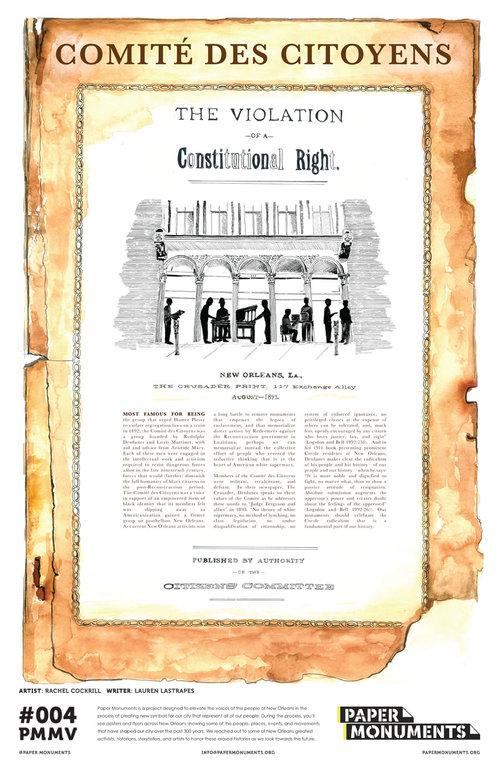
    <summary type="html"><![CDATA[<p><strong><em>Comité des Citoyens, most famous for being the group that organized member Homer Plessy's violation of railroad segregation laws on a train in 1892, was a group that advocated for black New Orleanians in the post-Reconstruction period.</em></strong></p><img src="https://mail.neworleanshistorical.org/files/fullsize/4137c8b5f8adf4bbc0ddf6eee0288940.jpg" alt="Comité des Citoyens" /><br/><p>Most famous for being the group that organized member Homer Plessy's violation of railroad segregation laws on a train in 1892, the Comité des Citoyens was a group founded by Rodolphe Desdunes and Louis Martinet, with aid and advice from Aristide Mary. Each of these men was engaged in the intellectual work and activism required to resist dangerous forces afoot in the late nineteenth century, forces that would (further) diminish the full humanity of black citizens in the post-Reconstruction period.</p><p>The Comité des Citoyens was a voice in support of an empowered form of Black identity that its members felt was slipping away as Americanization gained a firmer grasp on postbellum New Orleans. As current New Orleans activists battle to remove monuments that empower the legacy of enslavement, and that memorialize direct action by Redeemers against the Reconstruction government in Louisiana, perhaps we can memorialize instead the collective effort of people who resisted the reductive thinking that is at the heart of American white supremacy.</p><p>Members of the Comité des Citoyens were militant, recalcitrant, and defiant. In their newspaper, the Crusader, Desdunes speaks to these values of the Comité as he addresses these words to Judge Ferguson and his allies in 1893: “No theory of white supremacy, no method of lynching, no class legislation, no undue disqualification of citizenship, no system of enforced ignorance, no privileged classes at the expense of others can be tolerated, and, much less, openly encouraged by any citizen who loves justice, law, and right."</p><p>In his 1911 book presenting prominent Creole residents of New Orleans, Desdunes makes clear the radicalism of his people and his history—of our people and our history—when he says: “It is more noble and dignified to fight, no matter what, than to show a passive attitude of resignation. Absolute submission augments the oppressor’s power and creates doubt about the feelings of the oppressed." Our monuments should celebrate the Creole radicalism that is a fundamental part of our history.</p><p><em><strong><a href="https://mail.neworleanshistorical.org/items/show/1405">For more view the original article</a></strong></em></p>]]></summary>
    <published>2018-03-01T17:36:24+00:00</published>
    <updated>2026-07-15T16:20:27+00:00</updated>
    <link rel="alternate" type="text/html" href="https://mail.neworleanshistorical.org/items/show/1405"/>
    <id>https://mail.neworleanshistorical.org/items/show/1405</id>
    <author>
      <name>Paper Monuments, Rachel Cockrill, artist,&amp;#32;&amp;amp;&amp;#32; Lauren Lastrape, narrative</name>
    </author>
  </entry>
  <entry>
    <title type="html"><![CDATA[Plessy v. Ferguson]]></title>
    <summary type="html"><![CDATA[<img src="https://mail.neworleanshistorical.org/files/fullsize/4183f108a70978d929a4d433e7830bba.jpg" alt="Plessy&#039;s Arrest" /><br/><p>On June 7, 1892, a 30-year-old African-American man named Homer Plessy attempted to board a segregated East Louisiana Railroad passenger train car at Press and Royal Streets in New Orleans. Louisiana's Separate Car Act, passed in 1890, required the segregation of rail passengers traveling on intrastate railroads. </p><p>A group of New Orleanians organized as the Comite' des Citoyens (Committee of Citizens) decided to challenge the law. The committee selected Plessy for the legal campaign, in part, because of his light complexion. A darker-complected person would not likely have been able to purchase a ticket and be seated in the rail car reserved for whites. Plessy purchased a ticket to board the train that departed at 4:15 p.m. for Covington, Louisiana. After a planned altercation with the train conductor, Plessy refused to give up his seat and move to the colored only car; the train was stopped and he was arrested immediately by a private detective hired by the Comite' des Citoyens. </p><p>In State of Louisiana v. Homer Adolph Plessy, Plessy argued that the Louisiana law requiring segregated passenger cars had denied him his rights under the Thirteenth and Fourteenth Amendments of the US Constitution. However, Judge John Howard Ferguson ruled that Louisiana had the right to regulate railroad companies as long as they operated within state boundaries. Plessy was convicted and sentenced to pay a $25 fine. </p><p>Plessy applied for writs to the Supreme Court of Louisiana, arguing that the law segregating train passengers by race within the state of Louisiana was unconstitutional. In January 1893, Louisiana's highest court denied Plessy's application for writs and upheld Judge Ferguson's ruling. The Louisiana Supreme Court noted that the US Supreme Court had not yet decided the validity of statutes requiring, under penalty, "separate and equal accommodations." Plessy then applied for writs to the US Supreme Court, where, once again, the Louisiana statute was upheld. The US Supreme Court ruled in 1896 that separating the races was not a violation of rights, but a matter of public policy, as long as the separate facilities were equal. </p><p>Plessy v Ferguson thus became universally known as the "separate but equal law." This law sanctioned the segregation of public accommodations throughout much of the nation. It was later overturned by Brown v. Board of Education in 1954.</p><p><em><strong><a href="https://mail.neworleanshistorical.org/items/show/320">For more (including 5 images&#32;&amp;&#32;1 video) view the original article</a></strong></em></p>]]></summary>
    <published>2012-07-19T21:55:21+00:00</published>
    <updated>2026-07-15T16:20:35+00:00</updated>
    <link rel="alternate" type="text/html" href="https://mail.neworleanshistorical.org/items/show/320"/>
    <id>https://mail.neworleanshistorical.org/items/show/320</id>
    <author>
      <name>Mary Ann Wegmann, The Law Library of Louisiana, University of New Orleans History Department,&amp;#32;&amp;amp;&amp;#32; Nik Richard</name>
    </author>
  </entry>
  <entry>
    <title type="html"><![CDATA[Congo Square: Mythology and Music]]></title>
    <summary type="html"><![CDATA[<img src="https://mail.neworleanshistorical.org/files/fullsize/e54606760b797cdc090f2cef5ca17931.jpg" alt="&quot;Congo Square, Looking Toward End of  Basin St.&quot;" /><br/><p>For many Congo Square is the site that inspires the most fantastical images of enslaved life in New Orleans. From the 1840s to the 1880s, intellectuals and artists like George Washington Cable, Louis Gottschalk, and Lafcadio Hearn brought Congo Square into national imagination as a site of exoticized, sexualized abandon. The area famed for its African drumbeats and dances, now marked in Louis Armstrong Park, became famously known as “the birthplace of jazz.” But the history associated with the actual location stands in the shadow of its mythology, one created primarily by white writers who had never even seen enslaved people there.</p><p>From 1796 to 1803, 2800 enslaved people were baptized at St. Louis Cathedral in Jackson Square, more than 700 of them of Kongo background. Therefore it’s not a stretch to imagine that the enslaved people participating in Sunday afternoon revelry were incorporating music and dance from West Africa.</p><p>By 1817 New Orleans city laws had restricted gatherings of enslaved people to Sunday afternoons in Congo Square, then called Place Publique. Due to mounting concerns about abolitionists invading the city and the threat of revolution, Sunday afternoon music and dance was shut down in 1835, resumed, and then shut down again in 1851. By 1856, people of African descent were no longer legally allowed to play horns or drums in the city. After that the area was used primarily for military exercise. However, as was often the case in New Orleans, music and dance continued in circles of enslaved people, if hidden in secret. </p><p>When Benjamin Latrobe, a British born architect, described the musical scenes at Place Publique (also known as Circus Square) in 1819, he got caught up in what he sees as a ‘wild’ display. The derogatory racial attitudes of the era certainly enhanced this perception, but his drawings and specific descriptions of certain dances draw a parallel with the musical life of St. Domingue. </p><p>It’s likely that many of the people who filled the square on Sundays had spent the past couple of decades evading violence first in St. Domingue and then Cuba. They brought with them bamboula drums, banjos, and propensity for using clothing and dancing to mock social mores. The contredanse, for example, mocked high society partnered dances. Along with the more often sensationalized, sexualized African dancing, the contredanse appears in the testimony of not only Latrobe in New Orleans, but also Médéric Louis Élie Moreau de Saint-Méry in Saint-Domingue only 20 years prior. </p><p>Besides dance and music, Place Publique was known during the colonial phases and the less restrictive years of the antebellum era as a place where enslaved people could sell their wares. Vendors also hawked food and set up recreational amusements, such as the performances of a Havana-born circus performer. In the early French colonial era, enslaved people and Native Americans even played a version of lacrosse for the entertainment of wealthy Frenchmen. When it comes to the area known as Congo Square, we’ve only scratched the surface in terms of its significance for New Orleans enslaved population over the last 300 years. </p><p><em><strong><a href="https://mail.neworleanshistorical.org/items/show/745">For more view the original article</a></strong></em></p>]]></summary>
    <published>2013-12-09T20:38:00+00:00</published>
    <updated>2026-07-15T16:20:33+00:00</updated>
    <link rel="alternate" type="text/html" href="https://mail.neworleanshistorical.org/items/show/745"/>
    <id>https://mail.neworleanshistorical.org/items/show/745</id>
    <author>
      <name>Adam Majewski&amp;#32;&amp;amp;&amp;#32;Kate Mason</name>
    </author>
  </entry>
  <entry>
    <title type="html"><![CDATA[The New Orleans Mission]]></title>
    <summary type="html"><![CDATA[<p><strong><em>Big Easy, Big Heart. Rescue, Recovery, Re-Engagement.</em></strong></p><img src="https://mail.neworleanshistorical.org/files/fullsize/aeba3d0cf1cce3865dc0d4dceafb8941.jpg" alt="The New Orleans Mission" /><br/><p>Founded in 1989, The New Orleans Mission first started providing shelter, food, and religious guidance to a growing population of homeless men. Financially supported by donations from local residents, churches, organizations, and corporations, The Mission strives to reduce the number of men, women, and children living on the streets. Today, The Mission is the largest faith-based private service provider to homeless people in New Orleans and the economically disadvantaged residents of Central City. Currently, The Mission is under construction to complete renovations that will help it operate more efficiently and provide an inviting environment to the homeless. The newly completed façade recreates the historic storefront of a former furniture store.</p><p><em><strong><a href="https://mail.neworleanshistorical.org/items/show/1408">For more view the original article</a></strong></em></p>]]></summary>
    <published>2018-04-08T05:57:21+00:00</published>
    <updated>2026-07-15T16:20:27+00:00</updated>
    <link rel="alternate" type="text/html" href="https://mail.neworleanshistorical.org/items/show/1408"/>
    <id>https://mail.neworleanshistorical.org/items/show/1408</id>
    <author>
      <name>Jennie Garcia, Adriana Bennett ,&amp;#32;&amp;amp;&amp;#32;Dr. Michelle Thompson</name>
    </author>
  </entry>
  <entry>
    <title type="html"><![CDATA[Myrtle Banks Building]]></title>
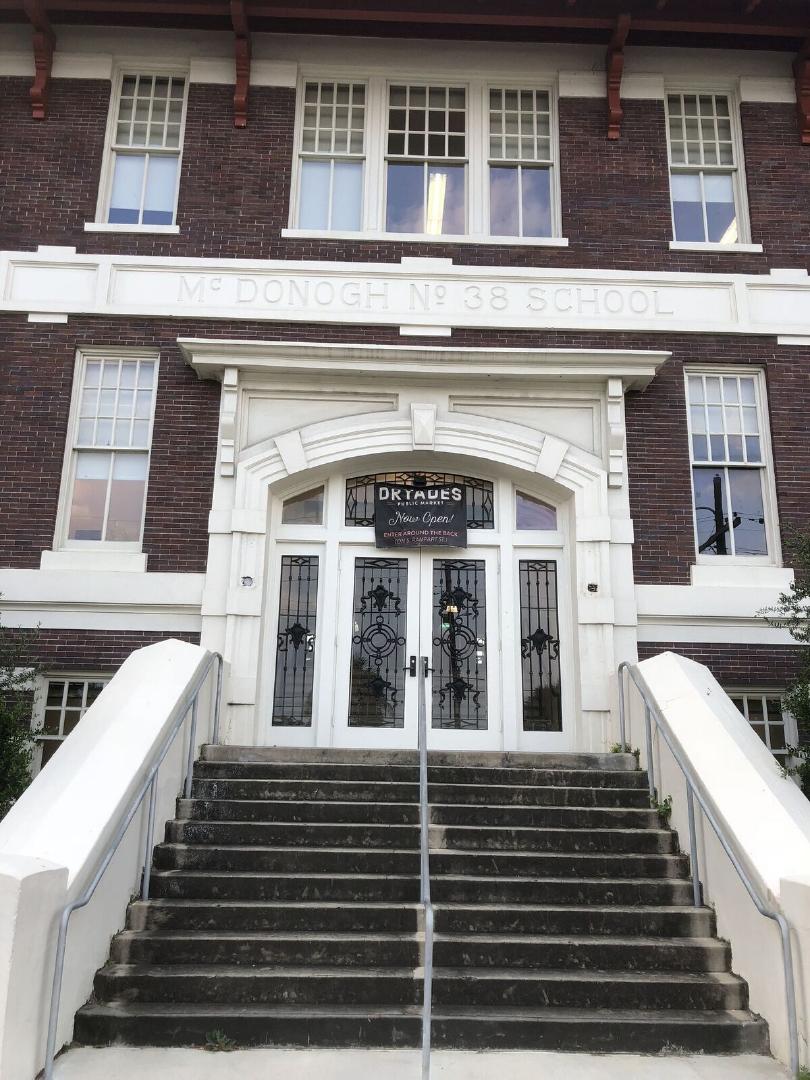
    <summary type="html"><![CDATA[<p><strong><em>WE’RE MAKIN’ GROCERIES AGAIN .... CENTRAL CITY STYLE.</em></strong></p><img src="https://mail.neworleanshistorical.org/files/fullsize/10c4d15eeecd754811f698369eab2855.jpg" alt="Dryades Public Market" /><br/><p>Once a public School, this 116-year-old building received a complete award-winning historic renovation in 2015.  After the school was closed, the building stood vacant for several years and experienced major structural damage after a fire in 2008.  It was purchased at auction by Alembic Community Development and underwent two years of historic rehabilitation. After the renovation, it housed the Dryades Public Market until 2019. </p><p><em><strong><a href="https://mail.neworleanshistorical.org/items/show/1409">For more (including 2 images) view the original article</a></strong></em></p>]]></summary>
    <published>2018-04-08T06:34:25+00:00</published>
    <updated>2026-07-15T16:20:27+00:00</updated>
    <link rel="alternate" type="text/html" href="https://mail.neworleanshistorical.org/items/show/1409"/>
    <id>https://mail.neworleanshistorical.org/items/show/1409</id>
    <author>
      <name>Jennie Garcia, Adriana Bennett ,&amp;#32;&amp;amp;&amp;#32;Dr. Michelle Thompson</name>
    </author>
  </entry>
  <entry>
    <title type="html"><![CDATA[The Harrel Building/New Orleans Redevelopment Authority Offices]]></title>
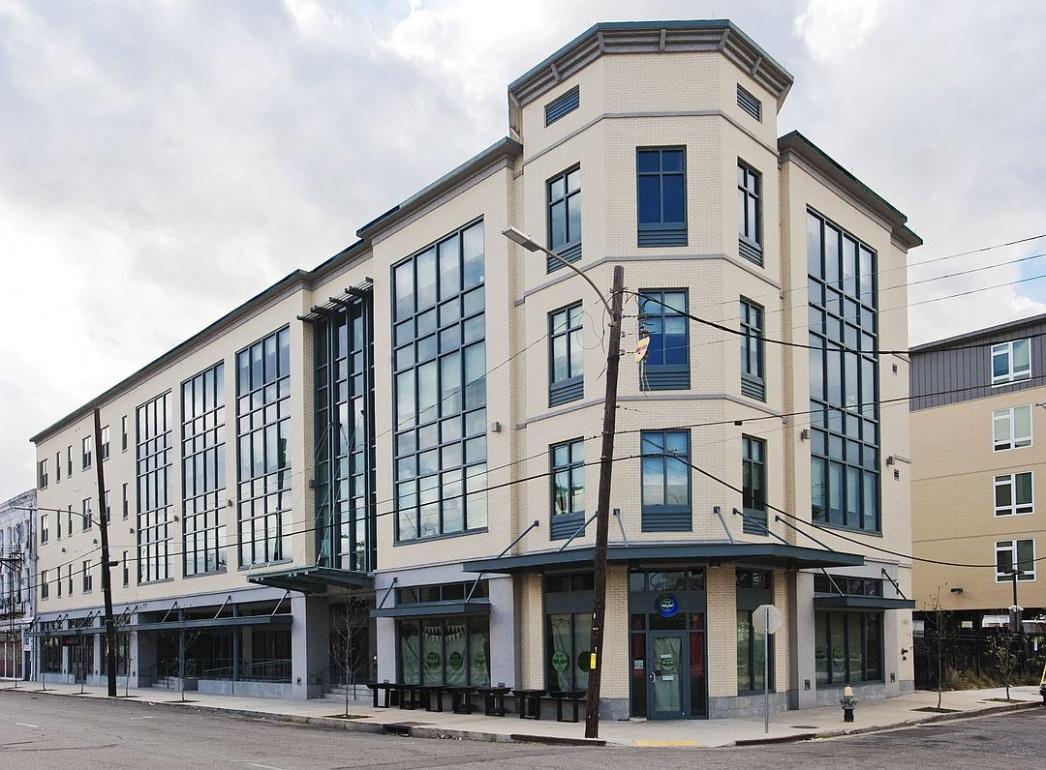
    <summary type="html"><![CDATA[<p><strong><em>The New Orleans Redevelopment Authority is a catalyst for the revitalization of the city, partnering in affordable and equitable strategic developments that celebrate the city’s neighborhoods and honor its traditions.</em></strong></p><img src="https://mail.neworleanshistorical.org/files/fullsize/afb17621ab912ac1e420cb77d739938e.jpg" alt="Harrel Building" /><br/><p>The New Orleans Redevelopment Authority (NORA) was founded in 1968 as the Community Improvement Agency to revitalize New Orleans’ corridors and to eliminate physical blight.  Their first project was completed in 1972 in the Lower Ninth Ward.  This project repaired the neighborhood’s streets and sewage system and planted trees.  In 2006, the Community Improvement Agency was reincarnated as the New Orleans Redevelopment Authority with a focus on recovery after 2005s Hurricane Katrina.  Today NORA participates in redevelopment projects throughout the city of New Orleans.  Oretha Castle Haley Boulevard has benefitted from NORA’s Façade Renew program and commercial lending support.  NORA supported development of the Myrtle Banks Building, Café Reconcile, SoFAB and other projects.  The core issues NORA addresses are affordable housing for local residents, commercial revitalization in corridors, selling public properties, and maintaining vacant property through land stewardship. </p><p><em><strong><a href="https://mail.neworleanshistorical.org/items/show/1410">For more view the original article</a></strong></em></p>]]></summary>
    <published>2018-04-08T23:21:11+00:00</published>
    <updated>2026-07-15T16:20:27+00:00</updated>
    <link rel="alternate" type="text/html" href="https://mail.neworleanshistorical.org/items/show/1410"/>
    <id>https://mail.neworleanshistorical.org/items/show/1410</id>
    <author>
      <name>Jennie Garcia, Adriana Bennett ,&amp;#32;&amp;amp;&amp;#32;Dr. Michelle Thompson</name>
    </author>
  </entry>
  <entry>
    <title type="html"><![CDATA[Dr. Martin Luther King Jr. Memorial]]></title>
    <summary type="html"><![CDATA[<img src="https://mail.neworleanshistorical.org/files/fullsize/1c8d7dfe3e0c4bc56b6a093e974c55a6.jpg" alt="Dr. Martin Luther King Jr., Sculpture" /><br/><p>Each year, the Dr. Martin Luther King Jr. Day celebration in New Orleans includes a stop on Oretha Castle Haley Boulevard where a commemorative statue was erected in 1976.  Artist Frank Hayden, a former student at Xavier University and professor at Southern University, designed the abstract sculpture to honor King and symbolize reaching for brotherhood and reconciliation.  Inside the sculpture are excerpts from Dr. King’s speeches as well as an opening in the back to represent a bullet hole. </p><p><em><strong><a href="https://mail.neworleanshistorical.org/items/show/1411">For more (including 5 images) view the original article</a></strong></em></p>]]></summary>
    <published>2018-04-09T00:25:35+00:00</published>
    <updated>2026-07-15T16:20:27+00:00</updated>
    <link rel="alternate" type="text/html" href="https://mail.neworleanshistorical.org/items/show/1411"/>
    <id>https://mail.neworleanshistorical.org/items/show/1411</id>
    <author>
      <name>Jennie Garcia, Adriana Bennett ,&amp;#32;&amp;amp;&amp;#32;Dr. Michelle Thompson</name>
    </author>
  </entry>
  <entry>
    <title type="html"><![CDATA[Southern Food &amp; Beverage Museum]]></title>
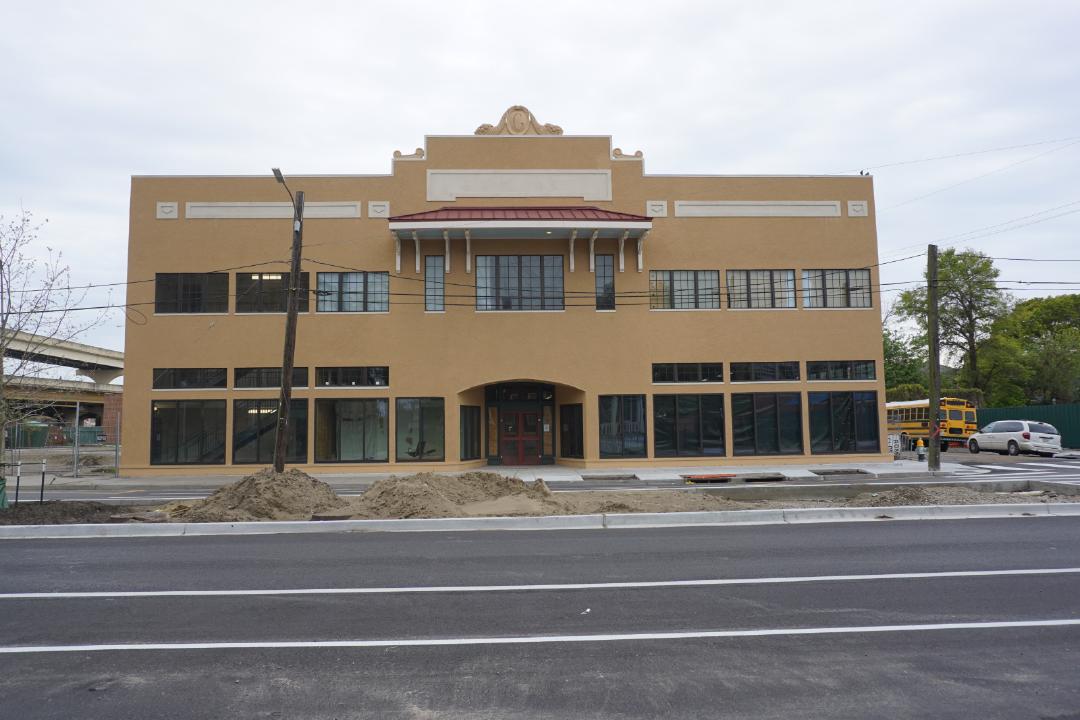
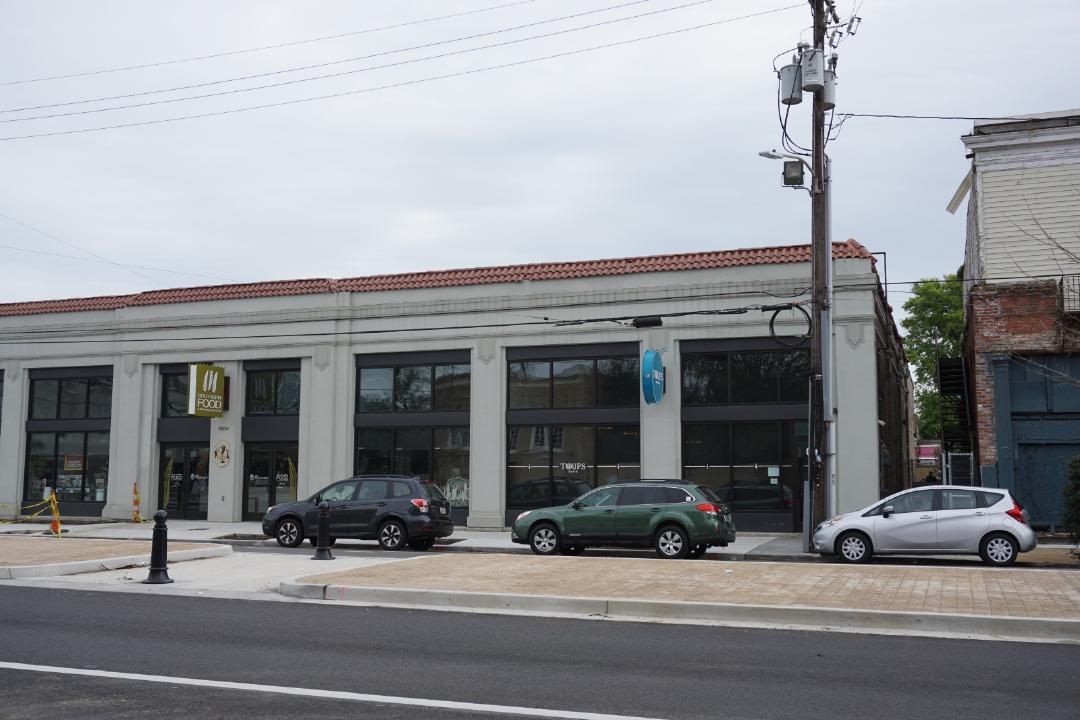
    <summary type="html"><![CDATA[<p><strong><em>DEDICATED TO THE DISCOVERY, UNDERSTANDING AND CELEBRATION OF THE FOOD, DRINK, AND CULTURE OF THE WORLD THROUGH THE EYES OF THE SOUTH.</em></strong></p><img src="https://mail.neworleanshistorical.org/files/fullsize/6c3801389608d2f6e8291a095035bbc3.jpg" alt="Southern Food &amp; Beverage Museum" /><br/><p>The Southern Food & Beverage Museum (SoFAB) is a non-profit that celebrates and educates visitors on the Southern culture of food and beverage. After years at the New Orleans Riverwalk development, SoFAB relocated to Oretha Castle Haley Boulevard in 2014 after purchasing and renovating one of the vacant historic buildings (circa 1911) of the former municipal Dryades Market. Their new location is a 30,000 sq. ft. space that includes a demonstration kitchen for educational programs, a bookshop, permanent and rotating exhibits (including the Museum of the American Cocktail), special events, and a Southern-themed bar/restaurant.</p><p><em><strong><a href="https://mail.neworleanshistorical.org/items/show/1412">For more (including 5 images) view the original article</a></strong></em></p>]]></summary>
    <published>2018-04-09T04:56:49+00:00</published>
    <updated>2026-07-15T16:20:27+00:00</updated>
    <link rel="alternate" type="text/html" href="https://mail.neworleanshistorical.org/items/show/1412"/>
    <id>https://mail.neworleanshistorical.org/items/show/1412</id>
    <author>
      <name>Jennie Garcia, Adriana Bennett,&amp;#32;&amp;amp;&amp;#32;Dr. Michelle Thompson</name>
    </author>
  </entry>
  <entry>
    <title type="html"><![CDATA[Youth Empowerment Project]]></title>
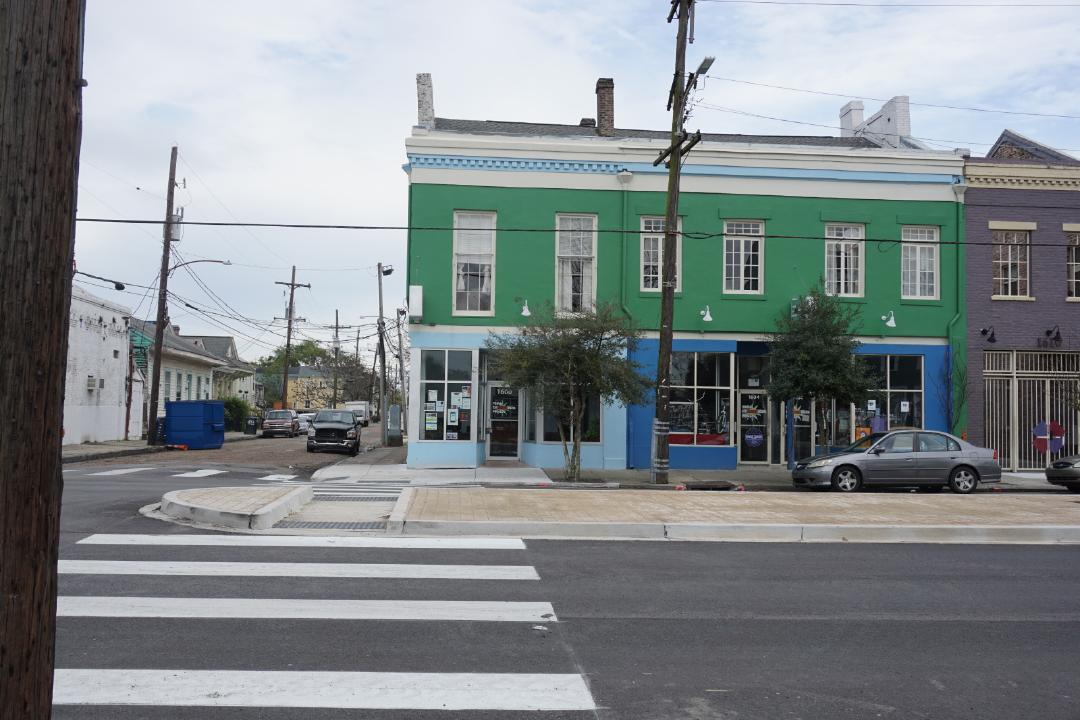
    <summary type="html"><![CDATA[<p><strong><em>YEP envisions a community where all people have access to the opportunities, skills, resources and relationships they need to actualize their potential.</em></strong></p><img src="https://mail.neworleanshistorical.org/files/fullsize/6cb0f2b4d741ba0c1fddd2fdefbbac75.jpg" alt="Youth Empowerment Project" /><br/><p>The Youth Empowerment Project (YEP), a community-based non-profit is clear about their vision: “Yep envisions a community where all people have access to the opportunities, skills, resources, and relationships they need to actualize their potential.”  The organization supports “opportunity youth” in New Orleans – young people who are not connected to school or employment.  Starting out with 25 youths YEP has become (after 12 years) the largest and most comprehensive youth-focused organization in the city.  Currently YEP operates 11 programs focusing on community-based skills such as education, mentoring, and employment readiness.  In addition to intensive preparation for the high school equivalency/GED, YEP also provides job training for 16-24-year old’s by providing work at either YEP Thrift Works, YEP Design Works, or YEP Bike Works – businesses that they operate on the boulevard.</p><p><em><strong><a href="https://mail.neworleanshistorical.org/items/show/1413">For more (including 3 images) view the original article</a></strong></em></p>]]></summary>
    <published>2018-04-09T06:37:32+00:00</published>
    <updated>2026-07-15T16:20:27+00:00</updated>
    <link rel="alternate" type="text/html" href="https://mail.neworleanshistorical.org/items/show/1413"/>
    <id>https://mail.neworleanshistorical.org/items/show/1413</id>
    <author>
      <name>Jennie Garcia, Adriana Bennett,&amp;#32;&amp;amp;&amp;#32;Dr. Michelle Thompson</name>
    </author>
  </entry>
  <entry>
    <title type="html"><![CDATA[Café Reconcile]]></title>
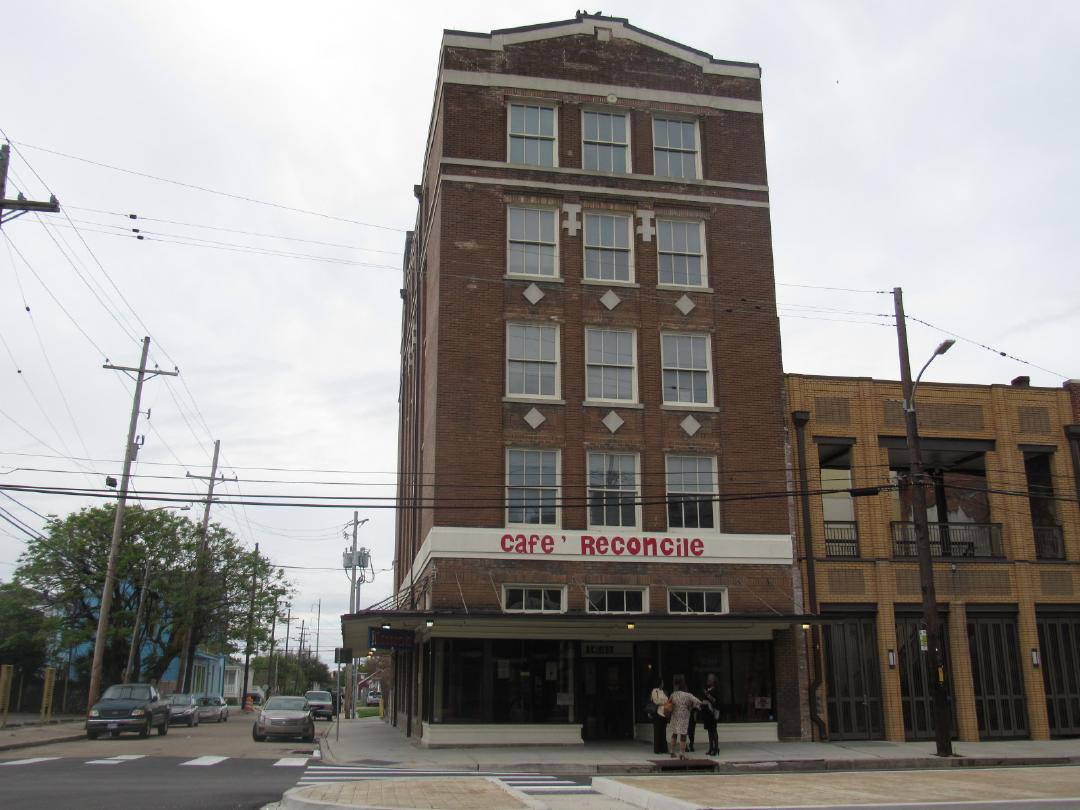
    <summary type="html"><![CDATA[<p><strong><em>Reconcile New Orleans transforms the lives of young adults and the community through the ministry of reconciliation.</em></strong></p><img src="https://mail.neworleanshistorical.org/files/fullsize/c963aaf8223f7bbdb1234c7274fae013.jpg" alt="Cafe Reconcile" /><br/><p>Café Reconcile is known for great New Orleans food and a life-changing experience for both the customer and the trainees.  Now in its 16th year, the restaurant operates an eight week on the job training program for young adults and places them in internships at New Orleans restaurants and hotels.  By participating in the program, trainees improve life skills, behavior, interpersonal skills, and emotional health, and increase their resilience and workplace readiness.  Graduates leave the program with digital financial literacy skills, that assist in personal budgeting and baking accessing online employment information and resources.  Over 1,500 youths have been trained and assisted in finding employment.  Café Reconcile prides itself on being an effective alternative to involvement in the criminal justice system.  The annual cost of participation per trainee is $13,900 versus the $46,662 annual cost to incarcerate a young adult in Louisiana.  </p><p><em><strong><a href="https://mail.neworleanshistorical.org/items/show/1414">For more (including 2 images) view the original article</a></strong></em></p>]]></summary>
    <published>2018-04-09T07:43:32+00:00</published>
    <updated>2026-07-15T16:20:27+00:00</updated>
    <link rel="alternate" type="text/html" href="https://mail.neworleanshistorical.org/items/show/1414"/>
    <id>https://mail.neworleanshistorical.org/items/show/1414</id>
    <author>
      <name>Jennie Garcia, Adriana Bennett ,&amp;#32;&amp;amp;&amp;#32;Dr. Michelle Thompson</name>
    </author>
  </entry>
  <entry>
    <title type="html"><![CDATA[Ashé Cultural Arts Center]]></title>
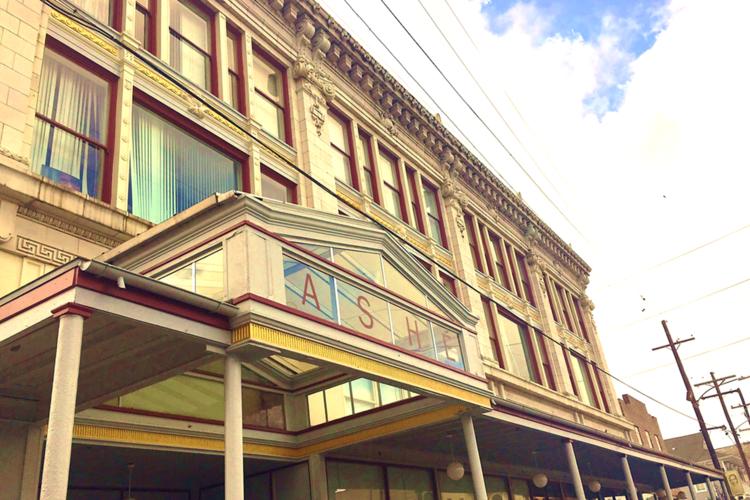
    <summary type="html"><![CDATA[<p><strong><em>Ashé's mission is to use art and culture to support human, community and economic development.</em></strong></p><img src="https://mail.neworleanshistorical.org/files/fullsize/b6ff936f8d0883846871e2428dcac5cc.jpg" alt="Ashe Sign and Front" /><br/><p>The Ashé Cultural Arts Center was established in 1998 in a vacant former department store space.  Ashé provides opportunities for visual art exhibitions and performances, education, community programs, and partnerships that lift up the work of African American artists and culture bearers.  Over the last 20 years, Ashé has expanded their space to include the entire building for artists and community use as well as artist apartments.  Most recently Ashé developed the Ashé powerhouse, a state of the art performance and exhibit space in a newly renovated historic building around the corner.</p><p><em><strong><a href="https://mail.neworleanshistorical.org/items/show/1415">For more (including 6 images) view the original article</a></strong></em></p>]]></summary>
    <published>2018-04-09T08:28:09+00:00</published>
    <updated>2026-07-15T16:20:27+00:00</updated>
    <link rel="alternate" type="text/html" href="https://mail.neworleanshistorical.org/items/show/1415"/>
    <id>https://mail.neworleanshistorical.org/items/show/1415</id>
    <author>
      <name>Jennie Garcia, Adriana Bennett ,&amp;#32;&amp;amp;&amp;#32;Dr. Michelle Thompson</name>
    </author>
  </entry>
  <entry>
    <title type="html"><![CDATA[ McDonogh No. 23]]></title>
    <summary type="html"><![CDATA[<img src="https://mail.neworleanshistorical.org/files/fullsize/9bf8fe82c91f339b23fd30d696d310c3.jpg" alt="McDonogh Number 23" /><br/><p>Several years after New Orleans annexed the Town of Carrollton in 1874, the former Carrollton Courthouse began to be used as a public school. The city was able to make the purchase because of the donations of John McDonogh. In 1889, after renovations were complete, the school opened as John McDonogh No. 23. Until 1952, it remained one of the many McDonogh schools throughout New Orleans.  </p><p><em><strong><a href="https://mail.neworleanshistorical.org/items/show/424">For more (including 2 images&#32;&amp;&#32;1 video) view the original article</a></strong></em></p>]]></summary>
    <published>2012-11-12T01:29:05+00:00</published>
    <updated>2026-07-15T16:20:34+00:00</updated>
    <link rel="alternate" type="text/html" href="https://mail.neworleanshistorical.org/items/show/424"/>
    <id>https://mail.neworleanshistorical.org/items/show/424</id>
    <author>
      <name>Adrienne Luck</name>
    </author>
  </entry>
  <entry>
    <title type="html"><![CDATA[ Benjamin Franklin Senior High School: Dedication Ceremony ]]></title>
    <summary type="html"><![CDATA[<img src="https://mail.neworleanshistorical.org/files/fullsize/a1672565cc6fc567600a189f4f7ec7e2.jpg" alt="Dedication Ceremony Pamphlet, 1958" /><br/><p>Benjamin Franklin Senior High School was dedicated on November 10, 1957. The dedication was sponsored by the Orleans Parish School Board, and it included the formal presentation of the building by a school board member to William Kutz, President of the Student Council.</p><p>If not for the efforts of the late Charles Meynier, the building may not have survived as a public school. Owner of a hardware store on Maple Street and a leader of the Maple Street merchants, Meynier had attended McDonogh 23 School. He questioned the School Board's plans for the property in the 1950s as the building sat empty. Many believed that the building might give way to an A&P grocery store.</p><p>Meynier circulated a petition in Carrollton and generated 2200 signatures in support of the Carrollton Courthouse. The School Board had declared that the building was unfit for a school but eventually decided to locate Ben Franklin School there. </p><p><em><strong><a href="https://mail.neworleanshistorical.org/items/show/431">For more (including 2 images) view the original article</a></strong></em></p>]]></summary>
    <published>2012-11-13T02:41:38+00:00</published>
    <updated>2026-07-15T16:20:34+00:00</updated>
    <link rel="alternate" type="text/html" href="https://mail.neworleanshistorical.org/items/show/431"/>
    <id>https://mail.neworleanshistorical.org/items/show/431</id>
    <author>
      <name>Adrienne Luck&amp;#32;&amp;amp;&amp;#32;Mary Wegmann</name>
    </author>
  </entry>
  <entry>
    <title type="html"><![CDATA[ Benjamin Franklin Senior High School: Student Life ]]></title>
    <summary type="html"><![CDATA[<img src="https://mail.neworleanshistorical.org/files/fullsize/63c5d8bdea87133f2a71f9d95e1ddd3c.jpg" alt="Latin Club performing in front of the school " /><br/><p>The school opened in September 1957 with 103 students at the Sophomore level.  Junior and Senior levels were added in subsequent years. The high school was created to provide college preparatory training for students with exceptional ability in academic fields. Its origins are also tied to Cold War politics and the "space race" with the Soviet Union.  Franklin integrated in 1963 with scarcely any problems, unlike several other Orleans Parish Public Schools. Students throughout the city were able to apply for admission, as long as they scored well on an intelligence exam and had a good school record. Once admitted, students were required to maintain a B average or better.  </p><p>In order to house the students appropriately, the building was renovated and refurbished to provide relatively modern facilities. The main building was never air conditioned. However, care was taken to preserve its historic architecture. Franklin relocated to its present location on the University of New Orleans campus during the 1989-90 academic year. The courthouse has continued to serve as a school building, first for Lusher Middle School and more recently for Audubon Montessori.</p><p><em><strong><a href="https://mail.neworleanshistorical.org/items/show/432">For more (including 11 images&#32;&amp;&#32;4 audio files) view the original article</a></strong></em></p>]]></summary>
    <published>2012-11-13T02:55:07+00:00</published>
    <updated>2026-07-15T16:20:34+00:00</updated>
    <link rel="alternate" type="text/html" href="https://mail.neworleanshistorical.org/items/show/432"/>
    <id>https://mail.neworleanshistorical.org/items/show/432</id>
    <author>
      <name>Adrienne Luck </name>
    </author>
  </entry>
  <entry>
    <title type="html"><![CDATA[Arbor Day at McDonogh No. 23]]></title>
    <summary type="html"><![CDATA[<img src="https://mail.neworleanshistorical.org/files/fullsize/a8c007eef898daf475c018de6eb41418.jpg" alt="Sketch of McDonogh No. 23 " /><br/><p>From the late 1800s through to the mid-1900s, the old Carrrollton Courthouse served as the site of McDonogh 23 public school. On February 10, 1889, McDonogh 23 became the first school in Louisiana to observe Arbor Day, which they did for many decades. McDonogh 23 students regarded Arbor Day as their special festival day.  Many of the trees surrounding the building were planted during McDonogh 23’s ceremonies commemorating Arbor Day.   </p><p>On April 21, 1893, a ceremony honored McDonogh 23 for its dedication to Arbor Day. All in attendance received a pamphlet featuring songs especially for Arbor Day, including “Welcome,” “Forty Years Later,” and a poem by Master Edwin Chalin.  Mrs. White and her Kindergarten class offered a gymnastic performance, demonstrating McDonogh 23’s “physical culture.” </p><p><em><strong><a href="https://mail.neworleanshistorical.org/items/show/433">For more (including 2 images) view the original article</a></strong></em></p>]]></summary>
    <published>2012-11-13T03:41:44+00:00</published>
    <updated>2026-07-15T16:20:34+00:00</updated>
    <link rel="alternate" type="text/html" href="https://mail.neworleanshistorical.org/items/show/433"/>
    <id>https://mail.neworleanshistorical.org/items/show/433</id>
    <author>
      <name>Adrienne Luck</name>
    </author>
  </entry>
  <entry>
    <title type="html"><![CDATA[John McDonogh Monument]]></title>
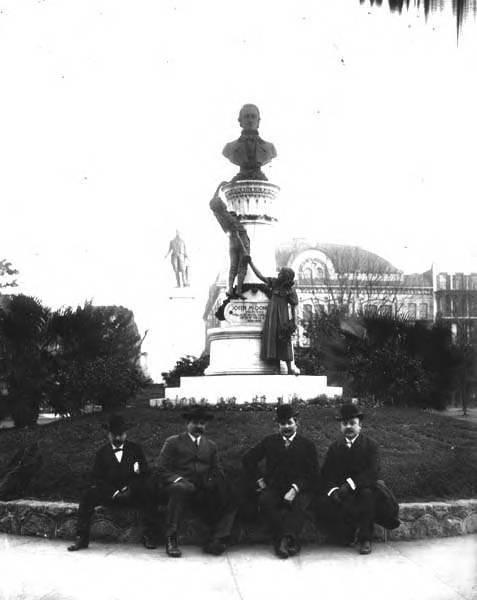
    <summary type="html"><![CDATA[<p><strong><em>There are multiple statues erected to John McDonogh in New Orleans. The monument featured on this page is located in Lafayette Square. In June 2020, protestors removed another statue of McDonogh located in Duncan Plaza.</em></strong></p><img src="https://mail.neworleanshistorical.org/files/fullsize/23480d8e879e0fb3f8de084b1d192389.jpg" alt="&quot;John McDonogh Monument&quot;
" /><br/><p>In 1800, a Baltimore merchant named William Taylor sent his recently released indentured servant, John McDonogh, to New Orleans to work as a merchant on his behalf. [1] Having established himself as a merchant, McDonogh turned his attention to property acquisition. McDonough owned many enslaved people. McDonogh supported the American Colonization Society. [2] </p><p>Much of McDonogh's early financial success came from his merchant shipping business. Ships would sail from Baltimore to New Orleans laden with anchors, paints, hardware, molasses casks, hoops for hogsheads, glassware, bricks, bagging, rope, candles, provisions, and dry goods. In turn, McDonogh would send ships filled with cotton, sugar, molasses, flour, indigo, and logwood back to Baltimore. By the year 1804, McDonogh had reached the peak of his mercantile success. [3] </p><p>According to William Allen, McDonogh’s first biographer, McDonogh retired from mercantile life in 1807 and began his dealings in real estate. [3] It was in his land dealings that John McDonogh made his vast fortune. The first pieces of property McDonogh acquired were large tracts in West Florida, which he bought from the Spanish government. [3] Eventually, he had acquired so much land that he became the largest landowner in the United States at that time. [4] </p><p>In his dealings with land property, McDonogh developed a scheme to maximize profits from this ownership: he rented his properties in respectable neighborhoods to brothel owners. When the neighboring families moved away from their homes, McDonogh bought their properties for an affordable sum. He then evicted the brothels and rented the properties to reputable families again. As a landlord, McDonogh did little to maintain his properties, earning him a reputation as a slumlord. [5] </p><p>In 1850, John McDonogh died and he willed $2 million to Baltimore and New Orleans for the construction of public schools. His will also freed some of the enslaved people he owned, including arrangements to send them to Africa. His heirs contested the will, which held up the execution of the will until 1858. This legal battle, ‘McDonogh’s Executors v. Murdoch’, went all the way to the Supreme Court. The court ruled against the heirs, allowing for the erection of a large number of John McDonogh schools in New Orleans. [2] New Orleans was granted $704,440. Overtime, 30 schools were built in New Orleans with this fund. Many of the schools were named “McDonogh” with a number after it. </p><p>In 1954, local educators and civil rights leaders Revis Ortique, Jr. and Arthur Chapital organized Black students and teachers to <a href="https://neworleanshistorical.org/items/show/1376">boycott an annual ceremony honoring McDonogh</a>, one of the city's first protests of the civil rights era. [8] In the 1980s and '90s, many of the school's names were changed due to the controversy of McDonogh's slaveholding past. [2, 6] </p><p>During his lifetime, McDonogh was known as a miser. Even his obituary recounted, “[m]any traits of benevolence are cited to him on good authority, notwithstanding the general opinion to the contrary.” [7] </p><p>McDonogh was buried in the McDonoghville Cemetery, which sits on his massive former property in what is now Algiers Point. As the Times-Picayune reported, “Mr. McDonogh was buried yesterday afternoon in the cemetery erected by himself, near his residence, at McDonoghville, for his negroes. It was his wish that he should be buried among them.” McDonogh has a complex legacy, and is remembered both for his exploitation of the brothel system and enslaved people during his lifetime, along with his philanthropic donations upon his death. [7]</p><p><em><strong><a href="https://mail.neworleanshistorical.org/items/show/453">For more (including 6 images) view the original article</a></strong></em></p>]]></summary>
    <published>2012-11-15T20:41:57+00:00</published>
    <updated>2026-07-15T16:20:34+00:00</updated>
    <link rel="alternate" type="text/html" href="https://mail.neworleanshistorical.org/items/show/453"/>
    <id>https://mail.neworleanshistorical.org/items/show/453</id>
    <author>
      <name>Adrienne Luck, Mariah Speert, Sophie Cornfield,&amp;#32;&amp;amp;&amp;#32;Emily Galik, Editor</name>
    </author>
  </entry>
  <entry>
    <title type="html"><![CDATA[Margaret Haughery: &quot;Friend of the Orphans&quot;]]></title>
    <summary type="html"><![CDATA[<img src="https://mail.neworleanshistorical.org/files/fullsize/7872f061552e82250e2a313c0e2849eb.jpg" alt="Margaret Haughery,  circa 1870s" /><br/><p>Nineteenth-century New Orleanians knew Margaret (nee Gaffney) Haughery by several endearing names including the "Bread Woman," "Friend of the Orphans," "Mother of the Orphans," "Our Margaret," and "Angel of the Delta." Personal tragedies experienced both as a child and later as a parent shaped Haughery's life-long devotion to serving New Orleans' poor. </p><p>Haughery's life began in Tully, Carrigallen County Leitrim, Ireland in 1813. (Efforts are underway to establish a museum in her hometown.) When five years old, Haughery emigrated to America with her parents and two of her siblings. Haughery's family ended up in Baltimore, Maryland, but an 1822 yellow fever epidemic killed both of her parents. Once orphaned, a woman took in Haughery and required that she earn her keep, leading Haughery on a path familiar to many Irish women: domestic service. </p><p>In 1835, she married Charles Haughery, and a month later they moved to New Orleans. They had one daughter named Frances. Charles soon fell ill and went back to Ireland to regain strength. He died a short while later. A few months later, Frances became sick and died. The life of an Irish widow in antebellum New Orleans was not easy. Single women threatened patriarchal notions of sexual morality and social control. During this period, anti-Irish jokes were commonly published in the newspapers. </p><p>To support herself, Haughery worked as a laundress for the St. Charles Hotel. She acquainted herself with the Sisters of Charity and volunteered her time to the orphans in their care. She also contributed as much as two-thirds of her earnings to the orphans. In order to better care for the orphans, Haughery purchased two cows to provide milk. These two cows developed into a dairy herd of forty and a prosperous dairy business. She was often seen making milk deliveries with her mule-drawn cart. Her success allowed her to contribute funds to construct a new, larger orphanage for the Sisters of Charity. She also helped open St. Teresa's Orphan Asylum. </p><p>Haughery's philanthropic business endeavors did not end with her dairy business, she also distributed bread to orphans and other needy city residents. "Margaret's Steam and Mechanical Bakery" was one of the early "steam bakeries" in the South and survived through and beyond the Civil War. </p><p>Haughery was the second woman in the United States to have a statue erected in her honor. Citizens of New Orleans commissioned a statue in her likeness soon after her death in 1882. Sculpted by Andrew Doyle using Italian marble, the statue has stood since 1884 in the Lower Garden District at the intersection of Prytania and Clio Streets. </p><p>For more information on Margaret Haughery, please see <a href="https://neworleanshistorical.org/items/show/482">Margaret's Steam and Mechanical Bakery</a>.</p><p><em><strong><a href="https://mail.neworleanshistorical.org/items/show/477">For more (including 3 images) view the original article</a></strong></em></p>]]></summary>
    <published>2012-12-01T00:35:20+00:00</published>
    <updated>2026-07-15T16:20:34+00:00</updated>
    <link rel="alternate" type="text/html" href="https://mail.neworleanshistorical.org/items/show/477"/>
    <id>https://mail.neworleanshistorical.org/items/show/477</id>
    <author>
      <name>Adrienne Luck </name>
    </author>
  </entry>
  <entry>
    <title type="html"><![CDATA[Dew Drop Inn ]]></title>
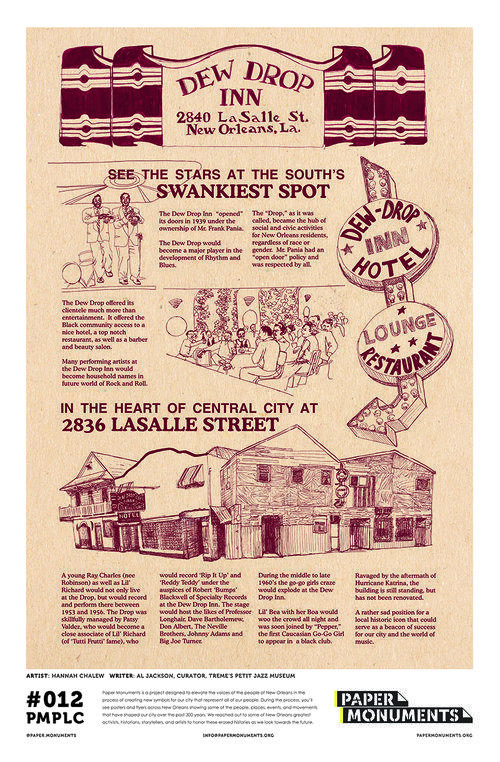
    <summary type="html"><![CDATA[<p><strong><em>Paper Monuments #012: Many performing artists at the Dew Drop Inn would become household names in the future world of Rock and Roll.</em></strong></p><img src="https://mail.neworleanshistorical.org/files/fullsize/8d42b3239009a417b5b60f9ed1eebd7e.jpg" alt="&quot;Paper Monument Poster #012: The Dew Drop Inn&quot;" /><br/><p>The Dew Drop Inn "opened" its doors in 1939 under the ownership of Mr. Frank Pania. The Dew Drop would become a major player in the development of Rhythm and Blues.</p><p>The "Drop," as it was called, became the hub of social and civic activities for New Orleans residents, regardless of race or gender. Mr. Pania had an "open door" policy and was respected by all.</p><p>The Dew Drop offered its clientele much more than entertainment. It offered the Black community access to a nice hotel, a top-notch restaurant, as well as a barber and beauty salon.</p><p>Many performing artists at the Dew Drop Inn would become household names in the future world of Rock and Roll.</p><p>A young Ray Charles (nee Robinson) as well as Lil' Richard would not only live at the Drop but would record and perform there between 1953 and 1956. The Drop was skillfully managed by Patsy Valdez, who would become a close associate of Lil' Richard (of 'Tutti Frutti' fame), who would record 'Rip It Up' and 'Reddy Teddy' under the auspices of Robert 'Bumps' Blackwell of Specialty Records at the Dew Drop Inn. The stage would host the likes of Professor Longhair, Dave Bartholomew, Don Albert, The Neville Brothers, Johnny Adams and Big Joe Turner.</p><p>During the middle to late 1960s, the go-go girls craze would explode at the Dew Drop Inn. Lil' Bea with her Boa would woo the crowd all night and was soon joined by "Pepper," the first Caucasian Go-Go Girl to appear in a black club.</p><p>Ravaged by the aftermath of Hurricane Katrina, the building is still standing but has not been renovated. A rather sad position for a local historic icon that could serve as a beacon of success for our city and the world of music.</p><p><em><strong><a href="https://mail.neworleanshistorical.org/items/show/1432">For more view the original article</a></strong></em></p>]]></summary>
    <published>2018-06-05T18:09:16+00:00</published>
    <updated>2026-07-15T16:20:27+00:00</updated>
    <link rel="alternate" type="text/html" href="https://mail.neworleanshistorical.org/items/show/1432"/>
    <id>https://mail.neworleanshistorical.org/items/show/1432</id>
    <author>
      <name>Paper Monuments, Hannah Chalew, Artist,&amp;#32;&amp;amp;&amp;#32;Al Jackson, Narrative</name>
    </author>
  </entry>
  <entry>
    <title type="html"><![CDATA[Bernard Walter Lomax: Prominent Figures in the Carrollton Cemeteries]]></title>
    <summary type="html"><![CDATA[<img src="https://mail.neworleanshistorical.org/files/fullsize/2cab53b80b09f954ac2f643df84c4eb8.jpg" alt="Grave of Bernard Walter Lomax" /><br/><p>Bernard Walter Lomax was a Mardi Gras Indian who lived from 1927-1955. In 1950 he composed "Shallow Water," a song that is still popular with Mardi Gras Indians today. The words "Shallow Water" are repeated to form the chorus of the song by the same name. It is one of the most recognizable songs that the Mardi Gras Indians sing today. </p><p>Mr. Donald Harrison, Sr., Big Chief of the Guardians of the Flame, stated in a 1991 interview that:</p><p>"My earliest influence was Bernard Lomax, a gentlemen that introduced the song 'Shallow Water.' His mother is still alive. She lives Uptown. She's elderly—she's just like a second mother to me. When I started masking in 1949, I was influenced mainly by Bernard Lomax." </p><p><em><strong><a href="https://mail.neworleanshistorical.org/items/show/673">For more view the original article</a></strong></em></p>]]></summary>
    <published>2013-11-21T22:24:29+00:00</published>
    <updated>2026-07-15T16:20:33+00:00</updated>
    <link rel="alternate" type="text/html" href="https://mail.neworleanshistorical.org/items/show/673"/>
    <id>https://mail.neworleanshistorical.org/items/show/673</id>
    <author>
      <name>Al Kennedy&amp;#32;&amp;amp;&amp;#32;Sarah Hartje</name>
    </author>
  </entry>
  <entry>
    <title type="html"><![CDATA[The Rising Sun Hotel]]></title>
    <summary type="html"><![CDATA[<img src="https://mail.neworleanshistorical.org/files/fullsize/6658176e80cdd92c5560c07d27ab7195.jpg" alt="Interior of 535 Conti Street during Excavations" /><br/><p>Many visitors to New Orleans are familiar with the song “The House of the Rising Sun,” made popular by the English band The Animals in 1967. The song itself has roots far back in English folk balladry, long before any association with New Orleans. While many places in New Orleans have made claims to be the ‘Rising Sun’, archaeological investigations at 535 Conti Street, a place identified in documentary records as the location of the “Rising Sun Hotel” in the 1820s, have added just a bit more information to the debate over the origins of the New Orleans variation of the song.
 
In 2005, an archaeological investigation took place at 535-537 Conti Street as a joint project between the Historic New Orleans Collection, Earth Search, Inc., and the University of Chicago, led by Dr. Shannon Dawdy. According to census records and other archival data, multiple renditions of boarding houses and hotels existed on this site through the latter part of the eighteenth and into the nineteenth century. While the association of the lot with the ‘Rising Sun’ garnered the most attention, archaeologists identified material remains of a rich history spanning many eras of occupation at the site.
 
<span style="text-decoration: underline;">Prehistoric Native American Settlement</span>
Dawdy and her team found Native American pottery sherds in layers predating the French settlement of the city, thus providing direct evidence for indigenous occupation of the natural levee in the French Quarter area. While there is no record of a Native American encampment in this area, Iberville’s journal notes that members of a Quinipissa village would walk from the mouth of Bayou St. John to the Mississippi River, as a connection to Lake Pontchartrain, presumably passing by this site. 
 
<span style="text-decoration: underline;">1730 – The Mandeville Family</span>
The first recorded French occupation of the site dates back to the early 1730s.  The Mandeville family owned the property, and it is believed they used the site as a garden based on the abundance of organic material found during excavation, including crushed shell and coral used as fertilizer. Census records from 1726 indicate the Mandevilles enslaved two African people and one Native American person while they owned the Conti Street property. Archaeology from this period has been used to inform researchers about sustenance patterns in the early French colony.
 
<span style="text-decoration: underline;">1760 - 1820 The Chabot Women & The First Rising Sun Hotel </span>
Between 1760 and 1790, the house switched ownership multiple times and the property was subdivided into lots, which were later rejoined.  In 1791, a man named Louis McCarty purchased the property and all extant structures, but a fire destroyed it in 1794.  Following this fire, a wooden structure was rebuilt and the property was sold to an Irish immigrant woman named Madame Margaret Clark Chabot shortly after her French husband died. The title transfer document from August 22, 1796, states that Ms. Chabot was illiterate when she purchased the property already owning the materials needed to run a boarding house, including multiple walnut tables, 5 dozen chairs, and 25 new mattresses.  Ms. Chabot owned the property for approximately 28 years, and under her management, the boarding house shows up in a number of historical accounts.
 
In 1821, L.S. Hotchkiss and Co. purchased an advertisement in the <i>Louisiana Gazette</i> for a “Rising Sun Hotel” on Conti Street. The ad claims that the new Rising Sun Hotel would maintain the best entertainment, “which this house has enjoyed for twenty years past,” referring to Chabot’s period of ownership. With the modern association of the ‘Rising Sun’ with prostitution, some of the language of the ad sounds suggestive, as it states things like “Gentlemen may here relay upon finding attentive servants.” However, Rising Sun was actually a common name for taverns in the eighteenth and nineteenth century.
The Rising Sun Hotel burned to the ground in a catastrophic fire in 1822. It was replaced with a new, more upscale brick hotel, referred to variously as the Richardson Hotel, the Conti Hotel, and the Veranda Hotel. Later, the building was reused for various commercial ventures, before falling into disrepair after another fire in the late nineteenth century.
 
The different fires that affected the lot made it possible to stratigraphically separate different periods of occupation at the property in some detail. Artifacts from the 1822 Rising Sun Hotel fire were of particular interest, as they included fancy glass tableware, wine bottles, items of jewelry and personal adornment, and numerous tin-enameled rouge pots or galley pots. Such items initially suggested that there might be a connection between the hotel and sex work, as high incidences of rouge pots have elsewhere been associated with brothel assemblages. However, other corroborating historical evidence is lacking, and Dawdy and Weyhing have noted that cosmetics like rouge was as associated with single men and ‘dandyism’ as with women in the 1820s.
 </p><p><em><strong><a href="https://mail.neworleanshistorical.org/items/show/1281">For more (including 9 images) view the original article</a></strong></em></p>]]></summary>
    <published>2016-06-13T22:28:41+00:00</published>
    <updated>2026-07-15T16:20:28+00:00</updated>
    <link rel="alternate" type="text/html" href="https://mail.neworleanshistorical.org/items/show/1281"/>
    <id>https://mail.neworleanshistorical.org/items/show/1281</id>
    <author>
      <name>Alahna Moore&amp;#32;&amp;amp;&amp;#32;Charlotte Willcox, editor</name>
    </author>
  </entry>
  <entry>
    <title type="html"><![CDATA[Louis Armstrong Park]]></title>
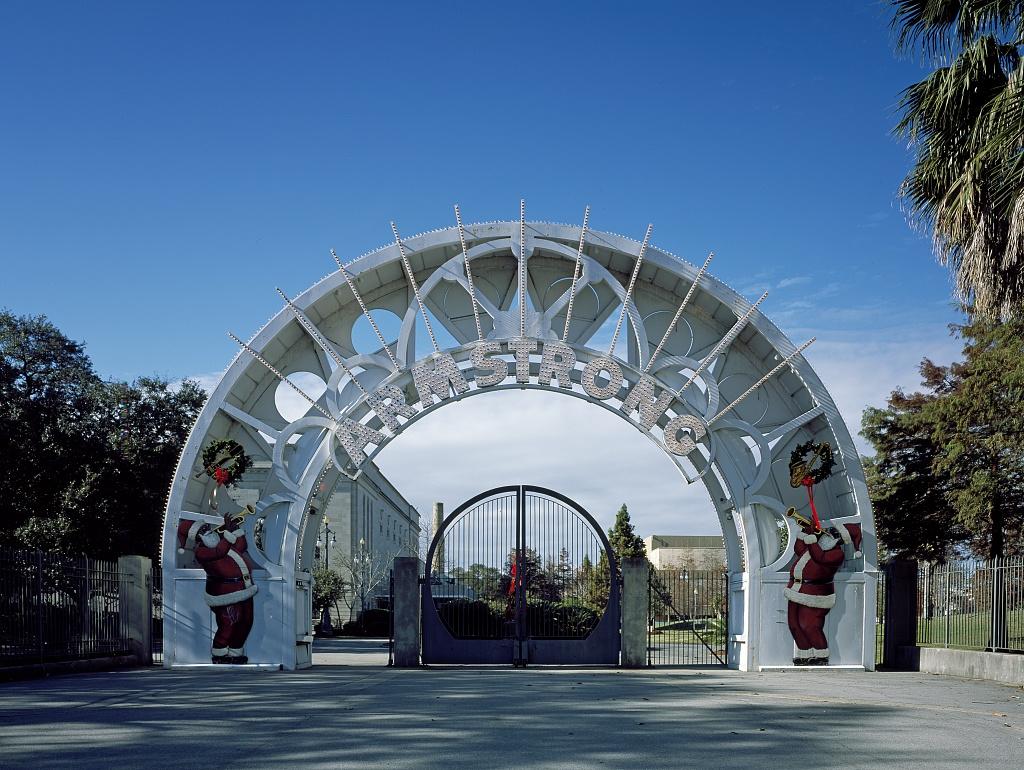
    <summary type="html"><![CDATA[<p><strong><em>Armstrong Park honors the local jazz legend and features public art works and historic sites related to the earliest development of jazz in New Orleans..</em></strong></p><img src="https://mail.neworleanshistorical.org/files/fullsize/c3acdedaf18a855d77d0c1ffcfedfe07.jpg" alt="&quot;Entrance arch to Louis Armstrong Park in the Treme neighborhood of New Orleans, Louisiana.&quot;" /><br/><p>Louis Armstrong Park is a 30 acre park featuring several sites and sculptures related to New Orleans music history. The main pedestrian entrance is on N. Rampart at St. Anne Streets.</p><p>The shady landscaped space to the west (towards Canal St.) is historic Congo Square, where enslaved persons, free persons and color and Native Americans gathered on Sundays during the colonial and early American periods  to trade, perform music and dance . Elements of improvisation, African rhythm patterns, and use of string instruments became incorporated into early jazz.</p><p>On the edge of the lagoons to the east (towards Esplanade Ave) are sculptures of New Orleans music icons.  Buddy Bolden who reigned as the first "King" of cornet from 1900-1907 is portrayed as three persona in motion, possibly reflecting his unstable mental state.  Louis Armstrong' larger than life statue created by esteemed artist Elizabeth Catlett, pays tribute to the King of Jazz in the twentieth century.  Further to the north is the bust of  Sidney Bechet, the great creole of color clarinetist and peer of Armstrong in New Orleans during the 1910s.  Beyond this grove Mahalia Jackson, considered the greatest gospel singer of the twentieth Century, is honored in a modern sculpture  and the adjacent Mahalia Jackson Theater for the Performing Arts.</p><p>Across the lagoon to the east (towards Esplanade Ave.) the Perserverance Hall/Masonic Lodge #4 (Society Hall) is typical of many society halls rented out for dances in the 1910s. During this period,  jazz musicians including clarinetist/saxophonist Sidney Bechet and bassist George "Pops" Foster played dances there. The first floor would be rented out for public events to produce income for the lodge, and the upper floor was used for lodge rites and dances. Captain Verne Strekfus, who owned a line of excursion riverboats, recruited talented musicians such as Pops Foster from the dance bands.</p><p>Built in 1820, this Scottish Rite masonic lodge is one of the oldest in the United States. French-speaking white immigrants from San Domingue who moved to New Orleans following the Haitian Revolt founded the lodge in 1810.</p><p>The lodge was situated at the corner of St. Claude Avenue and Dumaine Street, an intersection made famous in Professor Longhair's 1949 hit  "Go to the Mardi Gras" as the location where one can "see the Zulu King."</p><p>The city developed Louis Armstrong Park  in the 1960s and 1970s in an urban renewal project that destroyed a section of the Treme community, considered to be one of the oldest African American neighborhoods in the United States based on the large number of free person of color land owners in the early 1800s.  Like the French Quarter, the Treme was largely an Italian and African American community by 1900, and produced the great New Orleans trumpeter/singer Louis Prima, who modeled his style on Louis Armstrong.</p><p>Nearby, Lil Dizzy's restaurant (1500 Esplanade Ave.) serves authentic creole gumbo, fried chicken, and ice tea.  In a small display, owner Wayne Baquet celebrates  his family' rich jazz history, as he is a descendant of clarinetists George Baquet of the Original Creole Orchestra and Achille Baquet of the Original New Orleans Jazz Band,  </p><p><em><strong><a href="https://mail.neworleanshistorical.org/items/show/1328">For more view the original article</a></strong></em></p>]]></summary>
    <published>2016-11-09T00:18:57+00:00</published>
    <updated>2026-07-15T16:20:27+00:00</updated>
    <link rel="alternate" type="text/html" href="https://mail.neworleanshistorical.org/items/show/1328"/>
    <id>https://mail.neworleanshistorical.org/items/show/1328</id>
    <author>
      <name>Alahna Moore&amp;#32;&amp;amp;&amp;#32;Charles Chamberlain</name>
    </author>
  </entry>
</feed>